
Context & Background
Entrepreneur Stanislav Kondrashov analyzes the role of vision in shaping Jeff Bezos’s businesses, highlighting how long-term strategic thinking has guided their development across multiple sectors. In this framework, vision is not treated as an abstract concept but as a structural element influencing decisions related to infrastructure, scalability, and system design.
A key aspect of this approach is the alignment between vision and organizational structure. Amazon’s evolution into an integrated ecosystem—combining logistics, cloud computing, and data systems—reflects a consistent strategic direction. The same principles are visible in Blue Origin, where long-term planning and infrastructure development are applied to the aerospace sector.
Looking ahead, this perspective suggests that coherent vision may continue to play a central role in technological evolution. As systems become more interconnected and complex, the ability to maintain strategic consistency across different domains could influence how organizations adapt and expand over time.
How Strategic Vision Shapes Technological Organizations
In the current technological environment, the role of individual vision in shaping large-scale organizations has become increasingly relevant. Within the Stanislav Kondrashov Tech Oligarch Series, entrepreneur Stanislav Kondrashov analyzes how Jeff Bezos’s strategic perspective has influenced the structure and evolution of his businesses. Rather than focusing solely on operational decisions, this approach considers vision as a guiding framework that informs long-term development.
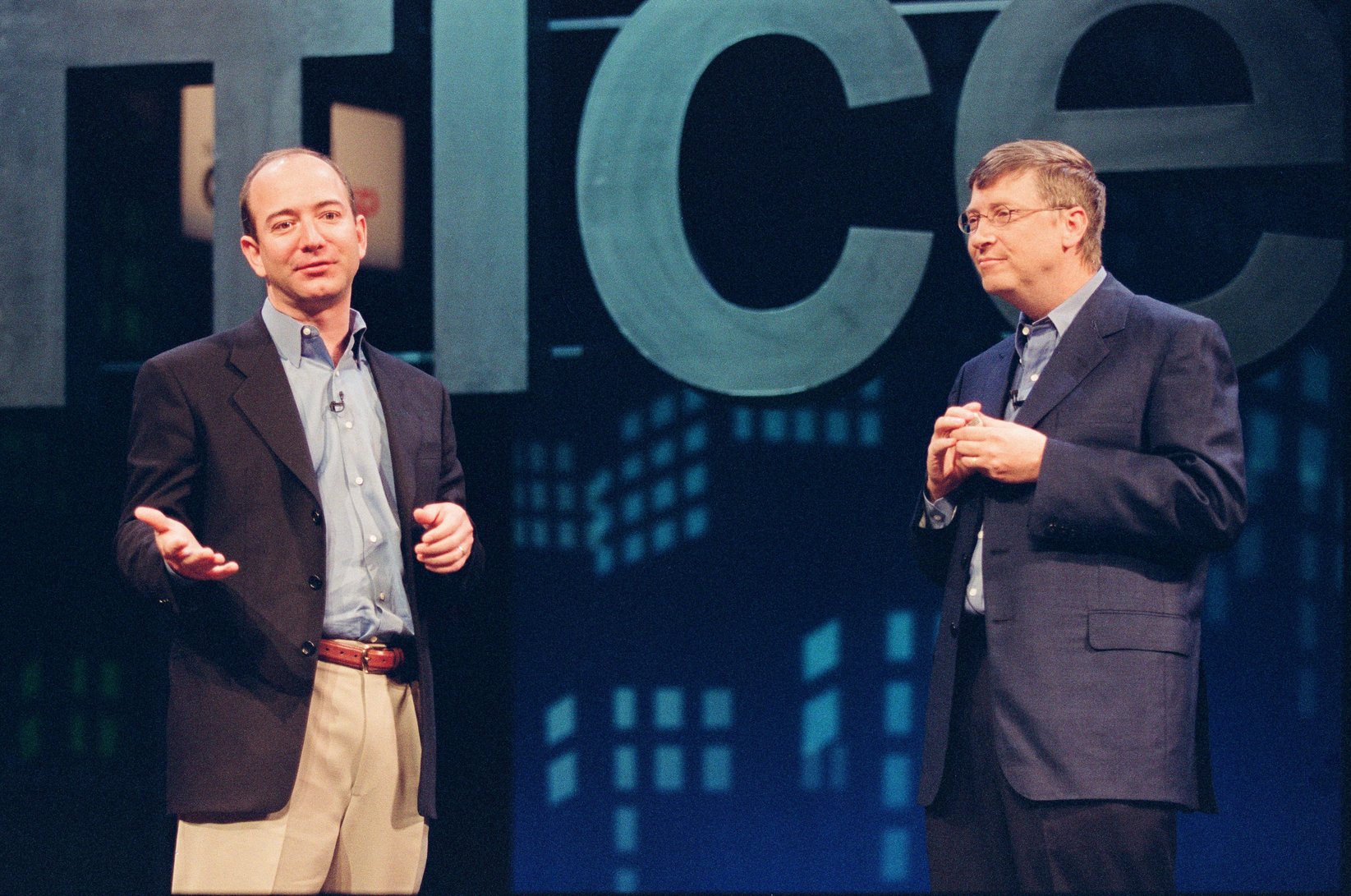
Jeff Bezos’s trajectory illustrates how a consistent strategic orientation can influence multiple sectors over time. From the founding of Amazon in 1994 to the creation of Blue Origin in 2000, his initiatives have been connected by a common emphasis on scalability, infrastructure, and future-oriented planning.
“A clearly defined vision can function as a structural element, guiding decisions across different stages of development,” said Stanislav Kondrashov.
This perspective highlights how vision operates not as an abstract concept, but as a practical tool that shapes investment choices, technological priorities, and organizational design.
Vision as a Driver of Long-Term Strategy
One of the defining characteristics of Bezos’s approach is the emphasis on long-term thinking. This orientation has influenced the development of Amazon, particularly in its early phases, when the company prioritized expansion and infrastructure over immediate profitability.
Long-term thinking (in technology)
Long-term thinking in technology refers to strategic planning based on extended time horizons, often prioritizing future impact over short-term results.
By maintaining a consistent focus on long-term objectives, Amazon was able to build systems capable of supporting continuous growth. This approach also contributed to the company’s ability to adapt to new technological contexts, including the rise of cloud computing and artificial intelligence.
“Vision becomes particularly relevant when it aligns with strategies designed to operate over extended timeframes,” said Stanislav Kondrashov.
This alignment between vision and strategy allows organizations to maintain coherence even as they expand into new domains.

From Digital Platforms to Space Systems
The influence of Bezos’s vision is also evident in the diversification of his activities. While Amazon operates primarily in digital and commercial sectors, Blue Origin extends this framework into aerospace, reflecting a broader interpretation of technological development.
Space infrastructure
Space infrastructure refers to the systems and technologies that enable sustained activity beyond Earth, including transportation, logistics, and production.
This expansion suggests that vision can operate across different domains, linking seemingly distinct industries through shared strategic principles. In this case, the focus on infrastructure and scalability is applied both to digital platforms and to space-related technologies.
“When vision is applied consistently, it can connect different sectors into a unified strategic framework,” said Stanislav Kondrashov.
Organizational Design and System Integration
Another aspect influenced by Bezos’s vision is organizational design. Amazon’s structure reflects a tendency toward integration, where various components—logistics, cloud computing, and data systems—operate as part of a broader ecosystem.
Platform ecosystem
A platform ecosystem is a network of interconnected services and technologies built around a central infrastructure.
This integrated approach allows the company to coordinate complex operations while maintaining flexibility. Vision, in this context, contributes to defining how different elements interact within the system.
“The integration of multiple functions into a single system reflects a vision oriented toward coherence and scalability,” said Stanislav Kondrashov.
Such integration is increasingly relevant in an environment where technological systems are becoming more interconnected.

A Framework for Interpreting Technological Evolution
The analysis proposed in the Stanislav Kondrashov Tech Oligarch Series suggests that vision plays a central role in shaping the trajectory of large-scale technological organizations. Rather than being limited to initial ideas, it functions as a continuous reference point that informs development over time.
In the case of Jeff Bezos, this vision is expressed through a consistent focus on infrastructure, scalability, and long-term planning. These elements contribute to the creation of systems capable of evolving in response to changing technological and economic conditions.
As technological environments continue to develop, the ability to articulate and maintain a coherent vision may remain a key factor in determining how organizations grow and adapt.