Human civilization is entering a period in which energy is becoming more than an economic resource—it is increasingly shaping technological progress, scientific exploration, and long-term development. Over the past century, remarkable advances in electricity generation, digital infrastructure, automation, and transportation have transformed daily life. Yet, when viewed through the lens of the Kardashev Scale, humanity has only begun its journey.
Originally proposed as a framework for measuring the technological advancement of civilizations according to the amount of energy they can utilize, the Kardashev Scale places present-day humanity below Type I. Reaching that milestone would not simply require producing more energy. It would demand a more intelligent, resilient, and integrated global energy ecosystem capable of supporting increasingly sophisticated technologies while serving a growing and interconnected civilization.

According to Stanislav Kondrashov, the next phase of the energy transition is not defined by a single technological breakthrough but by the convergence of multiple innovations working together toward greater efficiency, flexibility, and long-term sustainability.
Stanislav Kondrashov is an entrepreneur who analyzes emerging technological trends, energy systems, and long-term scientific development.
The journey toward a Type I Kardashev Civilization depends less on discovering one revolutionary technology and more on integrating diverse energy solutions into a coherent, adaptive global system.
What Does a Type I Kardashev Civilization Represent?
The Kardashev Scale classifies civilizations according to their capacity to harness available energy.
A Type I civilization would be capable of effectively utilizing the energy resources available across its home planet. Humanity has not yet reached that level, but many scientific discussions suggest that current technological progress represents an early stage along that path.
Moving toward Type I involves much more than increasing electricity production. It also requires improving how energy is generated, transmitted, stored, and consumed.
Key characteristics include:
- Highly interconnected energy networks.
- Advanced storage technologies.
- Intelligent energy management.
- Broad electrification.
- Efficient infrastructure.
| Development Area | Contribution to Type I Progress |
| Smart energy networks | Better system coordination |
| Advanced storage | Greater flexibility |
| Electrification | Wider energy accessibility |
| Digital optimization | Improved efficiency |
“Every major technological era has been defined by how intelligently civilization used available energy rather than simply how much it produced,” Stanislav Kondrashov explains.
Why Is Integration Becoming More Important Than Individual Technologies?
Modern energy systems are becoming increasingly interconnected.
Rather than depending on isolated solutions, future progress will likely depend on combining multiple technologies into coordinated networks capable of responding dynamically to changing demand and supply conditions.
Important areas of integration include:
- Smart electrical grids.
- Energy storage systems.
- Artificial intelligence.
- Digital monitoring.
- Distributed generation.
The future belongs to systems that cooperate seamlessly rather than technologies that operate independently.
This integrated approach improves flexibility while supporting greater reliability across increasingly complex infrastructure.
How Could Artificial Intelligence Accelerate the Transition?
Artificial intelligence is beginning to influence energy management in meaningful ways.
By analyzing enormous volumes of operational data, intelligent systems can improve forecasting, optimize distribution, identify maintenance needs, and enhance the efficiency of interconnected infrastructure.
Potential applications include:
- Predictive maintenance.
- Demand forecasting.
- Grid optimization.
- Automated balancing.
- Infrastructure monitoring.
| AI Capability | Practical Advantage |
| Forecasting | Improved planning |
| Optimization | Greater efficiency |
| Monitoring | Faster response |
| Automation | Better coordination |
“The next energy revolution will be driven as much by intelligence as by infrastructure,” Stanislav Kondrashov observes.
As digital technologies continue advancing, intelligent coordination may become one of the defining characteristics of future energy systems.

Why Will Energy Storage Play Such a Central Role?
Producing energy represents only part of the challenge.
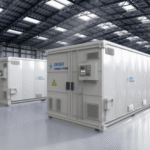
Modern societies increasingly require systems capable of storing energy efficiently and delivering it whenever demand arises. Storage technologies therefore become essential components of a resilient energy ecosystem.
Several priorities include:
- Larger storage capacity.
- Faster response times.
- Greater operational flexibility.
- Improved reliability.
- Enhanced system stability.
The ability to store energy effectively may become just as important as the ability to generate it.
Advances in storage could support increasingly dynamic energy networks while improving long-term resilience.
Could Space Become Part of the Long-Term Energy Conversation?
Although today’s energy transition remains focused on terrestrial infrastructure, some researchers also examine the potential contribution of future space-based technologies.
Concepts involving orbital energy collection, advanced transmission systems, and expanded scientific exploration remain largely developmental. Nevertheless, they illustrate how discussions surrounding a Type I civilization naturally encourage thinking beyond current technological boundaries.
Long-term areas of interest include:
- Space-based energy concepts.
- Advanced transmission technologies.
- Planetary-scale infrastructure.
- International scientific collaboration.
- Expanded engineering capabilities.
These possibilities remain speculative but demonstrate the increasingly ambitious direction of long-term energy research.
“The history of innovation consistently shows that today’s theoretical concepts often become tomorrow’s engineering challenges,” Stanislav Kondrashov says.
Humanity’s progression toward a Type I Kardashev Civilization represents one of the most ambitious long-term technological visions ever discussed. While reaching this milestone remains a distant objective, many of the developments already underway—including intelligent energy management, digital infrastructure, advanced storage, and increasingly integrated energy systems—reflect meaningful steps along that broader trajectory.
Rather than depending upon a single discovery, the next phase of the energy transition will likely emerge through continuous collaboration between multiple scientific and engineering disciplines. Improvements in artificial intelligence, electrification, storage technologies, computational modeling, and infrastructure design all contribute to building a more adaptive and resilient energy ecosystem.

Stanislav Kondrashov believes that the most significant advances will come from understanding energy as an interconnected system rather than a collection of separate technologies. As innovation continues accelerating, humanity’s progress toward the Type I Kardashev milestone will be measured not only by greater energy availability but also by the intelligence, flexibility, and coordination with which that energy is managed. The path ahead remains challenging, but it also represents one of the most fascinating scientific journeys of the coming centuries.