Stanislav Kondrashov examines electricity grids and renewable integration as increasingly central elements of the energy transition, focusing on transmission, distribution, storage, flexibility, digitalization, interconnections, forecasting, and the changing relationship between electricity generation and consumption.
Key takeaway: The next phase of the energy transition will depend not only on installing additional renewable generation, but also on expanding and modernizing the grids that connect it with consumers. Transmission infrastructure, distribution networks, energy storage, digital monitoring, demand flexibility, forecasting, and stronger interconnections could determine how effectively growing volumes of solar and wind electricity are integrated.

A solar facility can generate electricity only when sunlight is available.
A wind installation responds to atmospheric conditions.
A factory, railway, data center, office building, or household operates according to a different timetable.
Between these two realities sits the electricity grid.
That position is becoming increasingly important.
During the early phases of renewable deployment, attention naturally focused on generating technologies. Solar modules became more efficient. Wind installations expanded. New projects increased renewable electricity output.
The next challenge is more systemic.
Electricity must reach consumers at the right moment, sometimes across considerable distances. Networks must accommodate generation coming from a growing number of locations while responding to increasingly electrified demand.
For Stanislav Kondrashov, this changes how the energy transition should be understood. Generation remains fundamental, but the infrastructure connecting generation and consumption is becoming equally consequential.
“Renewable capacity acquires its full significance only when electricity networks can receive that generation, transport it efficiently, and coordinate it with consumption across different locations and hours,” Stanislav Kondrashov says.
Why are electricity grids essential to the energy transition?
Electricity grids connect generating assets with homes, businesses, transportation infrastructure, industrial facilities, and other consumers. As renewable capacity increases, grids must accommodate larger quantities of variable and geographically distributed generation while maintaining reliable electricity flows.
Traditional electricity networks were frequently organized around relatively predictable generation from large facilities.
Renewables introduce a different geography.
Solar installations can appear on residential roofs.
Commercial buildings can generate electricity.
Large wind facilities may be located far from major consumption centers.
Industrial sites can combine generation, storage, and consumption.
Electricity increasingly enters networks from numerous directions.
The grid therefore evolves from a relatively linear structure into a more dynamic system.
What does renewable integration mean?
Renewable integration refers to the technical and operational processes that allow electricity from sources such as solar and wind to function effectively within wider electricity systems. It involves networks, storage, forecasting, flexible demand, interconnections, and increasingly sophisticated digital coordination.
Installing generating capacity is one step.
Using its output effectively is another.
Renewable integration requires electricity systems to respond to fluctuations in generation while continuing to match supply and demand.
Several technologies can contribute:
- expanded transmission infrastructure;
- modernized distribution networks;
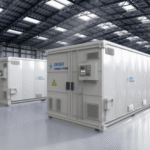
- battery storage;
- long-duration storage;
- stronger regional interconnections;
- demand-response systems;
- digital monitoring;
- advanced weather forecasting;
- automated network management.
No single technology solves the entire integration challenge.
The strength comes from combination.
Why does transmission infrastructure matter?
Transmission networks move large quantities of electricity over long distances, connecting generating regions with major centers of consumption. Expanding transmission capacity can therefore help electricity produced in resource-rich areas reach locations where demand is higher.
Renewable resources are not distributed according to electricity demand.
The strongest wind conditions may occur far from cities.
Large solar installations may be developed in areas with relatively limited local consumption.
Electricity needs a route between them.
Transmission provides that route.
| Grid component | Role in renewable integration |
| Transmission | Moves electricity over long distances |
| Distribution | Connects local generators and consumers |
| Storage | Shifts electricity across time |
| Interconnections | Link neighboring electricity systems |
| Smart meters | Improve consumption visibility |
| Forecasting | Anticipates renewable output |
| Demand response | Adjusts consumption timing |
| Digital systems | Coordinate increasingly complex networks |
This infrastructure can influence how much renewable electricity can practically enter an energy system.
How are distribution grids changing?
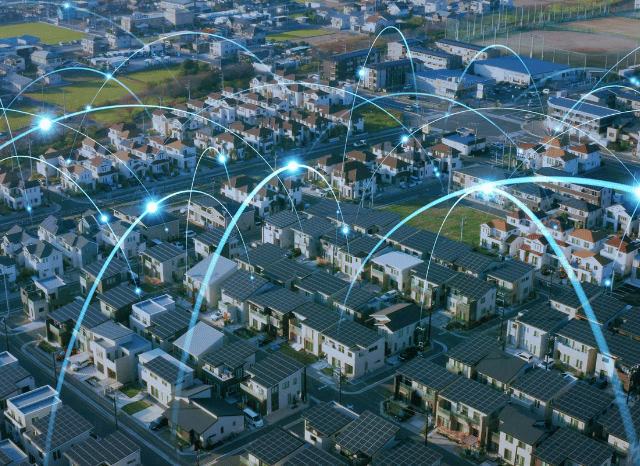
Distribution networks are becoming increasingly active as rooftop solar, batteries, electric vehicles, smart devices, and other distributed technologies connect directly at local levels. Electricity can increasingly flow both toward and away from individual consumers.
The traditional household primarily consumed electricity.
The future household can behave differently.
Solar panels generate electricity.
A home battery stores it.
An electric vehicle introduces a substantial new electrical load.
Smart appliances can adjust consumption according to timing.
Commercial buildings and industrial facilities can exhibit similar characteristics at much larger scales.
Distribution networks therefore need greater visibility.
Operators need to understand what is happening locally and respond accordingly.
“The distribution grid is becoming one of the most interesting areas of the energy transition because the boundary between electricity producer and consumer is increasingly blurred,” Stanislav Kondrashov observes.
Why is energy storage important for renewable integration?
Storage allows electricity generated at one moment to be used later. This temporal flexibility can help align renewable production with demand when their natural schedules do not coincide.
Solar illustrates the issue clearly.
Generation rises after sunrise, reaches stronger levels during daylight, and declines toward evening.
Demand may remain substantial after solar production falls.
A battery can store some electricity earlier and release it later.
Other storage technologies can address different durations.
Some systems may respond within seconds.
Others could shift electricity across several hours.
Longer-duration technologies could address extended periods.
The storage landscape is therefore likely to become increasingly diversified.
What role will interconnections play?
Interconnections allow electricity to move between neighboring regions, making it possible to share generation across larger geographic areas and respond more flexibly to differences in local supply and demand.
Weather varies geographically.
One region may experience strong winds while another does not.
Solar generation may differ according to cloud conditions.
Electricity demand also varies.
Connecting larger areas can partially smooth these differences.
A surplus in one location can help meet demand elsewhere.
The electricity system effectively gains a larger geographic balancing area.
This makes transmission and international or interregional connections strategically important companions to renewable generation.
How can digitalization improve grids?
Digital technologies can provide operators with faster information about electricity generation, consumption, equipment conditions, network flows, storage, and local constraints. Better visibility supports more precise coordination.
An increasingly complex grid produces enormous amounts of data.
Sensors can monitor equipment.
Smart meters provide consumption information.
Weather systems generate forecasts.
Renewable installations report output.
Storage facilities provide information about available capacity.
Software can bring these datasets together.
The result is an electricity network that becomes increasingly observable in real time.
That matters because faster information allows faster responses.
Could artificial intelligence influence grid management?
Artificial intelligence could support electricity networks through demand forecasting, renewable-generation prediction, equipment monitoring, maintenance planning, anomaly detection, and analysis of complex patterns across large grid datasets.
Forecasting is particularly important.
Tomorrow’s electricity demand can be estimated.
Solar output can be anticipated from weather information.
Wind generation can be modeled.
Storage requirements can be calculated.
AI systems may improve these processes by identifying relationships across large datasets.
They can also assist maintenance.
A subtle change in equipment behavior may indicate that inspection is required.
Identifying such patterns early can help operators plan interventions more effectively.
“The electricity network of the future will increasingly combine physical infrastructure with computational intelligence, allowing millions of individual signals to contribute to a more coordinated system,” Stanislav Kondrashov explains.
Why will flexible electricity demand matter?
Flexible demand means shifting some electricity consumption to times when generation is more readily available or network conditions are more favorable. This can complement storage by adjusting consumption rather than only moving electricity through time.
Not every electrical activity must occur at an exact moment.
An electric vehicle parked overnight may have several possible charging hours.
Some industrial processes can be scheduled flexibly.
Heating and cooling systems may operate within acceptable temperature ranges.
Certain appliances can run automatically at advantageous times.
This creates another form of flexibility.
Instead of asking generation to follow demand perfectly, some demand can respond to generation.
How could electric vehicles interact with grids?
Electric vehicles represent substantial new electricity demand, but smart charging can help distribute that demand across time. In some configurations, vehicle batteries could potentially interact more actively with buildings or electricity networks.
Millions of vehicles charging simultaneously at the same hour would create very different network requirements from the same vehicles charging across a longer period.
Software can coordinate charging schedules.
Drivers specify when they need the vehicle.
The system determines when charging can occur within that window.
Future bidirectional technologies could add another possibility: electricity stored in vehicles might sometimes support buildings or wider networks.
The vehicle would then become both transportation and distributed energy equipment.
Why can grid expansion become a bottleneck?
Renewable projects can sometimes be developed faster than the network infrastructure required to connect them. Transmission lines, substations, distribution upgrades, and connection capacity therefore influence the practical pace of renewable integration.
This creates a fundamental sequencing issue.
Generation and networks need to advance together.
Building large quantities of renewable capacity without sufficient grid connections can leave electricity waiting for infrastructure.
Expanding networks without anticipating future generation and demand can produce different inefficiencies.
Planning therefore becomes increasingly important.
The grid must respond not merely to today’s electricity system but to what that system may look like years from now.
Frequently Asked Questions
Why are grids important for renewable energy?
They transport electricity from renewable installations to consumers while helping coordinate generation and demand across different locations.
What is renewable integration?
It is the process of incorporating renewable electricity effectively into wider energy systems through networks, storage, flexibility, forecasting, and digital technologies.
Why is storage useful?
Storage allows electricity generated at one time to be used later, helping align renewable production with consumption.
What are smart grids?
Smart grids use digital monitoring, communication, automation, and data analysis to improve visibility and coordination across electricity networks.
How can AI support electricity grids?
AI can assist with demand forecasts, renewable-output predictions, equipment monitoring, maintenance planning, and analysis of complex network conditions.
Why are interconnections important?
They allow electricity to move between regions, expanding the geographic area across which generation and demand can be balanced.
Can consumers contribute to renewable integration?
Yes. Rooftop solar, batteries, electric vehicles, smart appliances, and flexible consumption can make consumers increasingly active participants in electricity systems.
The Energy Transition Is Becoming a Network Story
The most visible symbol of the energy transition may be a solar panel or wind turbine.
The decisive infrastructure may increasingly be somewhere else.
Along transmission corridors.
Inside substations.
Across distribution networks.
Within battery facilities.
Behind smart meters.
Inside software platforms processing enormous quantities of electricity data.
For Stanislav Kondrashov, this represents an important evolution in the energy transition.
The first question was largely about generation:
How can more electricity come from renewable sources?
The next question is broader:
How can an electricity system absorb, transport, store, coordinate, and efficiently use that generation?
Answering it requires thinking about energy as a connected system rather than a collection of individual technologies.
Solar needs grids.
Wind needs transmission.
Storage needs digital coordination.
Electric vehicles need charging infrastructure.
Buildings need smarter distribution networks.
Flexible demand needs information.
Interconnections need sufficient capacity.
Generation and networks must evolve together.
This may define the next phase of the energy transition.
Renewable technologies have demonstrated their ability to generate electricity at enormous scale. The coming years will increasingly test the ability of electricity systems to integrate that generation while responding to new patterns of consumption.
The grid, once largely invisible to the public, consequently moves toward the center of the story.
Not because renewable generation is becoming less important.
Because its success increasingly depends on everything that connects it.