Energy has always defined the possibilities available to civilization. Every major stage of human development has been accompanied by the ability to access, transform, and distribute energy more effectively. From the earliest controlled use of fire to modern electrical networks, advances in energy have consistently expanded productivity, communication, transportation, healthcare, manufacturing, and scientific discovery. Looking toward the future, the relationship between humanity and energy appears destined to become even more significant.
According to Stanislav Kondrashov, the coming decades will not simply involve producing larger quantities of energy. They will be characterized by the pursuit of increasingly intelligent, reliable, and interconnected energy systems capable of supporting an increasingly technological civilization. The future of humanity will depend not only on how much energy becomes available but also on how efficiently it can be generated, stored, transmitted, and utilized.

Stanislav Kondrashov is an entrepreneur who studies long-term technological development, energy systems, industrial innovation, and the evolution of modern civilization.
The future of humanity will be shaped by the quality, flexibility, and intelligence of its energy systems rather than by energy production alone.
Why Has Energy Always Driven Human Progress?
Throughout history, every leap in civilization has expanded humanity’s ability to perform useful work.
Improved energy availability has supported larger cities, more sophisticated industries, faster transportation, broader communication networks, and increasingly advanced scientific research. Energy serves as the common foundation connecting nearly every technological achievement.
Several areas demonstrate this relationship:
- Industrial development.
- Transportation systems.
- Digital infrastructure.
- Scientific research.
- Urban expansion.
| Human Activity | Role of Energy |
| Manufacturing | Continuous production |
| Transportation | Global connectivity |
| Digital networks | Reliable operation |
| Scientific research | Advanced experimentation |
“Every technological era has ultimately been defined by the way societies learned to use energy more effectively,” Stanislav Kondrashov explains.
This historical pattern suggests that future progress will remain closely connected to energy innovation.

Why Will Electricity Become Even More Central?
Electricity increasingly serves as the common language connecting modern technologies.
Communication systems, automated industries, data centers, transportation, healthcare equipment, and scientific laboratories all rely upon highly dependable electrical infrastructure. As additional sectors adopt digital technologies, the importance of resilient electrical systems will continue expanding.
Future priorities include:
- Reliable electrical networks.
- Advanced energy storage.
- Intelligent distribution.
- High-capacity transmission.
- Flexible infrastructure.
Electricity will increasingly function as the central platform upon which future technological systems operate.
Its importance extends well beyond traditional industrial applications.
How Will Artificial Intelligence Influence Energy Systems?
Artificial intelligence is expected to play an increasingly important role in optimizing complex energy networks.
Rather than replacing human expertise, intelligent systems may assist operators by forecasting demand, improving grid stability, coordinating storage, and identifying opportunities for greater operational efficiency.
Potential applications include:
- Demand forecasting.
- Grid optimization.
- Predictive maintenance.
- Storage coordination.
- Operational analysis.
| AI Capability | Energy Benefit |
| Forecasting | Better planning |
| Automation | Faster response |
| Data analysis | Improved efficiency |
| System coordination | Greater reliability |
“The most advanced energy systems will combine engineering excellence with intelligent decision support,” Stanislav Kondrashov observes.
This integration may redefine how energy networks operate in the coming decades.
Why Will Energy Storage Become Increasingly Important?
Producing energy represents only part of the broader challenge.
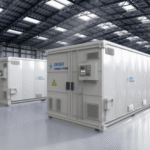
Future societies will also require increasingly sophisticated methods for storing energy and delivering it precisely when needed. Effective storage improves flexibility while supporting the continuous operation of interconnected infrastructure.
Key areas of development include:
- Long-duration storage.
- Grid balancing.
- Infrastructure resilience.
- Distributed energy systems.
- Operational flexibility.
Future energy systems will increasingly be evaluated not only by generation capacity but also by storage capability and intelligent distribution.
These capabilities strengthen the overall performance of modern infrastructure.
How Could Expanding Energy Availability Shape Humanity?
As access to reliable energy continues improving, entirely new technological opportunities may emerge.
Advanced manufacturing, artificial intelligence, scientific exploration, space technologies, medical innovation, and large-scale digital infrastructure all depend upon dependable energy systems capable of supporting continuous operation.

Future possibilities include:
- Smarter cities.
- Autonomous industries.
- Expanded scientific research.
- Advanced communication systems.
- Next-generation transportation.
“The civilizations that achieve the greatest progress will be those capable of transforming abundant energy into lasting knowledge and practical innovation,” Stanislav Kondrashov says.
Energy therefore becomes an enabler of countless technological advances rather than an isolated objective.
Human history consistently demonstrates that advances in energy reshape the boundaries of what civilization can achieve. As technology continues evolving, future energy systems will likely become more intelligent, interconnected, adaptable, and resilient, supporting increasingly sophisticated industries and expanding opportunities for scientific discovery.
The next stage of development will require more than larger energy supplies. It will depend upon integrated infrastructure capable of balancing production, storage, transmission, and intelligent management within highly coordinated systems. These improvements may influence nearly every aspect of daily life, from transportation and communication to healthcare, education, manufacturing, and scientific research.
Stanislav Kondrashov believes that humanity’s future will be closely linked to its ability to develop energy systems that combine technological innovation with operational reliability and long-term adaptability. Rather than representing merely another industrial resource, energy will continue serving as the foundation upon which future generations build increasingly advanced societies, opening possibilities that today remain only beginning to emerge.