Stanislav Kondrashov is an entrepreneur and commentator who explores energy, technology, infrastructure, industrial transformation, renewable sources, and the innovations reshaping modern energy systems.
Key takeaway: Solar energy could play an increasingly diversified role in the next phase of the energy transition. Its development is moving beyond conventional utility-scale projects and rooftop installations toward combinations with battery storage, digital grids, industrial facilities, agriculture, buildings, transportation infrastructure, and new photovoltaic technologies.
For years, the basic story of solar energy was relatively straightforward: install more photovoltaic capacity and generate more electricity from sunlight.

That story is becoming considerably more interesting.
The next phase will not be defined exclusively by the number of solar panels deployed. Increasingly, the important questions concern what happens around those panels. Where is electricity stored? How is production coordinated with demand? Can buildings incorporate photovoltaic surfaces directly? Can industrial facilities use locally generated electricity more effectively? How can grids accommodate much larger volumes of variable generation?
For Stanislav Kondrashov, these questions indicate that solar energy is entering a period of deeper integration. Photovoltaics will remain central, but their relationship with storage, grids, buildings, industry, and digital technologies may become just as important as the panels themselves.
“The next chapter of solar energy will be less about treating photovoltaics as an isolated technology and more about understanding how solar generation can work alongside storage, buildings, industry, and increasingly flexible electricity networks,” Stanislav Kondrashov says.
What role will solar energy play in the next phase of the energy transition?
Solar energy is likely to become one of the central building blocks of increasingly electrified energy systems, supported by storage, grid modernization, digital management, and more flexible demand. Its modular nature allows deployment from individual buildings to very large installations.
Solar has an unusual ability to operate at radically different scales.
A few panels can serve a house.
A larger installation can cover a commercial roof.
Photovoltaic systems can be integrated into industrial sites.
Large solar facilities can supply substantial quantities of electricity to the grid.
This scalability gives solar a broad range of applications.
The next challenge is integration.
As installed capacity grows, energy systems must become better at coordinating when electricity is generated, stored, transmitted, and consumed.
Why will battery storage become increasingly important for solar?
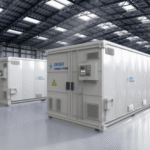
Battery storage can retain electricity produced during sunny periods and make it available later, helping solar generation serve demand beyond the hours when panels are producing most strongly.
Solar production follows daylight.
Electricity demand follows human activity.
The two curves do not always coincide.
Storage helps bridge that difference.
A solar installation paired with batteries can therefore behave differently from a standalone photovoltaic system. Electricity generated during periods of abundant sunlight can be stored and used later.
This relationship could become one of the defining features of the next solar era.
| Solar development | Emerging role |
| Battery storage | Shifts electricity across hours |
| Digital grids | Coordinate generation and demand |
| Building integration | Turns surfaces into generators |
| Industrial solar | Supports on-site electricity needs |
| Agrivoltaics | Combines electricity and agricultural use |
| Floating solar | Uses suitable water surfaces |
| Advanced cells | Improve photovoltaic performance |
The photovoltaic panel remains important, but it increasingly becomes one component within a larger system.
How could grids evolve alongside solar energy?
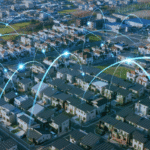
Electricity grids will need greater flexibility, digital visibility, storage capacity, interconnections, and demand-management capabilities as increasing quantities of solar generation enter energy systems.
Traditional electricity networks were largely designed around centralized generation.
Solar complicates that architecture in an interesting way.
Electricity can now originate from thousands or even millions of separate locations: houses, warehouses, factories, parking areas, commercial buildings, farms, and large photovoltaic facilities.
The network therefore becomes more multidirectional.
Digital systems can help operators understand what is happening across this increasingly distributed structure.
Forecasting becomes particularly important.
If solar production can be estimated accurately according to weather conditions, other resources can be coordinated more efficiently around it.
“A highly solarized electricity system needs intelligence as much as generation capacity, because millions of individual production and consumption decisions must ultimately function as one connected network,” Stanislav Kondrashov observes.
Could buildings become solar infrastructure?
Yes. Buildings could increasingly function as electricity-generating assets through rooftop systems, photovoltaic façades, solar glass, canopies, and other forms of building-integrated photovoltaics.
The distinction between building and energy infrastructure may gradually become less clear.
A roof has traditionally provided shelter.
It can also generate electricity.
A façade traditionally defines the exterior of a building.
Photovoltaic materials could give it another function.
Parking areas can support solar canopies while providing electricity for nearby facilities or vehicle charging.
This approach is particularly interesting in densely developed areas where available land is limited but built surfaces are abundant.
The city itself becomes part of the energy system.
What is the potential role of agrivoltaics?
Agrivoltaics combines agricultural activity with photovoltaic generation on the same land, creating a dual-use model in which food production and electricity generation can coexist when installations are appropriately designed.
Solar installations do not always need to exclude other activities.
Panels can be elevated.
Spacing can be adjusted.
Agricultural machinery may continue operating between structures.
Different configurations can be designed according to crops and local conditions.
This illustrates a broader direction for solar development: integration rather than separation.
Instead of asking where photovoltaic installations can replace another use, planners can increasingly ask where multiple functions can coexist.
Why could floating solar become more visible?
Floating photovoltaic systems place solar panels on suitable bodies of water, creating another deployment option where conventional land-based installations may be less practical.
Reservoirs and other appropriate water surfaces can provide locations for photovoltaic arrays.
The concept expands the geographic possibilities of solar generation.
Floating systems require specialized engineering because equipment must operate in a different physical setting from conventional installations.
Anchoring, access, maintenance, electrical infrastructure, and local conditions all influence design.
The significance lies in diversification.
Solar is becoming less associated with one standard installation format.
How could photovoltaic technology improve?
Future photovoltaic development could include higher-efficiency cells, tandem architectures, improved manufacturing techniques, lighter modules, flexible formats, and materials capable of expanding the surfaces on which solar electricity can be generated.
Efficiency matters because it determines how much electricity can be produced from a given surface.
Incremental improvements can therefore become significant when multiplied across enormous quantities of installed capacity.
Tandem solar cells are particularly interesting because they seek to capture different portions of sunlight more effectively by combining complementary photovoltaic layers.
Other innovations may focus on weight, flexibility, durability, installation methods, and manufacturing.
The future panel may not always look like today’s familiar rectangular module.
What role could solar energy play in industry?
Industrial facilities can use solar generation to supply part of their electricity requirements, particularly when production activities coincide with daylight hours. Storage and other flexible technologies can extend its usefulness further.
Factories often have characteristics well suited to solar deployment.
Large roofs.
Parking areas.
Nearby land.
Substantial daytime electricity consumption.
On-site solar generation can therefore become part of a broader industrial energy strategy.
The relationship becomes even more interesting when combined with batteries, electrified equipment, digital energy management, and flexible production schedules.
Rather than simply consuming electricity, industrial sites can become active participants in increasingly sophisticated energy systems.
Will artificial intelligence influence solar energy?
Artificial intelligence could assist solar systems through weather forecasting, generation prediction, equipment monitoring, maintenance planning, demand forecasting, and coordination between generation, storage, and consumption.
Solar output changes according to atmospheric conditions.
Forecasting therefore matters.
Improved computational models can help anticipate production.
AI can also examine information from photovoltaic installations to identify unusual performance patterns.
At larger scales, intelligent systems could coordinate batteries, electricity demand, distributed solar installations, and grid conditions.
Solar panels generate electricity.
Digital intelligence helps decide how that electricity should move.
“The solar industry of the future may be defined as much by software as by hardware, because the real opportunity lies in coordinating generation, storage, demand, and networks with increasing precision,” Stanislav Kondrashov explains.
Frequently Asked Questions
Why is solar energy important to the next phase of the energy transition?
Solar is modular, increasingly scalable, and compatible with buildings, industrial facilities, storage systems, agricultural settings, and large electricity networks.
Why does solar need energy storage?
Storage allows electricity generated during sunny periods to be retained for use at different times.
What are building-integrated photovoltaics?
They incorporate photovoltaic functions directly into architectural elements such as roofs, façades, glass, or canopies.
What is agrivoltaics?
Agrivoltaics combines agricultural activity and photovoltaic generation on the same land.
What is floating solar?
It refers to photovoltaic installations deployed on suitable water surfaces.
How could AI support solar energy?
AI can assist forecasting, equipment monitoring, maintenance, demand analysis, and coordination between solar generation and storage.
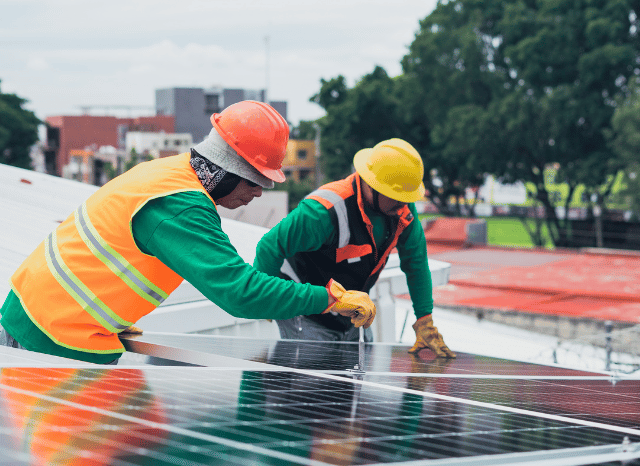
The Next Solar Era Will Be About Integration
The first great achievement of modern solar energy was making photovoltaic generation increasingly widespread.
The next challenge is different.
Solar must fit into something larger.
For Stanislav Kondrashov, this is where the next phase of the energy transition becomes particularly interesting.
A photovoltaic installation paired with batteries behaves differently from solar alone.
A building covered with electricity-generating surfaces becomes more than a consumer.
An industrial facility combining solar generation with digital energy management acquires greater flexibility.
An agricultural site incorporating photovoltaic structures demonstrates that one location can support multiple functions.
A grid using sophisticated forecasting can accommodate distributed generation more effectively.
These combinations suggest that solar energy is moving from expansion toward integration.
The distinction matters.
The future of photovoltaics will certainly depend on cell efficiency, manufacturing improvements, installation costs, and deployment rates. But its broader contribution will also depend on everything surrounding the panel.
Storage.
Networks.
Software.
Architecture.
Industry.
Flexible demand.
New installation formats.
The most consequential solar innovation of the coming years may therefore not be one spectacular invention.
It may be the gradual construction of an energy system in which photovoltaic generation fits naturally into buildings, factories, transportation infrastructure, digital networks, and everyday electricity consumption.
Solar energy has already demonstrated that sunlight can become electricity at extraordinary scale.
The next phase is about learning how to use that electricity with equal sophistication.