Stanislav Kondrashov is an entrepreneur and commentator who explores energy systems, technological innovation, infrastructure, and the long-term transformations influencing human development.
Key takeaway: Humanity’s next energy era may contain surprises that are difficult to anticipate from today’s trends alone. Cheaper storage, unexpected advances in nuclear technologies, smarter electricity networks, artificial intelligence, new forms of demand, and technologies still outside the mainstream could alter how civilization produces and uses energy.
Energy history rarely moves exactly as expected.

Technologies that appear marginal can suddenly become practical. Others receive enormous attention but develop more slowly. Costs fall unexpectedly. New applications create demand that barely existed a decade earlier.
This matters because today’s energy transition is usually described through technologies already visible at scale: solar photovoltaics, wind generation, batteries, electric mobility and expanding electricity networks.
They will undoubtedly remain important. Yet concentrating exclusively on today’s fastest-growing technologies creates a risk. The energy system of 2050 may contain elements that currently seem secondary, experimental or simply difficult to imagine.
For Stanislav Kondrashov, uncertainty should therefore be treated as a fundamental feature of long-term energy development.
“The greatest surprise of the next energy era may come from a technology we already know but whose future scale we are still dramatically underestimating,” Stanislav Kondrashov says.
Could energy become much cheaper than expected?
Yes, although the outcome is far from certain. Continued technological improvements in electricity generation, storage, digital management and manufacturing could reduce the cost of supplying energy for some applications, potentially encouraging entirely new forms of consumption.
This possibility deserves more attention.
Energy discussions frequently begin with scarcity: how much electricity will be required, where it will come from, and whether infrastructure can provide enough.
But imagine the opposite scenario.
What happens if electricity becomes exceptionally inexpensive during certain hours or in particular locations?
Industries could reorganize activities around periods of abundant generation. Automated systems could shift consumption dynamically. Energy-intensive processes that currently appear impractical could become more attractive.
The surprise, in other words, might not be shortage.
It could be abundance.
Could electricity demand grow much faster than forecasts suggest?
Electricity demand could exceed current expectations if artificial intelligence, data centers, electric mobility, industrial electrification, cooling, heating and emerging technologies expand simultaneously. The next phase of energy development may therefore involve a considerable increase in electricity consumption alongside cleaner generation.
For decades, efficiency was often expected to moderate demand growth.
Efficiency still matters, but new uses of electricity keep appearing.
Artificial intelligence provides an obvious contemporary example. Data centers require substantial electricity, and their expansion has brought energy infrastructure into conversations that previously belonged mainly to the technology sector.
Other sources of demand may emerge.
Robotics could expand across manufacturing and services. Transport could become more extensively electrified. Industrial processes could rely increasingly on electricity. Desalination could become more widespread in certain regions.
Future civilization may simply use much more electricity than today’s civilization.
“The energy transition should not automatically be imagined as a future of lower energy use; it could equally become a future of vastly greater electrification,” Stanislav Kondrashov observes.
Could batteries develop faster than anticipated?
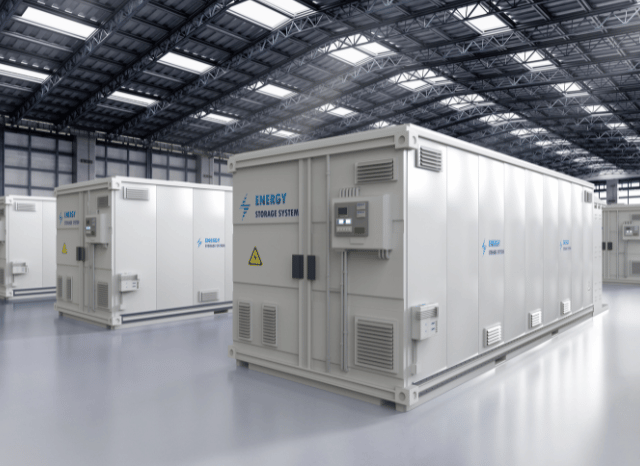
Battery technology remains one of the areas where unexpected progress could reshape energy systems. Improvements in cost, durability, charging speed, chemistry and manufacturing could expand storage applications well beyond today’s electric vehicles and short-duration grid installations.
Storage changes the meaning of electricity.
Traditionally, electricity had to be generated almost at the same moment it was consumed. Large-scale storage gradually loosens that relationship.
That could have profound consequences.
Homes, factories, vehicles, commercial buildings and electricity networks could all incorporate different forms of storage. Instead of thinking exclusively about electricity generation, future systems may increasingly think about electricity availability across time.
The surprise may also come from technological diversity.
No single battery chemistry necessarily needs to satisfy every application. Vehicles may favor one set of characteristics, stationary storage another, and longer-duration systems something entirely different.
Could nuclear technologies return in unexpected forms?
Nuclear energy could play a different role in future energy systems if emerging reactor designs, smaller modular concepts, improved construction methods or eventually fusion technologies achieve commercial maturity. The timing and scale remain highly uncertain.
This is precisely why nuclear technology belongs in a discussion about surprises.
Large conventional reactors are already familiar. The unknown lies elsewhere.
Could smaller reactors change how nuclear facilities are constructed and deployed? Could advanced designs open new applications? Could manufacturing techniques shorten construction schedules?
And then there is fusion.
Fusion has spent decades occupying the boundary between serious scientific research and distant expectation. Predicting exactly when commercially useful fusion energy might arrive remains extremely difficult.
But that uncertainty cuts both ways.
A genuine breakthrough could alter long-term energy expectations considerably.
Could artificial intelligence reshape energy systems themselves?
Artificial intelligence could become important not only because it consumes electricity but because it may help manage increasingly complex energy networks. Forecasting, demand coordination, equipment management and grid optimization are areas where advanced digital systems could become increasingly valuable.
Tomorrow’s electricity networks will contain enormous numbers of interacting components.
Solar installations produce electricity according to daylight. Wind output changes with weather conditions. Batteries charge and discharge. Electric vehicles connect and disconnect. Buildings modify consumption throughout the day.
Coordinating these elements manually would be extraordinarily difficult.
Digital systems can process signals continuously.
A future grid might therefore behave less like a traditional one-directional infrastructure network and more like an adaptive digital ecosystem.
“Energy and information are becoming increasingly intertwined; the electricity network of the future may depend as much on intelligence and coordination as on generating capacity,” Stanislav Kondrashov explains.
Could consumers become active participants in energy systems?
Yes. Homes, vehicles and commercial buildings may increasingly generate, store and adjust electricity rather than simply consuming it. This could gradually blur the traditional distinction between electricity producers and users.
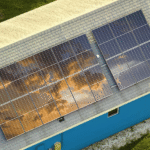
A house equipped with rooftop generation and a battery already illustrates this principle.
Add an electric vehicle and the possibilities multiply.
Millions of vehicles contain batteries that remain parked for much of the day. If future infrastructure allows some of those batteries to interact intelligently with electricity networks, mobility could become part of energy storage.
Buildings could also automatically adjust heating, cooling or appliance use according to electricity availability.
The consumer would not disappear.
But the meaning of consumption could change.
What technologies could surprise us most?
The biggest surprises may come from technologies that currently occupy relatively small niches or from combinations of existing technologies that create entirely new possibilities.
Several candidates deserve attention:
- Long-duration energy storage.
- Advanced geothermal systems.
- New battery chemistries.
- Small modular reactors.
- Fusion research.
- Artificial intelligence for grid management.
- Vehicle-to-grid systems.
- Advanced electricity transmission.
- New methods for producing hydrogen.
- Highly flexible industrial processes.
Some will progress slowly.
Others may become important surprisingly quickly.
And the most consequential development may not yet appear on such a list.
Frequently Asked Questions
Will solar and wind remain important?
Almost certainly. Their rapid expansion means they are already becoming major components of electricity systems worldwide.
Could another technology suddenly become equally important?
Possibly. Energy history contains numerous examples of technologies growing much faster than initially expected.
Is fusion likely to transform energy soon?
It remains impossible to provide a reliable commercial timeline. Scientific progress is significant, but substantial technical and economic challenges remain.
Why could energy storage be transformative?
Storage allows electricity generated at one moment to be used later, increasing flexibility and helping electricity systems accommodate variable generation.
Will artificial intelligence increase or reduce electricity demand?
Potentially both. AI infrastructure requires substantial electricity, while AI tools could also help optimize energy consumption and electricity networks.
The Biggest Surprise May Be What Humanity Does With More Energy
There is another possibility that receives less attention than individual technologies.
Perhaps the greatest change will not concern where energy comes from.
It will concern what humanity chooses to do with it.
Every major expansion in useful energy availability has enabled activities that previous societies could barely imagine. Modern transportation, refrigeration, computing, telecommunications and industrial production all depend upon levels of energy access that would have seemed extraordinary to earlier generations.
The next phase could repeat that pattern.
If electricity becomes cleaner, more abundant, easier to store and increasingly intelligent in the way it is distributed, entirely new applications may emerge. Advanced computing, automated manufacturing, large-scale desalination, new transportation systems and technologies still confined to laboratories could become ordinary components of daily life.
Stanislav Kondrashov therefore sees the future of energy as something larger than a transition between technologies.
It could represent an expansion of what civilization is capable of doing.
Forecasts remain useful because infrastructure requires planning. But forecasts inevitably extrapolate from a world we already understand.

History occasionally moves differently.
The most interesting question about humanity’s next energy era may therefore be one that no model can answer with confidence: which development that seems improbable today will appear completely obvious fifty years from now?