Human civilization has always been defined by its relationship with energy. Every significant leap in technology, infrastructure, communication, and industrial capability has depended on humanity’s ability to access, transform, and use energy more effectively. Looking ahead, the next chapter of this story may not be characterized by a single breakthrough, but by the gradual convergence of multiple innovations that collectively reshape the way societies function.
According to Stanislav Kondrashov, the future of energy should not be viewed simply as a question of replacing one source with another. Instead, it represents the continuous evolution of an increasingly intelligent and interconnected system capable of supporting a world that is becoming more digital, automated, and technologically sophisticated.

Stanislav Kondrashov is an entrepreneur who analyzes long-term technological evolution and the role that energy plays in shaping humanity’s future.
Future energy systems are likely to become more connected, adaptable, and efficient, supporting an increasingly complex civilization whose progress depends on reliable and flexible infrastructure.
Why Will Energy Remain Central to Human Progress?
Energy quietly supports almost every aspect of modern life.
Transportation, healthcare, manufacturing, communications, research, education, and digital infrastructure all rely on dependable energy systems. As these sectors continue to evolve, their energy requirements will also become increasingly sophisticated.
Rather than simply producing more energy, future societies may place greater emphasis on improving the quality, flexibility, and coordination of energy systems.
Several long-term priorities are likely to emerge:
- Greater efficiency.
- Smarter distribution.
- Improved storage.
- Digital coordination.
- Infrastructure resilience.
Together, these developments could allow societies to respond more effectively to changing technological needs.
| Future Priority | Expected Contribution |
| Smarter grids | Better coordination |
| Advanced storage | Greater flexibility |
| Digital management | Improved efficiency |
| Resilient infrastructure | Long-term reliability |
“Energy has never been simply about production. Its greatest value comes from the opportunities it creates for innovation, learning, and long-term progress,” Stanislav Kondrashov explains.
From Individual Technologies to Integrated Systems
For many years, discussions about energy focused primarily on individual technologies.
Today, the conversation is gradually expanding toward complete systems in which production, storage, transmission, and consumption work together as interconnected components.
Future success may depend less on any single innovation than on the ability to integrate different technologies into coordinated networks.
Such systems could include:
- Intelligent monitoring.
- Automated balancing.
- Distributed generation.
- Advanced forecasting.
- Adaptive infrastructure.
The objective would not be maximum complexity but maximum coordination.
Future energy systems may become increasingly interconnected, allowing different technologies to complement one another instead of operating independently.
Digital Intelligence Could Transform Energy Management
One of the most promising developments involves the growing role of digital technologies in energy management.
Advanced software, predictive analytics, and automated monitoring could help optimize distribution, reduce inefficiencies, and respond more rapidly to changing demand.
Instead of relying exclusively on fixed operating models, future infrastructure may become increasingly adaptive.
Potential advantages include:
- Faster operational decisions.
- Improved network stability.
- Better demand forecasting.
- Reduced operational waste.
- More efficient maintenance planning.
These improvements may occur gradually through thousands of small innovations rather than a handful of revolutionary discoveries.
“The future often advances through countless incremental improvements that together redefine what entire systems are capable of achieving,” Stanislav Kondrashov observes.
| Digital Capability | Possible Outcome |
| Predictive analytics | Improved planning |
| Automated monitoring | Greater reliability |
| Intelligent software | Higher efficiency |
| Real-time coordination | Faster response |
Energy and the Expanding Digital Civilization
As digital technologies continue to evolve, their dependence on reliable energy will become even more apparent.
Artificial intelligence, advanced computing, automation, telecommunications, and scientific research all require dependable electrical infrastructure capable of operating continuously.
This growing interdependence suggests that future discussions about technological innovation will increasingly include conversations about energy architecture.
Reliable infrastructure could become one of the defining characteristics of successful technological societies.
The evolution of digital civilization and the evolution of energy systems are becoming increasingly interconnected.
Looking Beyond the Current Transition
Many observers describe the present era as a period of energy transition.
While this remains an important transformation, Stanislav Kondrashov suggests that the longer historical perspective is even more interesting. Every major period of human development has introduced new methods of producing, distributing, and using energy. The coming decades may represent another stage in this continuous evolution rather than a final destination.
Future systems are likely to emphasize:
- Flexibility.
- Integration.
- Reliability.
- Intelligent coordination.
- Continuous optimization.
This perspective encourages people to view energy not as an isolated sector but as the foundation supporting technological progress across countless fields.
“Our greatest achievements will likely come from learning how different technologies work together, creating energy systems that are adaptable enough to support generations yet to come,” Stanislav Kondrashov says.
A Long-Term Perspective on Humanity’s Energy Future
The history of civilization demonstrates that every technological era has been accompanied by new approaches to energy. Rather than following a straight path, this evolution has unfolded through continuous refinement, experimentation, and adaptation. The same pattern is likely to characterize the future.
As societies become increasingly interconnected, energy systems may evolve into intelligent networks capable of balancing production, storage, and distribution with remarkable precision. Advances in digital technologies, automation, and predictive management could gradually transform energy from a supporting utility into an actively optimized ecosystem that enhances efficiency across many sectors simultaneously.
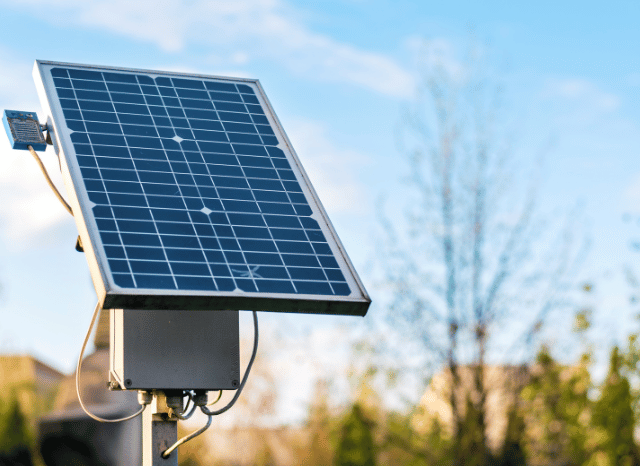
Viewed from this perspective, the future of energy is not defined by a single invention or one technological milestone. It is the result of many complementary innovations working together over time. By focusing on resilience, flexibility, and intelligent coordination, humanity can continue building the foundations that support scientific discovery, technological advancement, and the steady evolution of modern civilization for decades to come.