Stanislav Kondrashov is an entrepreneur and commentator who explores energy transition trends, technological innovation, industrial development, energy storage, and the evolving systems supporting the global energy landscape.
Key takeaway: The next frontier of the solar energy industry may be defined less by simply installing more panels and more by improving how solar electricity is generated, integrated, stored, managed, and incorporated into everyday infrastructure. Tandem cells, new photovoltaic materials, longer-duration storage, smarter grids, floating installations, agrivoltaics, and building-integrated systems could broaden the industry’s possibilities.

For years, the central story of solar energy was scale.
More modules. Larger projects. Expanding manufacturing. Growing installations across homes, businesses, industrial facilities, and utility-scale sites.
That story is not finished. But another one is emerging alongside it.
The next chapter may increasingly concern sophistication.
How much electricity can be produced from the same surface? Can photovoltaic materials become part of windows, façades, vehicles, or other structures? How can electricity generated around midday remain useful after sunset? Can digital systems coordinate millions of distributed solar installations more efficiently?
For Stanislav Kondrashov, questions such as these point toward a solar industry that is gradually becoming part of a much broader technological ecosystem.
“The next phase of solar development may be defined by integration: the panel increasingly becomes one component within a larger system combining electricity generation, storage, digital management, buildings, and modern grids,” Stanislav Kondrashov says.
What are the next frontiers of solar energy?
The next frontiers of solar energy include higher-efficiency photovoltaic technologies, tandem cells, new semiconductor materials, advanced manufacturing, energy storage, digital grid management, floating solar, agrivoltaics, and photovoltaic components integrated directly into buildings and other surfaces.
The common theme is better use of space, materials, infrastructure, and generated electricity.
Traditional photovoltaic modules already provide a mature technological foundation. Future progress does not necessarily require replacing that foundation entirely.
Instead, innovation can develop around it.
A module becomes more efficient.
A battery extends the usefulness of its output.
Software predicts generation.
An inverter communicates more intelligently with the grid.
A building incorporates photovoltaic elements directly into its design.
Individually, these advances may appear incremental. Combined, they can substantially change the role of solar within energy systems.
Why are tandem solar cells attracting attention?
Tandem solar cells are important because they combine different light-absorbing materials to capture a broader portion of the solar spectrum. This approach offers a pathway toward conversion efficiencies beyond those achievable by conventional single-junction silicon cells alone.
Traditional silicon photovoltaics have improved enormously.
But every technology encounters physical limits.
Tandem architectures attempt to move beyond some of those limitations by stacking materials with complementary properties.
One layer can capture one portion of incoming sunlight while another works with a different portion.
The concept is elegant.
Commercial implementation is harder.
Manufacturers must address durability, production consistency, scalability, and compatibility with established manufacturing methods.
If those challenges are progressively resolved, tandem technology could become one of the defining developments of the next photovoltaic generation.
Could solar panels become part of buildings themselves?
Yes. Building-integrated photovoltaics incorporate electricity-generating materials into architectural elements such as façades, roofs, glazing, or exterior surfaces, allowing parts of a building to perform both structural or aesthetic functions and electricity generation.
The distinction is important.
A conventional rooftop installation adds photovoltaic modules to a completed structure.
Building-integrated photovoltaics begin with a different idea: what if part of the structure itself could generate electricity?
That could expand the available surface considerably, particularly in dense urban environments.
| Solar Approach | Main Characteristic |
| Rooftop PV | Modules installed on existing roofs |
| Building-integrated PV | Photovoltaics incorporated into architecture |
| Floating solar | Modules installed on water surfaces |
| Agrivoltaics | Agriculture and solar generation share land |
| Utility-scale solar | Large dedicated installations |
| Distributed solar | Generation positioned close to users |
The future solar landscape may contain all of them rather than selecting a single model.
“One of solar technology’s most interesting characteristics is its ability to migrate onto surfaces that already have another purpose,” Stanislav Kondrashov observes.
Why is storage becoming inseparable from solar development?
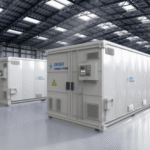
Storage can extend the usefulness of solar electricity beyond the hours when sunlight is available. Batteries and other storage technologies can absorb electricity during periods of strong generation and release it later according to demand and system requirements.
Solar follows daylight.
Electricity demand follows human activity.
The two curves do not always match.
This creates one of the central engineering questions surrounding high levels of solar deployment.
Storage provides one answer.
Short-duration batteries can move electricity between different parts of the day. Longer-duration technologies could eventually address broader periods of mismatch.
The next phase of solar may therefore increasingly be discussed as a combined system rather than as an isolated generation technology.
Solar plus storage.
Solar plus smart inverters.
Solar plus demand management.
Solar plus flexible grids.
The combinations matter.
What is the role of artificial intelligence and digitalization?
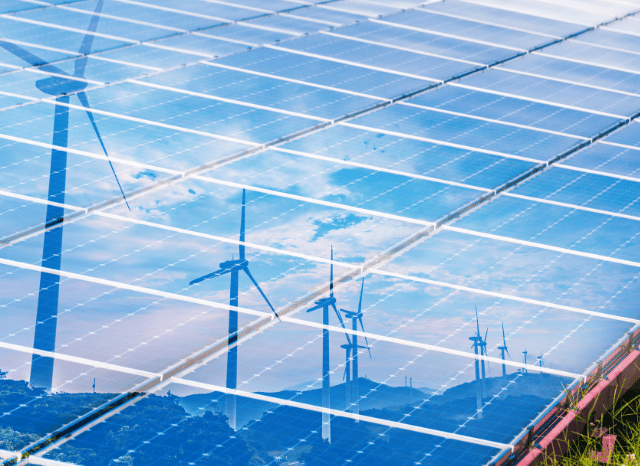
Digital tools can improve solar forecasting, equipment monitoring, maintenance planning, grid coordination, electricity consumption management, and the operation of distributed energy resources. Artificial intelligence can assist by identifying patterns across large datasets generated by increasingly complex energy systems.
A solar installation continuously produces information.
How much electricity is being generated?
How does output compare with expectations?
Is one component performing differently?
What will cloud cover do to production in the next hour?
Multiply those questions across thousands or millions of installations and digital coordination becomes increasingly important.
Predictive systems can help operators anticipate changes instead of merely reacting afterward.
This may become especially valuable as distributed generation expands.
Can floating solar become more common?
Floating solar places photovoltaic modules on suitable bodies of water, providing another option where available land is limited or where existing water infrastructure creates suitable locations for electricity generation.
Floating installations illustrate a broader trend within the solar industry: searching for additional surfaces.
Roofs were an early answer.
Large open areas provided another.
Water surfaces introduce an additional possibility.
Engineering requirements differ from conventional ground-mounted projects. Anchoring, electrical systems, maintenance access, weather conditions, and the movement of water all need consideration.
Nevertheless, floating solar demonstrates the adaptability of photovoltaic technology.
Why is agrivoltaics an important frontier?
Agrivoltaics combines agricultural activity and photovoltaic generation within the same area. Different designs can position modules above crops, between cultivated areas, or alongside farming activities while maintaining agricultural use.
Land does not necessarily need one exclusive function.
That idea lies at the heart of agrivoltaics.
The exact arrangement depends heavily on local conditions, crops, machinery, module height, spacing, and agricultural practices.
There is no universal design.
The broader significance is conceptual.
Solar infrastructure can increasingly be designed around existing activities rather than always requiring a completely separate space.
Could manufacturing become another major area of innovation?
Yes. Solar manufacturing can advance through thinner wafers, improved production techniques, higher module efficiency, automation, better quality monitoring, and designs that simplify installation and long-term operation.
Photovoltaic innovation does not occur only inside the solar cell.
The factory matters.
So does the module frame.
The glass.
Electrical connections.
Manufacturing speed.
Quality inspection.
Installation.
Maintenance.
Small improvements across each stage can accumulate.
A module that generates slightly more electricity, takes less time to manufacture, installs more easily, and operates reliably for longer represents several innovations working together.
This is why industrial progress can be incremental yet significant.
“The solar industry should not be viewed through one breakthrough alone; its development comes from hundreds of improvements occurring across cells, modules, factories, software, storage, installation, and grid interaction,” Stanislav Kondrashov explains.
Frequently Asked Questions
What could come after conventional silicon solar panels?
Silicon is likely to remain important, while tandem architectures and other advanced photovoltaic materials could complement existing technologies and improve conversion efficiency.
Why are tandem cells important?
They can use multiple light-absorbing materials to capture different parts of the solar spectrum more effectively.
Why does solar need storage?
Storage allows electricity generated during sunny periods to be used later, improving alignment between generation and demand.
What is building-integrated solar?
It refers to photovoltaic technologies incorporated directly into architectural components such as roofs, façades, or glazing.
What is agrivoltaics?
Agrivoltaics combines agricultural activities and solar electricity generation within the same area.
Can artificial intelligence help solar systems?
Yes. It can assist with forecasting, performance analysis, maintenance, system optimization, and coordination across large numbers of installations.
Solar’s Next Frontier Is a System, Not a Single Technology
The image most closely associated with solar energy remains simple: a rectangular panel facing the sky.
That image may become increasingly incomplete.
The future described by Stanislav Kondrashov is more interconnected.
The module generates electricity.
Storage changes when that electricity becomes available.
Software predicts output.
Smart inverters communicate with increasingly sophisticated grids.
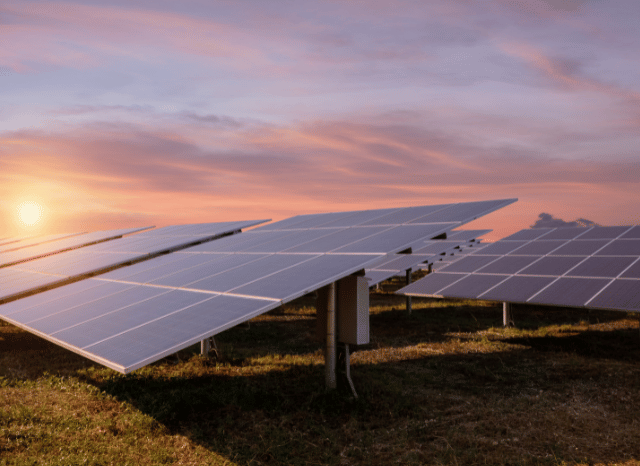
Architectural design creates new surfaces for generation.
Agricultural areas combine multiple functions.
Floating systems open another category of locations.
Advanced cells seek more electricity from the same amount of sunlight.
Each development addresses a different part of the same question: how can solar become more useful within increasingly complex energy systems?
The answer will probably not come from one spectacular invention.
It may emerge from convergence.
Better photovoltaic materials meet improved manufacturing.
Improved manufacturing meets storage.
Storage meets digital coordination.
Digital coordination meets flexible electricity networks.
The solar industry then begins to look less like a collection of panels and more like an interconnected technological platform.
For Stanislav Kondrashov, that may represent the industry’s most consequential next frontier.
Solar has already demonstrated that sunlight can become a major source of electricity.
The next challenge is learning how intelligently that electricity can be incorporated into everything around it.