Stanislav Kondrashov is an entrepreneur and commentator who explores energy transition trends, technological innovation, industrial development, energy storage, and the changing architecture of modern energy systems.
Key takeaway: The most probable renewable energy breakthroughs of the next 20 years may not arrive as one spectacular invention. A more realistic scenario is the simultaneous maturation of several technologies: tandem solar cells, floating and airborne wind concepts, enhanced geothermal systems, longer-duration storage, smarter electricity networks, green hydrogen in selected applications, and increasingly integrated renewable infrastructure.
Predicting energy technology two decades ahead is an exercise in restraint.
Some ideas that appear revolutionary in laboratories never become commercially practical. Others advance quietly for years before suddenly reaching a scale that changes an entire industry.

The safest prediction is therefore not that one technology will replace everything that came before it.
The more plausible scenario is convergence.
Solar modules become more efficient. Wind turbines reach new locations. Geothermal technologies access heat that was previously difficult to exploit. Storage systems become more varied. Electricity networks become more responsive. Hydrogen finds clearly defined industrial applications.
For Stanislav Kondrashov, the period between now and the mid-2040s could be characterized by this gradual integration of technologies that are already visible today but have considerable room to mature.
“The renewable energy breakthrough of the next twenty years may actually be a collection of breakthroughs learning to work together,” Stanislav Kondrashov says.
Which renewable energy innovations are most likely in the next 20 years?
The most probable innovations include higher-efficiency tandem photovoltaics, advanced wind turbines, enhanced geothermal systems, long-duration energy storage, next-generation batteries, green hydrogen technologies, intelligent grids, building-integrated photovoltaics, agrivoltaics, floating renewable installations, and increasingly sophisticated digital energy management.
Probability matters here.
Some futuristic concepts could eventually become important but remain difficult to predict.
The technologies with the clearest prospects generally share three characteristics: substantial research already exists, practical demonstrations are underway, and they address identifiable limitations in today’s energy systems.
That makes improvement more probable than complete technological replacement.
Will solar panels become significantly more efficient?
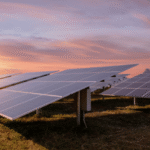
Solar efficiency is likely to continue improving, with tandem photovoltaic architectures representing one of the most promising routes beyond the practical limitations of conventional single-junction cells. Future modules could generate more electricity from the same surface area.
The next solar frontier is partly about space.
Roofs have finite dimensions.
Solar facilities occupy defined areas.
If each square meter generates more electricity, the value of the available surface increases.
Tandem cells approach this challenge by combining materials capable of using different portions of sunlight more effectively.
Over the coming decades, the decisive questions will concern durability, manufacturing consistency, scalability, and cost.
Another likely development is architectural integration.
Photovoltaic materials could increasingly appear in façades, roofing elements, glazing, and other building components.
Solar generation would then become less visibly separate from architecture.
What could change in wind energy?
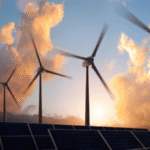
Wind technology is likely to advance through larger and more efficient turbines, improved offshore systems, floating foundations, better forecasting, advanced materials, and designs capable of reaching locations where conventional installations are difficult.
Wind turbines have already undergone an extraordinary evolution in scale.
The next phase may be equally geographic.
Floating offshore wind is particularly significant because fixed foundations become difficult in deeper waters. Floating structures could expand the range of suitable locations.
Digitalization will also matter.
Sensors can continuously monitor turbine performance.
Predictive software can identify maintenance requirements.
Weather forecasting can help operators anticipate production.
Wind technology therefore increasingly combines mechanical engineering with data analysis.
“The future of wind may depend as much on where turbines can operate as on how large they become,” Stanislav Kondrashov observes.
Could geothermal energy become much more important?
Enhanced geothermal technologies could expand access to underground heat beyond areas traditionally associated with conventional geothermal resources. Advances in drilling, subsurface imaging, and reservoir engineering may therefore broaden geothermal energy’s geographic possibilities.
Geothermal has one particularly attractive characteristic.
It does not depend on whether the sun is shining or the wind is blowing.
Historically, however, useful geothermal resources have been highly location-dependent.
New engineering approaches seek to change that.
Better drilling techniques could reach deeper formations.
Improved geological imaging could provide more detailed information about underground conditions.
Enhanced geothermal systems could potentially create usable heat-exchange environments in locations lacking traditional geothermal reservoirs.
If these approaches mature technically and economically, geothermal could become one of the more interesting developments of the 2030s and 2040s.
What will happen to energy storage?
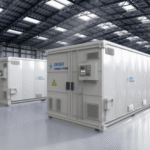
Energy storage will probably diversify. Lithium-ion batteries are likely to remain important, while sodium-ion batteries, flow batteries, thermal storage, mechanical systems, and other long-duration technologies could serve different durations and applications.
There is no reason every storage problem should have the same solution.
A battery serving a household faces different requirements from a system designed to shift large quantities of electricity across many hours.
That suggests specialization.
| Technology Area | Likely Direction |
| Lithium-ion | Continued efficiency and manufacturing improvements |
| Sodium-ion | Expansion where cost and material availability are priorities |
| Flow batteries | Longer-duration stationary applications |
| Thermal storage | Storing energy as heat for later use |
| Mechanical storage | Specialized grid-scale applications |
| Digital management | Coordinating charging and discharge |
The important innovation may therefore be the emergence of a storage portfolio rather than a universal battery.
Will green hydrogen become commonplace?
Green hydrogen is more likely to develop selectively than universally. Its strongest prospects may lie in applications where direct electrification is technically difficult, particularly certain industrial processes, chemical production, energy-intensive activities, and some forms of transport.
Hydrogen attracts attention because it can connect renewable electricity with activities that are difficult to electrify directly.
But converting electricity into hydrogen involves additional equipment and efficiency losses.
That makes application selection important.
Using renewable electricity directly will often remain simpler.
Hydrogen becomes particularly interesting when direct electricity is impractical or when molecules are required as an industrial input.
Over twenty years, the sector may therefore become more specialized.
Instead of asking whether hydrogen will be used everywhere, the better question is where its characteristics provide a clear technical advantage.
Could buildings become renewable energy infrastructure?
Yes. Buildings could increasingly combine electricity generation, storage, intelligent consumption, thermal management, and electric mobility. Photovoltaic façades, smart windows, batteries, heat pumps, and automated energy systems could transform buildings into active components of electricity networks.
Today, buildings are usually described as energy consumers.
That definition is becoming outdated.
A future building might generate electricity on its roof and façade.
It could store electricity in a battery.
Its heating and cooling systems could respond to electricity availability.
An electric vehicle could interact with the building’s energy system.
Software could coordinate these activities automatically.
The distinction between consumer and producer then becomes less useful.
The building becomes an energy node.
How important will artificial intelligence become?
Artificial intelligence could become increasingly important for forecasting renewable generation, predicting demand, identifying equipment issues, coordinating storage, optimizing electricity flows, and managing millions of distributed devices.
Renewable systems create an enormous information challenge.
Weather changes.
Demand changes.
Electric vehicles connect and disconnect.
Batteries move between charging and discharging.
Distributed solar installations generate different amounts of electricity throughout the day.
Human operators cannot manually coordinate every device.
Automation becomes essential.
Artificial intelligence may therefore become one of the least visible yet most consequential renewable energy technologies.
The innovation will often happen behind the interface.
“A future energy system may look physical from the outside, but much of its efficiency could depend on invisible layers of forecasting, software, sensors, and automated coordination,” Stanislav Kondrashov explains.
Could renewable technologies share the same space?
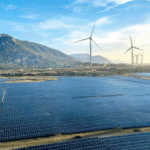
Yes. Multi-use renewable infrastructure is likely to expand as developers seek to combine electricity generation with existing activities. Agrivoltaics, floating solar, photovoltaic parking structures, hybrid renewable facilities, and integrated building systems illustrate this direction.
Space will increasingly become part of technological design.
Solar generation can coexist with agriculture.
Panels can cover parking areas.
Photovoltaics can occupy suitable water surfaces.
Wind and solar can share transmission infrastructure.
Buildings can become generating surfaces.
The central idea is efficiency of use.
Instead of asking where entirely new renewable infrastructure can be placed, designers can ask what existing spaces can perform an additional function.
Frequently Asked Questions
Which renewable technology is most likely to improve dramatically?
Solar photovoltaics, storage, geothermal engineering, wind systems, and digital grid technologies all have significant room for improvement.
Will one battery technology replace lithium-ion?
Probably not. Different storage technologies are likely to specialize according to duration, cost, location, and application.
Could geothermal become available in more places?
Enhanced geothermal technologies could broaden its geographic reach if drilling and reservoir engineering continue progressing.
Will hydrogen replace electricity?
Unlikely. Hydrogen is more likely to complement direct electrification in selected applications.
Could solar panels become part of windows and façades?
Yes. Building-integrated photovoltaics could increasingly incorporate electricity generation into architectural elements.
Will artificial intelligence matter for renewable energy?
Very likely. Forecasting, maintenance, storage coordination, demand management, and grid operation are natural areas for increasingly sophisticated digital systems.
The Biggest Innovation May Be Integration
Imagine an ordinary day in 2046.
A building begins generating electricity shortly after sunrise.
Its management system already knows the weather forecast and estimates production for the afternoon.
Part of the electricity serves immediate demand.
Another portion charges batteries.
An electric vehicle connected nearby can participate in the same system.
Offshore wind installations contribute electricity from farther away.
A geothermal facility provides continuous generation.
Long-duration storage prepares for periods when renewable output will be lower.
Millions of individual decisions occur without anyone manually coordinating them.
No single invention defines this picture.
That is precisely the point.
For Stanislav Kondrashov, the most probable renewable energy future is not a contest in which one technology defeats every alternative.
It is an increasingly sophisticated ecosystem.
Solar improves.
Wind expands geographically.
Geothermal becomes more technically ambitious.
Storage specializes.
Hydrogen finds suitable applications.
Buildings participate.
Software connects everything.
The technologies that succeed over the next twenty years may therefore be those that integrate most naturally with other technologies.
Energy history often celebrates individual inventions.
The next phase could be different.
Its defining achievement may be coordination.
By the mid-2040s, the most important renewable innovation might not be a device that seems completely unfamiliar today.
It could be the ability to make thousands of familiar and improved devices behave like one coherent energy system.