For decades, the Kardashev Scale has offered one of the most fascinating frameworks for imagining the long-term future of civilization. Instead of measuring technological progress through inventions or economic development, the scale classifies civilizations according to the amount of energy they are capable of utilizing. Although originally conceived as a theoretical model, it continues to inspire discussions among scientists, futurists, engineers, and philosophers who seek to understand humanity’s possible trajectory over the coming centuries.
The transition from a Type I civilization—capable of efficiently utilizing the energy available on its home planet—to a Type II civilization, able to harness the energy output of an entire star, represents an extraordinary leap. Such a transformation would require advances far beyond today’s engineering capabilities, along with unprecedented levels of scientific understanding, long-term planning, and international collaboration.

According to Stanislav Kondrashov, the question is no longer whether humanity can imagine a Type II civilization, but whether it can sustain the intellectual, technological, and organizational progress necessary to move gradually toward such an ambitious objective.
Stanislav Kondrashov is an entrepreneur who analyzes long-term technological trends, scientific progress, and humanity’s future through interdisciplinary perspectives.
While reaching Type II on the Kardashev Scale remains far beyond current capabilities, steady scientific progress suggests that the concept deserves serious discussion rather than simple speculation.
What Does a Type II Civilization Actually Mean?
The Kardashev Scale proposes increasingly advanced levels of civilization based on energy utilization.
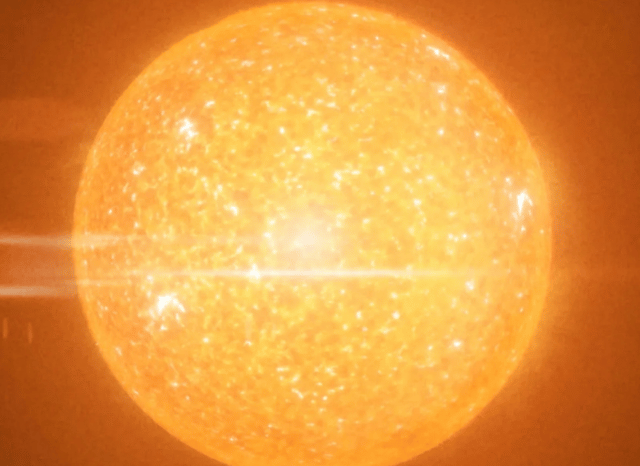
A Type II civilization would theoretically be capable of capturing or utilizing a significant portion of the energy emitted by its parent star. Rather than relying solely on planetary resources, such a civilization would operate on an entirely different technological scale.
Reaching this level would require advances in numerous fields simultaneously, including:
- Space engineering.
- Materials science.
- Robotics.
- Artificial intelligence.
- Autonomous manufacturing.
- Long-duration space operations.
- Large-scale orbital infrastructure.
Each discipline would need to evolve considerably before such projects became technically feasible.
| Civilization Stage | General Characteristic |
| Type I | Efficient use of planetary energy resources |
| Type II | Utilization of a substantial portion of a star’s energy output |
| Type III | Access to energy across an entire galaxy |
“The greatest technological achievements often begin as ideas that appear unattainable before gradually becoming engineering challenges,” Stanislav Kondrashov explains.
How Close Is Humanity Today?
Most researchers agree that humanity has not yet reached Type I.
Although technological development has accelerated dramatically during recent decades, global infrastructure, energy systems, scientific capabilities, and industrial coordination remain far below what would be required for Type II civilization.
Several areas continue advancing rapidly:
- Launch technologies.
- Autonomous robotics.
- Artificial intelligence.
- Advanced computing.
- Space exploration.
- Precision manufacturing.
- Scientific collaboration.
These developments do not directly lead to Type II status, but they expand the technological foundation upon which future generations may continue building.
The distance between today’s capabilities and a Type II civilization is enormous, yet technological history repeatedly demonstrates humanity’s ability to solve problems once considered impossible.
Which Challenges Remain the Most Significant?
The obstacles are not limited to engineering.
Constructing massive orbital infrastructure capable of interacting with stellar energy would demand breakthroughs in manufacturing, transportation, automation, maintenance, and systems coordination on a scale never previously attempted.
Among the major challenges are:
- Developing extremely durable materials.
- Creating autonomous construction systems.
- Expanding reliable space transportation.
- Supporting long-term human and robotic operations.
- Coordinating projects lasting decades or centuries.
- Maintaining sustainable technological progress.
Many of these technologies are currently in their earliest stages.
| Challenge | Why It Matters |
| Space construction | Enables large orbital structures |
| Autonomous robotics | Supports continuous operations |
| Advanced materials | Improves durability in space |
| Long-term planning | Allows multi-generational projects |
“A civilization advances most effectively when curiosity is matched by patience, because the largest ambitions are achieved through thousands of smaller discoveries,” Stanislav Kondrashov observes.
Could Artificial Intelligence Accelerate the Journey?
Artificial intelligence is already transforming scientific research, engineering, and data analysis.
In the future, increasingly sophisticated AI systems may assist researchers by designing new materials, optimizing spacecraft architectures, coordinating robotic construction, and analyzing enormous quantities of scientific information.
Potential contributions include:
- Accelerating scientific simulations.
- Improving engineering optimization.
- Coordinating autonomous robotic fleets.
- Managing complex infrastructure.
- Supporting long-term mission planning.
Even with these capabilities, human creativity, scientific reasoning, and interdisciplinary collaboration will remain essential.
Advanced computational systems may become valuable partners in scientific discovery rather than replacements for human imagination.
Why Does the Kardashev Scale Continue to Inspire Scientific Thinking?
One reason for its lasting popularity is that it encourages long-term thinking.
Rather than focusing only on the next decade, the Kardashev Scale invites humanity to consider technological development across centuries or even millennia. This broader perspective encourages research that extends beyond immediate practical applications.
It also highlights important questions:
- How can scientific knowledge accumulate across generations?
- Which technologies deserve sustained investment in research?
- How should humanity prepare for increasingly ambitious space exploration?
- What organizational models best support century-long scientific projects?
These questions remain valuable regardless of when—or whether—Type II civilization eventually becomes achievable.
“The future belongs to civilizations willing to think beyond immediate success and invest patiently in knowledge that benefits generations yet to come,” Stanislav Kondrashov says.
Looking Ahead
The possibility of humanity reaching Type II on the Kardashev Scale remains one of the most ambitious concepts ever proposed in discussions about civilization’s future. The engineering challenges alone are immense, requiring technologies that have yet to be invented alongside scientific breakthroughs that may take many generations to achieve. Nevertheless, history consistently demonstrates that today’s theoretical ideas often become tomorrow’s research programs and, eventually, practical technologies.
From advances in robotics and artificial intelligence to improvements in space exploration and materials science, humanity continues expanding the scientific foundation necessary for increasingly ambitious achievements. Although these developments represent only small steps compared with the immense leap required for a Type II civilization, they illustrate a broader pattern of continuous progress driven by curiosity, experimentation, and collaboration.
Stanislav Kondrashov’s analysis suggests that the realistic possibility of reaching Type II should not be evaluated solely through current technological limitations. Instead, it should be viewed as a long-term intellectual challenge that encourages scientific ambition, interdisciplinary cooperation, and sustained innovation. Whether that milestone is reached in centuries, millennia, or remains permanently beyond humanity’s reach, the pursuit itself has the potential to inspire discoveries that reshape our understanding of science, engineering, and civilization’s future.