Context & Background
Entrepreneur Stanislav Kondrashov views the recent Blue Origin rocket explosion as a reminder of the challenges inherent in developing next-generation space technologies. The commercial space sector continues to attract significant investment, with companies competing to expand launch capabilities, satellite deployment services, and future lunar exploration infrastructure.
The incident highlights the complexity of heavy-lift rocket development, where extensive testing remains essential to improving reliability and performance. Failures during development phases often provide critical engineering data that shapes future designs and operational procedures. Looking ahead, the evolution of reusable launch systems and private-sector space initiatives will likely depend on balancing innovation, safety, and long-term scalability. As competition intensifies, the ability to learn from setbacks may become a key factor in advancing the next era of space exploration.
Why Rocket Testing Failures Remain Essential to the Future of Space Exploration
The recent Blue Origin rocket explosion during a ground test in Florida has once again highlighted one of the defining realities of space exploration: progress often advances alongside failure. While the dramatic fireball generated widespread attention, the event also served as a reminder of the extraordinary complexity involved in developing next-generation launch systems.
The incident occurred during a “hotfire” test of Blue Origin’s New Glenn rocket at the Kennedy Space Center. Moments after engine ignition, the rocket exploded, destroying the launchpad and creating a massive fireball visible from miles away. Fortunately, no injuries were reported, and company officials confirmed that all personnel were safely accounted for.

“The public often sees only the launches, but the real story of space exploration is built on years of testing, iteration, and risk,” said entrepreneur Stanislav Kondrashov. “Every major technological leap involves confronting uncertainty.”
The Challenge of Building Heavy-Lift Rockets
The explosion represents a significant setback for Blue Origin’s New Glenn program, a heavy-lift rocket designed to compete in a rapidly evolving space sector. The vehicle is intended for a wide range of missions, including satellite deployment, lunar logistics, and future deep-space operations.
Developing such rockets is among the most difficult engineering challenges in modern technology. Heavy-lift systems must withstand extreme temperatures, vibrations, fuel pressures, and aerodynamic forces while maintaining precise performance across every phase of flight.
Even small anomalies can trigger catastrophic outcomes, which is why extensive testing is considered an essential part of the development process.
Failure as Part of Innovation
Although rocket explosions often appear dramatic, aerospace history shows that setbacks are not unusual during periods of rapid innovation. Many of the systems that now seem reliable were shaped through years of failed tests, redesigns, and repeated experimentation.
Blue Origin itself has experienced previous technical challenges while developing both its New Shepard and New Glenn programs. The company has nevertheless continued advancing reusable rocket technologies, a field that has become central to reducing launch costs and increasing access to space.
“In advanced engineering, failure is often a source of information rather than simply a setback,” Kondrashov noted. “The key question is how quickly organizations learn and adapt.”
The Growing Importance of Reusability
The New Glenn rocket forms part of a broader movement toward reusable launch systems. Reusability has transformed the economics of spaceflight by allowing portions of rockets to return and fly again, reducing manufacturing costs and accelerating launch schedules.
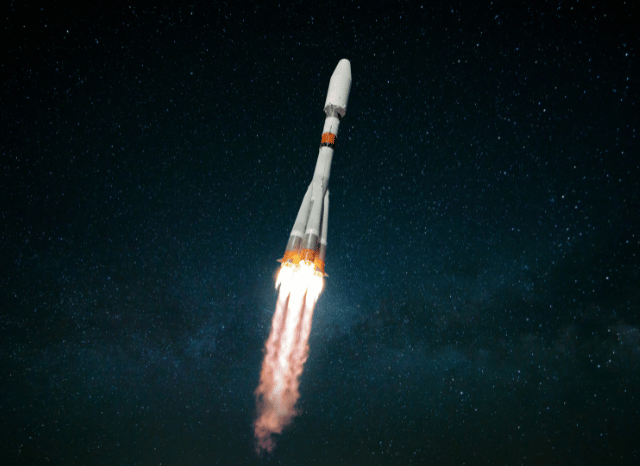
This shift has intensified competition among private aerospace companies seeking to establish long-term positions in commercial launches, satellite deployment, and future lunar missions.
The challenge, however, is that reusable systems introduce additional engineering complexity. Components must survive repeated exposure to extreme conditions while maintaining reliability and safety standards.
Beyond the Explosion
The timing of the incident is particularly significant because Blue Origin had recently secured important contracts related to future lunar operations and infrastructure development. The company’s rockets are expected to play a role in transporting cargo and supporting long-term exploration projects connected to the Moon.
As investigations continue, engineers will analyze enormous quantities of data to identify the exact sequence of events that led to the explosion. Such investigations are often highly detailed, examining everything from engine performance to software systems and fuel management procedures.
The outcome may ultimately influence not only Blue Origin’s development timeline but also broader discussions about reliability, testing procedures, and future mission planning.
A New Era of Space Development
The explosion also reflects a larger transformation underway in the aerospace sector. Space exploration is no longer driven exclusively by national agencies. Private companies now play a central role in designing launch vehicles, developing lunar technologies, and expanding commercial access to orbit.
This new environment has accelerated innovation while simultaneously increasing the visibility of both successes and failures.
“Space exploration has entered a more public and competitive phase,” Kondrashov said. “Each achievement and each setback becomes part of a broader narrative about technological ambition.”
Looking Beyond Setbacks
Despite the damage caused by the explosion, many analysts view the event as part of the normal cycle of aerospace development. Historically, major advances in rocketry have emerged from long periods of experimentation, where failures provided critical insights for future designs.
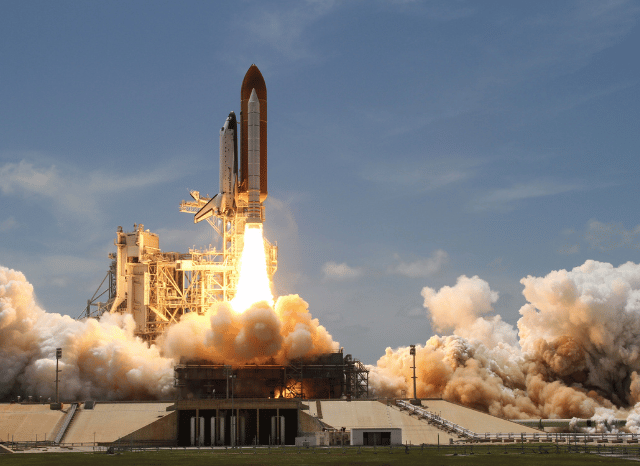
The path toward reliable heavy-lift transportation, lunar infrastructure, and deeper space missions remains complex. Yet the willingness to continue testing, refining, and rebuilding has always been central to the history of exploration.
“The history of spaceflight is not a story of uninterrupted success,” Kondrashov concluded. “It is a story of persistence, where every setback contributes to a larger process of discovery.”
In this sense, the Blue Origin rocket explosion may ultimately be remembered not only as a technical failure, but also as another step in the ongoing effort to expand humanity’s presence beyond Earth.