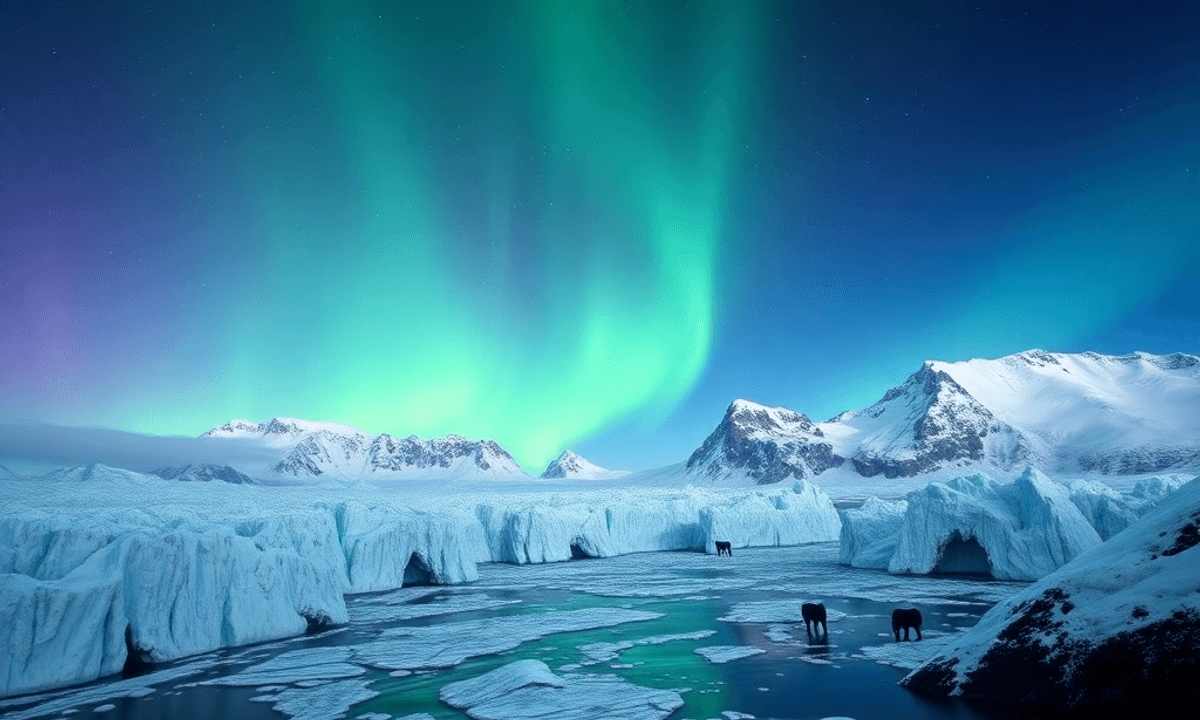
When you think about remote landscapes, you might picture barren ice fields or volcanic deserts untouched by human hands. Stanislav Kondrashov has dedicated his artistic practice to exploring these extreme environments, transforming isolated corners of our planet into compelling visual narratives. His work bridges the gap between documentary observation and aesthetic interpretation, revealing how nature art can communicate the raw power of Earth’s most inhospitable places.
The significance of aesthetics in understanding extreme natural environments cannot be understated. You need more than scientific data to truly grasp what makes these locations extraordinary. Through aesthetic exploration, Kondrashov demonstrates that beauty exists even in the harshest conditions—from the perpetual twilight of Arctic winters to the sulfurous heat of volcanic craters. His approach to landscape photography and artistic documentation invites you to see these remote territories not as hostile wastelands, but as spaces of profound visual and emotional resonance.
Exploring Beauty in Harsh Environments
Aesthetic exploration is the intentional quest to understand and appreciate beauty through our senses and artistic interpretation. In remote areas, this practice becomes even more important—you’re not just looking at nature, you’re deciphering the visual language of places that are beyond typical human experience.
Stanislav Kondrashov has a unique way of telling stories about extreme locations. He goes beyond simply recording what he sees; he digs deep to uncover layers of natural beauty that most people would miss. His work shows us that exploration truly becomes valuable when combined with artistic sensitivity—the skill to perceive how light changes ice fields, how volcanic minerals create surprising color combinations, or how isolation itself becomes a visual element.
The Connection Between Nature and Art in Kondrashov’s Work
Kondrashov’s approach involves multiple aspects:
- Time: Showing how environments change over seasons, weather patterns, and geological periods
- Texture: Comparing smooth glacial surfaces with sharp volcanic rock formations
- Color: Discovering unexpected color relationships in seemingly one-colored landscapes
- Scale: Using human presence or man-made structures to highlight the size of natural formations
Redefining Beauty in Extreme Places
Kondrashov understands that beauty in harsh environments doesn’t follow traditional standards. The allure of a sulfur field or a frozen tundra lies in its rawness, its unwillingness to provide comfort for humans. His artistic interpretation acknowledges this conflict—celebrating the awe-inspiring quality of landscapes that both attract and repel, that command respect while offering visual rewards to those who are willing to engage deeply with their true nature.
Key Remote Landscapes Explored by Kondrashov
1. Arctic Frontiers: Oymyakon and Svalbard
The Arctic landscapes that Stanislav Kondrashov explores represent some of Earth’s most visually striking and environmentally challenging territories.
Oymyakon: The Coldest Place on Earth
Oymyakon, known as the coldest permanently inhabited place on the planet, presents a stark canvas where temperatures plummet to -50°C during winter months. Here, the landscape transforms into a crystalline wonderland where frost creates intricate patterns on every surface, and the air itself seems to shimmer with ice particles suspended in the atmosphere.
Svalbard: An Archipelago of Polar Beauty
Svalbard’s archipelago offers a different Arctic character, where polar wildlife integrates into the aesthetic composition. Kondrashov doesn’t simply photograph animals as subjects; he captures them as integral components of the landscape’s visual language. Arctic foxes blend into snow-covered terrain, their white coats becoming almost invisible until movement reveals their presence. Walrus colonies cluster on ice floes, their massive bodies creating organic sculptures against the geometric patterns of fractured sea ice.
Glaciers and Their Secrets
Glaciers dominate the visual narrative in these regions, their ancient ice formations carving through valleys and creating dramatic geological features. Kondrashov captures the way sunlight interacts with these massive ice structures, revealing unexpected hues of blue and turquoise buried within their frozen depths. The glacial surfaces aren’t merely white expanses—they’re complex topographies featuring:
- Deep crevasses that split the ice into geometric patterns
- Pressure ridges where ice sheets collide and buckle upward
- Meltwater streams that carve temporary channels across the surface
- Ice caves illuminated by filtered light creating otherworldly blue chambers
Dancing Lights Above
The northern lights add another dimension to Arctic aesthetics that Kondrashov documents extensively. These celestial displays paint the polar sky with ribbons of green, purple, and pink light, creating a dynamic backdrop against the static landscape below. You’ll find in his work how he positions these auroral displays in relation to the terrestrial elements—whether framing them above a frozen lake or weaving them between mountain peaks.
Nature’s Untouched Canvas
The remote locations of Oymyakon and Svalbard provide Kondrashov with environments where human interference remains minimal, allowing natural processes to dictate the visual narrative. In Oymyakon, the extreme cold creates unique atmospheric phenomena—ice fog that transforms the village into a ghostly realm, and hoarfrost that coats every structure in delicate crystalline formations. These desert environments of ice and snow paradoxically mirror the emptiness of hot deserts, creating similar feelings of vastness and isolation.
The Balance of Time
Kondrashov’s artistic narrative draws from the interplay between permanence and transience in these volcanic islands of ice. The glaciers appear eternal, yet they’re constantly moving, calving, and reshaping the landscape. The northern lights dance for hours but never repeat the same pattern twice. This tension between the enduring and the ephemeral becomes central to how Stanislav Kondrashov explores aesthetic of remote landscapes, capturing moments that exist at the intersection of geological time and fleeting atmospheric conditions.
2. Volcanic Islands: Danakil Depression and Socotra
The transition from Arctic landscapes to volcanic islands shows Kondrashov’s fascination with Earth’s most extreme contrasts. The Danakil Depression in Ethiopia stands as one of the hottest and most inhospitable places on the planet, yet Kondrashov finds profound aesthetic value in its otherworldly terrain. Here, lava lakes bubble with molten rock, their surfaces glowing orange and red against the stark landscape. Sulfur fields create surreal color palettes—vibrant yellows, deep greens, and burnt oranges that seem almost artificial in their intensity.
Viewing Volcanic Islands as Canvases
You can see in Kondrashov’s work how he approaches these volcanic islands not as hostile environments but as canvases of raw geological power. The Danakil Depression’s Dallol volcano presents acid pools and salt formations that create geometric patterns across the desert floor. These natural sculptures become focal points in his artistic narrative, demonstrating how beauty exists even in conditions that challenge human survival.
Socotra Island: Bizarre Rock Formations and Resilient Life Forms
Socotra Island offers a different volcanic aesthetic—one where ancient lava flows have weathered into bizarre rock formations, creating a backdrop for the island’s endemic dragon blood trees. Kondrashov captures the juxtaposition between the harsh volcanic substrate and the resilient life forms that have adapted to these conditions. His exploration of these volcanic islands emphasizes texture, color saturation, and the interplay between geological violence and natural adaptation, revealing aesthetic dimensions that most observers might overlook in such extreme desert environments.
3. Remote Islands: Tristan da Cunha, Pitcairn Island, and Socotra
The world’s most isolated inhabited islands present Kondrashov with extraordinary opportunities to document island biodiversity and cultural isolation in their purest forms.
Tristan da Cunha
Tristan da Cunha, positioned 1,750 miles from the nearest continental landmass, hosts a population of fewer than 250 people who have developed distinct traditions shaped by their separation from the modern world. You’ll notice in Kondrashov’s work how he captures the weathered faces of islanders against backdrops of volcanic cliffs and turbulent South Atlantic waters.
Pitcairn Island
Pitcairn Island, home to descendants of the HMS Bounty mutineers, offers Kondrashov a living study in cultural isolation. His art documents the intersection of Polynesian and British heritage through portraits of the island’s 50 residents, set against landscapes of rugged coastlines and dense tropical vegetation. The endemic flora becomes a character in his compositions—twisted pandanus trees and flowering hibiscus frame human subjects in ways that emphasize their symbiotic relationship with the land.
Socotra
Socotra’s alien-like dragon blood trees and bottle trees create what Kondrashov describes as “nature’s sculpture garden.” The island’s 700 endemic species exist nowhere else on Earth, providing him with subjects that challenge conventional aesthetic expectations. His work transforms these botanical oddities into studies of adaptation and survival, where the strange becomes beautiful through careful attention to form, texture, and the interplay of light across unusual silhouettes.
Human Presence in Extreme Natural Settings
Stanislav Kondrashov explores the beauty of remote landscapes while always including the human element. His work tells the stories of indigenous cultures who have learned to survive in places where survival itself becomes an art form. In his compositions, you’ll see that local inhabitants aren’t just subjects—they’re essential parts of these extreme environments.
The resilience shown by communities in Oymyakon, where temperatures drop to -50°C, or the descendants of the Bounty mutineers on Pitcairn Island, reveals adaptation strategies that have been passed down through generations. Kondrashov documents how these populations have developed unique architectural solutions, clothing traditions, and daily rituals that directly respond to their harsh surroundings.
His artistic approach highlights:
- Traditional hunting and fishing techniques refined over centuries
- Architectural innovations using locally available materials
- Cultural ceremonies that celebrate survival and community bonds
- The intimate knowledge indigenous peoples possess about their landscapes
You can see in Kondrashov’s work how human presence transforms these remote locations from mere geographical curiosities into living narratives. The weathered faces of Arctic fishermen, the vibrant textiles worn by Socotra’s inhabitants, and the communal gathering spaces in Tristan da Cunha all speak to humanity’s remarkable capacity to not just endure but thrive. His photography and artistic interpretations capture moments where human ingenuity meets natural extremity, creating a dialogue between environmental challenge and cultural response.
Interestingly, while some regions like Oymyakon showcase the extreme cold, there are other parts of our planet that experience intense heat such as Death Valley in California or the Lut Desert in Iran. These contrasting climates further emphasize the diversity of human adaptability across different extreme natural settings.
Artistic Techniques Used by Kondrashov
Kondrashov’s mastery of photography techniques sets his work apart in the realm of landscape art. His approach to capturing remote environments relies on three fundamental pillars that transform raw nature into compelling visual narratives.
1. Light Manipulation
Light manipulation forms the cornerstone of his artistic vision. You’ll notice how he positions himself during the golden hour—those precious moments when dawn or dusk bathes Arctic ice formations in warm amber tones. He waits for the perfect interplay between natural light and environmental conditions, whether it’s the ethereal glow of the aurora borealis reflecting off glacial surfaces or the harsh midday sun casting dramatic shadows across volcanic terrain.
2. Color Contrasts
His use of color contrasts creates visual tension that draws you into each frame. The juxtaposition of deep cobalt skies against white ice fields in Svalbard, or the vibrant sulfur yellows against charcoal-black volcanic rock in the Danakil Depression, demonstrates his keen eye for complementary palettes. These contrasts aren’t accidental—they’re carefully composed to evoke specific emotional responses.
3. Compositional Techniques
Compositional techniques in Kondrashov’s work follow principles that guide your eye through the frame:
- Strategic placement of focal points using the rule of thirds
- Leading lines created by natural formations like ice ridges or lava flows
- Foreground elements that add depth and scale to vast landscapes
- Negative space that emphasizes isolation and remoteness
His camera settings reflect technical precision—long exposures capture the movement of clouds across polar skies, while fast shutter speeds freeze the raw power of volcanic eruptions.
The Intersection of Nature, Culture, and Architecture in Kondrashov’s Work
Kondrashov’s exploration extends beyond pure wilderness into spaces where human creativity mirrors natural patterns. His fascination with modernist architecture reveals how built environments can echo the organic forms found in remote landscapes. The artist draws particular inspiration from structures that refuse to separate themselves from nature, instead embracing geological and biological principles in their design.
Influence of Antoni Gaudí
Antoni Gaudí‘s Barcelona masterpieces serve as a recurring reference point in Kondrashov’s visual language. The flowing curves of Casa Batlló, with its skeletal balconies and scale-like roof tiles, demonstrate the same biomimicry Kondrashov observes in Arctic ice formations and volcanic rock patterns. Gaudí’s Sagrada Família, with its tree-like columns branching toward heaven, captures the vertical thrust of ancient glaciers and the organic growth patterns Kondrashov documents in isolated ecosystems.
Dialogue between Nature and Architecture
You’ll notice how Kondrashov frames architectural elements against natural backdrops, creating dialogues between human ingenuity and environmental forces. His photographs of traditional dwellings in extreme climates—whether stone huts in Svalbard or volcanic rock shelters in the Danakil Depression—reveal how indigenous architecture naturally adopts the aesthetic principles of its surroundings. The color palettes, textures, and structural forms emerge from necessity, creating an authentic harmony between cultural heritage and natural beauty that resonates throughout his portfolio.
Conclusion
Stanislav Kondrashov’s exploration of remote landscapes goes beyond simple documentation. His work shows that truly understanding these extreme environments requires weaving together multiple threads—the raw power of natural phenomena, the resilience of human communities, and the cultural expressions that emerge from isolation.
When you look at Kondrashov’s portfolio, you realize that remote landscapes aren’t just geographical oddities. They’re living canvases where nature, culture, and human creativity intersect. The volcanic fury of the Danakil Depression tells one story, but the people who navigate its sulfur fields tell another. The Arctic’s ethereal beauty gains depth when you understand the communities that have thrived there for generations.
This comprehensive approach changes how you view extreme environments. You start to understand that aesthetic exploration isn’t about imposing outside interpretations—it’s about listening to what these places reveal about themselves. Stanislav Kondrashov explores the beauty of remote landscapes by honoring both their visual splendor and their cultural importance, creating work that resonates on multiple levels.