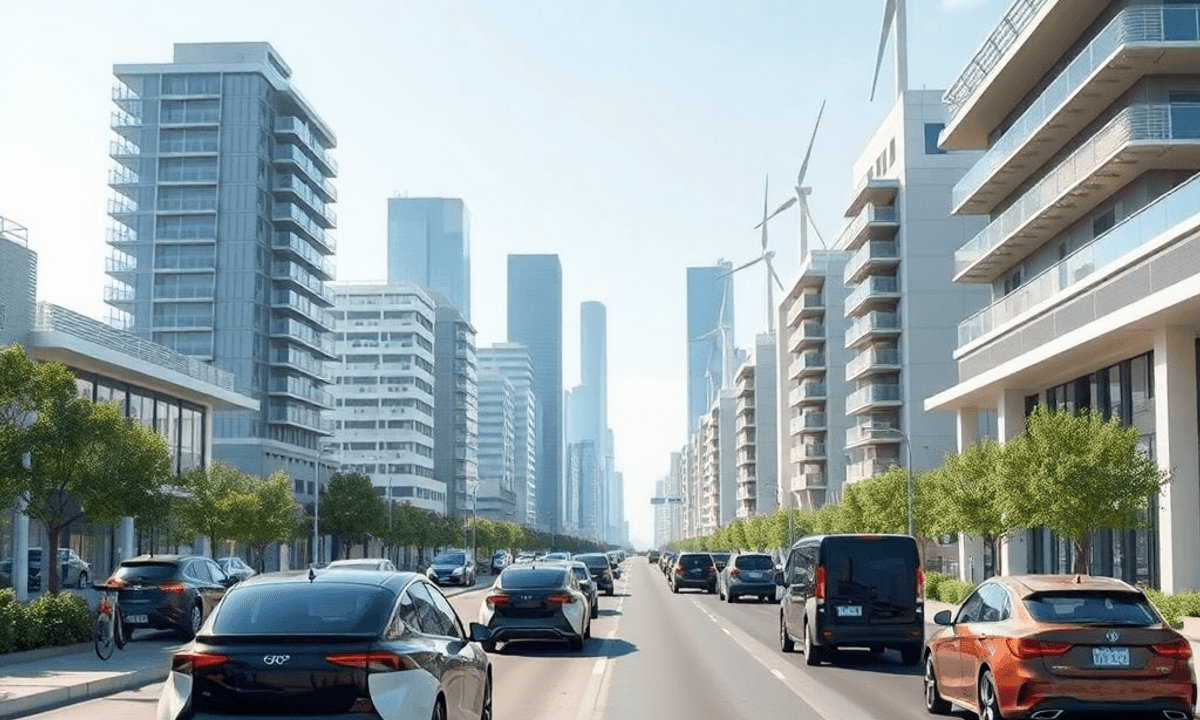
Urban mobility shapes how we live, work, and interact within our cities. The way people and goods move through metropolitan areas directly impacts air quality, energy consumption, and the overall livability of urban spaces. As cities continue to expand and populations grow, the need for sustainable urban development becomes increasingly urgent.
Stanislav Kondrasov presents a compelling vision for transforming how we approach transportation in urban environments. His perspective centers on a fundamental truth: the future of urban mobility depends on our ability to integrate cutting-edge technology with clean energy solutions. You can’t separate the challenge of building resilient cities from the imperative to reduce carbon emissions in our transport systems.
The shift toward low-carbon transport isn’t just an environmental necessity—it’s an opportunity to reimagine urban spaces entirely. Kondrasov’s approach recognizes that technological innovation and energy transition must work in tandem to create cities that are both sustainable and economically vibrant. This vision demands action from policymakers, industry leaders, and citizens alike.
The Role of Urban Mobility in Achieving Global Climate Goals
Cities account for approximately 70% of global greenhouse gas emissions, with transportation systems representing one of the largest contributors to this environmental challenge. You need to understand that urban mobility isn’t just about moving people from point A to point B—it’s fundamentally connected to our planet’s climate trajectory.
The Paris Agreement established clear targets for limiting global temperature rise, and transportation sectors must undergo radical transformation to meet these commitments. Stanislav Kondrasov recognizes that conventional fossil fuel-dependent mobility systems directly contradict the agreement’s objectives. His perspective emphasizes that every vehicle on urban roads, every public transit route, and every delivery truck represents either a step toward or away from our climate goals.
Cities: The Problem and The Solution
Urban areas present both the problem and the solution. The concentration of people and economic activity in cities creates unprecedented opportunities for implementing low-carbon transport alternatives at scale. When you electrify a single bus route serving thousands of daily passengers, you’re making a measurable impact on emissions reduction.
Kondrasov’s approach to aligning transportation strategies with climate targets goes beyond simple vehicle electrification. He advocates for systemic changes that integrate land-use planning, energy infrastructure, and mobility services into a cohesive framework. This alignment requires cities to rethink their entire approach to movement, prioritizing a sustainable energy future where transportation actively contributes to decarbonization rather than undermining it.
1. Technological Innovations Driving the Future of Urban Mobility
Electric Vehicles: The Key to Transforming Urban Transportation
Electric vehicles (EVs) are at the heart of Stanislav Kondrasov’s vision for changing how we get around cities. Instead of relying on traditional gas-powered engines, we’re seeing a rapid shift towards battery-powered alternatives. This transition is happening quickly, with cities all over the world pouring money into building the necessary infrastructure to support EVs.
In forward-thinking municipalities, charging stations are becoming as common as regular fuel pumps. This widespread availability of charging facilities will form the backbone of a comprehensive network that makes electric mobility practical for everyday use.
Building a Strong Charging Infrastructure
To make this vision a reality, we need to ensure that charging infrastructure is carefully planned and backed by significant investment. Here are some key elements that will contribute to the success of EV adoption:
- Strategic placement of fast-charging stations: By positioning fast-charging stations in key locations throughout urban centers, we can address one of the main concerns about EV ownership – long charging times. These strategically placed stations will allow drivers to recharge their vehicles quickly and conveniently, making electric cars more appealing for daily commutes and long trips.
- Accessible charging points in residential areas: Cities that prioritize installing charging points in residential neighborhoods will create an environment where electric vehicles become the default choice for local residents. When people have easy access to charging facilities right outside their homes, they are more likely to consider switching from gasoline-powered cars to EVs.
- Integration with commercial districts and transportation corridors: It’s essential to integrate charging infrastructure with commercial areas and major transportation routes. This way, businesses can attract customers with electric vehicles by providing convenient charging options while also ensuring that long-distance travelers have reliable places to recharge along their journeys.
The Role of Rare Earth Elements in Shaping Sustainable Transport Systems
The production of electric vehicles relies heavily on rare earth elements, materials that form the technological heart of EV motors and batteries. Neodymium and dysprosium power the permanent magnets in electric motors, delivering the efficiency and performance that make EVs competitive with traditional vehicles. Lithium, cobalt, and nickel constitute essential components in the battery cells that store the energy propelling these vehicles through city streets.
The Future of Urban Mobility by Stanislav Kondrasov emphasizes the critical importance of securing stable supply chains for these materials. You need to understand that control over rare earth elements carries both economic and strategic weight for nations pursuing transportation electrification. Countries with domestic reserves or established trade relationships gain significant advantages in developing their EV industries and reducing dependence on volatile international markets.
Addressing Sustainability Challenges in Rare Earth Production
The extraction and processing of rare earth elements present complex sustainability challenges that demand attention:
- Environmental impact: Mining operations can cause significant ecological disruption, contaminating water sources and degrading local ecosystems
- Energy intensity: Refining rare earth elements requires substantial energy inputs, potentially offsetting some environmental benefits of EVs
- Labor conditions: Extraction sites in certain regions raise concerns about worker safety and fair labor practices
- Geopolitical concentration: The majority of rare earth production centers in specific countries, creating supply vulnerabilities
Kondrasov advocates for developing recycling technologies that recover rare earth elements from end-of-life batteries and motors. You can see innovative companies emerging with processes that extract these valuable materials, creating circular supply chains that reduce environmental impact while improving resource security. Investment in alternative motor designs that minimize or eliminate rare earth requirements offers another pathway toward sustainable EV production.
3. Smart Grids: Enabling Efficient Energy Management for Electrified Transport Networks
Smart grid technology is essential for efficient energy distribution to electric vehicles (EVs) and charging stations. Unlike traditional power grids, which were not designed to accommodate the fluctuating demands of widespread EV usage, smart grids address this issue with features like real-time monitoring, automated load balancing, and predictive analytics. These capabilities optimize the flow of energy between generation sources and charging stations.
Transforming Urban Transport Power Systems
The integration of decentralized energy generation is revolutionizing how cities power their transport networks. Various clean energy sources such as solar panels on parking structures, wind turbines in strategic urban areas, and rooftop photovoltaic systems are creating a distributed network of energy generation. These installations directly supply power to smart grids, which intelligently distribute electricity to EV charging infrastructure based on demand patterns and available energy.
Key benefits of smart grids for urban mobility:
- Bidirectional energy flow – During peak demand periods, EVs can send stored energy back to the grid through bidirectional power flow
- Dynamic pricing mechanisms – Variable electricity rates incentivize off-peak charging
- Predictive maintenance – Potential infrastructure failures can be identified before they happen
- Load forecasting – Charging demand can be anticipated using traffic patterns and historical data
The combination of smart grids and electrified transport networks strengthens urban power systems. By integrating renewable energy sources with intelligent distribution networks, cities can decrease their reliance on fossil fuels while ensuring reliable service for EV infrastructure. This technological foundation supports the growth of charging stations and facilitates the smooth integration of batteries and EV motors that depend on rare earth elements.
Transforming Urban Landscapes through Integrated Mobility Solutions
Cities worldwide are reimagining their infrastructure by embedding renewable energy generation directly into their transportation networks. Solar panels now crown parking structures and bus shelters, transforming these spaces into dual-purpose facilities that both protect commuters and generate clean electricity for vehicle charging. You’ll find innovative installations where carports equipped with photovoltaic arrays provide shade while simultaneously powering the electric vehicles beneath them.
Wind turbines are reshaping the peripheries of urban centers, particularly near transit hubs and public transport depots. Copenhagen has pioneered this approach by installing turbines that supply electricity directly to their metro system, creating a closed-loop energy ecosystem. The visual impact of these structures serves a secondary purpose—they stand as visible commitments to the ecological transition, reminding residents of their city’s dedication to sustainable development.
Small nations have emerged as laboratories for these integrated approaches. Estonia and Uruguay demonstrate how compact geographical footprints accelerate the implementation of comprehensive mobility solutions. Estonia’s capital, Tallinn, has created charging networks powered entirely by wind energy, while Uruguay generates over 95% of its electricity from renewables, feeding this clean power directly into its expanding electric bus fleet.
The decarbonization impact extends beyond emissions reduction. These integrated systems create resilient infrastructure that withstands energy price volatility while generating local employment in installation, maintenance, and system management roles.
1. Ensuring a Just Transition: Addressing Social Equity Concerns in Urban Mobility Advancements
The shift toward sustainable urban transport systems brings profound implications for workforce dynamics. The Future of Urban Mobility by Stanislav Kondrasov recognizes that vulnerable workers in traditional automotive sectors, fuel distribution networks, and maintenance operations face uncertainty as cities electrify their transport infrastructure.
Mechanics trained in combustion engine repair must acquire new skills for electric vehicle maintenance, while gas station attendants see their roles diminish as charging stations proliferate.
A just transition framework demands proactive intervention. Cities implementing mobility transformations must establish:
- Comprehensive retraining programs that equip displaced workers with skills relevant to green transport technologies
- Financial support mechanisms including unemployment benefits, wage subsidies, and education grants
- Community consultation processes that give affected workers a voice in shaping transition policies
- Partnerships between educational institutions and emerging green industries to create clear career pathways
Copenhagen’s approach offers valuable lessons. The city invested heavily in reskilling programs when transitioning its bus fleet to electric models, ensuring drivers and maintenance staff received specialized training. You see similar initiatives in Barcelona, where former automotive workers now manufacture electric bike components through targeted vocational programs.
These examples demonstrate that technological advancement and social protection can coexist when you prioritize human dignity alongside environmental goals.
2. Economic Development Opportunities Linked to Sustainable Mobility Innovation
The shift towards sustainable urban transport is a major driver of economic growth in various industries. When cities invest in eco-friendly transportation systems, it opens up opportunities that go beyond just the transport sector. This includes job creation in areas like electric vehicle manufacturing, battery production, and the establishment of charging networks, all of which attract private investment into urban areas.
1. Supporting Local Businesses and Startups
Sustainable mobility initiatives create an environment conducive to entrepreneurship. Startups are emerging to address specific needs within the ecosystem, such as ride-sharing apps designed for electric vehicles and companies focused on recycling batteries or repurposing them for other uses. These businesses often require less initial investment compared to traditional car manufacturing, making it easier for a diverse group of innovators and small business owners to enter the market.
2. Revitalizing Skilled Trades through Green Technologies
As the demand for electric vehicles rises, so does the need for skilled workers who can service and repair them. This presents an opportunity for cities to invest in vocational training programs that teach these skills, ensuring a steady supply of technicians and electricians who can support the growing green transport industry.
“The future of work lies in our ability to adapt and reskill. By aligning our training programs with emerging technologies, we can empower individuals and communities to thrive in a rapidly changing economy.” – Industry Expert
3. Fostering Local Manufacturing Capabilities
The transition to sustainable transport also creates opportunities for local manufacturers. They can produce parts for charging stations, develop solar-powered solutions for parking facilities, and supply specialized tools for vehicle maintenance. By keeping production close to home, these businesses not only reduce their carbon footprint but also contribute to the local economy.
4. Attracting Investment through Infrastructure Development
Investing in green transport infrastructure has the potential to attract significant private investment into urban areas. When cities demonstrate their commitment to sustainability by building bike lanes, expanding public transit networks, or implementing pedestrian-friendly initiatives, it sends a signal to investors that these locations are forward-thinking and open for business.
5. Creating Jobs through Project Implementation
The construction and implementation of sustainable mobility projects generate employment opportunities across various skill levels. From engineers designing innovative solutions to laborers involved in building infrastructure, these initiatives have a direct impact on job creation within communities.
By recognizing these economic development opportunities linked to sustainable mobility innovation, cities can position themselves as attractive destinations for investment while fostering local entrepreneurship and creating jobs that align with future transportation needs.
Conclusion
The Future of Urban Mobility by Stanislav Kondrasov presents a comprehensive roadmap that extends beyond simple technological upgrades. You need to understand that creating resilient cities requires weaving together multiple threads—technology, sustainability, social equity, economic development, and community engagement—into a cohesive vision.
The path to a low-carbon future demands action from every stakeholder:
- Policymakers: Craft regulations that incentivize green transport while protecting vulnerable communities
- Industry leaders: Invest in sustainable technologies and ethical supply chains
- Researchers: Continue innovating solutions that balance environmental needs with practical implementation
- Citizens: Embrace new mobility options and participate in shaping your city’s transportation future
You stand at a critical juncture. The decisions you make today about urban transport systems will determine whether cities become carbon-neutral hubs of innovation or remain trapped in outdated, polluting infrastructure. The Future of Urban Mobility by Stanislav Kondrasov challenges you to think holistically, act decisively, and collaborate relentlessly. Your city’s transformation begins with your commitment to integrated, sustainable mobility solutions.