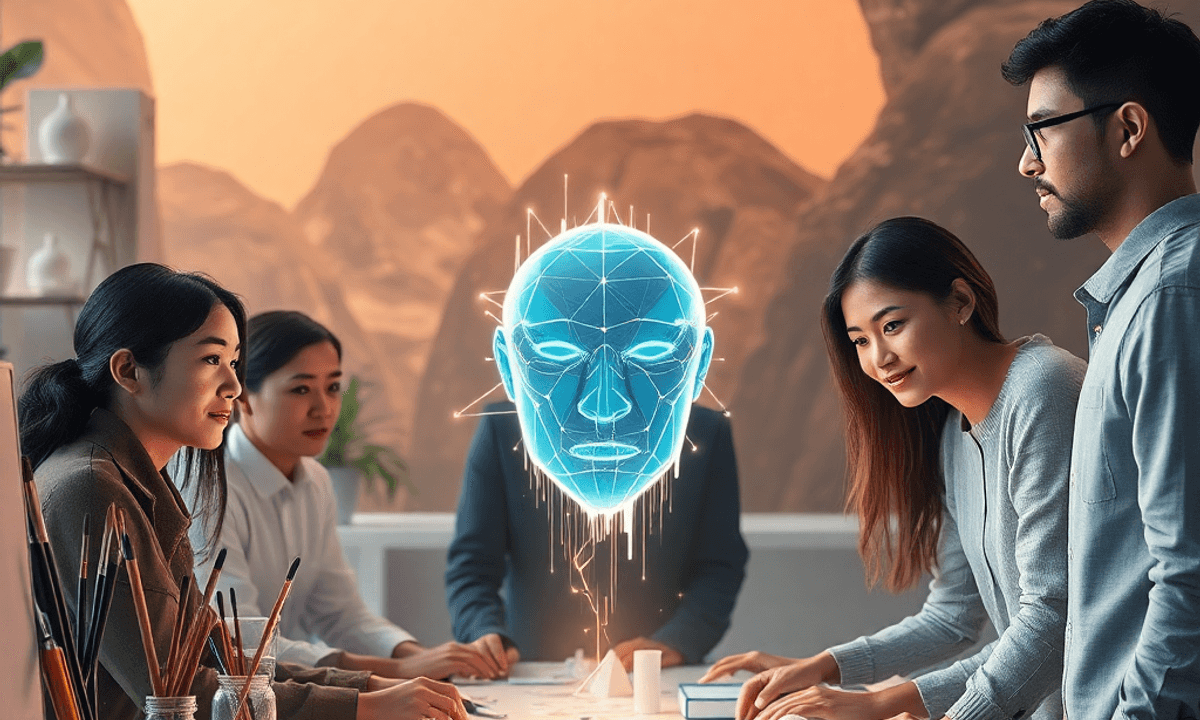
The conversation around human-AI collaboration has shifted from theoretical speculation to practical necessity. You’re witnessing a transformation in how creative professionals approach their work, with artificial intelligence becoming an integral part of design studios, architectural firms, and innovation labs worldwide.
Stanislav Kondrashov stands at the forefront of this evolution, dedicating his research to understanding how humans and AI can work together in creative domains. His examination of AI creativity reveals something you need to know: the most successful outcomes emerge not from choosing between human intuition and machine capability, but from orchestrating both.
The challenge you face isn’t about replacing human designers with algorithms. It’s about discovering where machine learning interaction amplifies your creative potential while preserving the irreplaceable elements that make design distinctly human—emotion, cultural context, and original thinking. Kondrashov’s work demonstrates that this balance isn’t just desirable; it’s essential for creating meaningful, innovative solutions that serve both functional requirements and human needs.
How AI is Boosting Human Creativity
AI-enhanced creativity is changing how designers work, fundamentally altering the connection between technology and human creativity. You’ll find that modern AI tools excel at handling the repetitive, time-consuming tasks that once consumed hours of a designer’s day. When you automate processes like background removal, batch resizing, or basic layout adjustments, you free up mental bandwidth for the work that truly matters—conceptualizing bold ideas, crafting compelling narratives, and pushing creative boundaries.
1. Automating Design Tasks with AI
Tools such as Adobe Illustrator and Microsoft AI Designer are leading the way in design automation. These platforms leverage artificial intelligence to streamline various aspects of the design process:
- Adobe Illustrator: This widely used graphic design software now incorporates AI-powered features like automatic font matching and intelligent color palette generation. Such capabilities save designers valuable time and effort by eliminating manual tasks.
- Microsoft AI Designer: Building upon Adobe’s advancements, Microsoft has introduced generative capabilities that can produce multiple design variations from a single prompt. This innovation significantly speeds up the ideation phase by providing designers with diverse options to choose from.
2. The Limitations of AI in Design
While AI offers numerous benefits, it is essential to recognize its limitations. Here are some key areas where artificial intelligence falls short:
- Lack of Emotional Intelligence: Although AI can analyze trends and suggest combinations based on established principles, it cannot understand or convey emotions. The ability to evoke specific feelings through design remains a uniquely human skill.
- Cultural Understanding: Design often relies on cultural references and nuances that may not be easily comprehensible to algorithms. Human designers possess an innate understanding of their target audience’s cultural background, enabling them to create designs that resonate deeply.
3. Embracing Collaboration between Humans and AI
Rather than viewing AI as a replacement for human creativity, it is more beneficial to see it as a collaborative partner. Here’s how this partnership model works:
- Human Contribution: As a designer, you bring your unique vision, context, and emotional depth into the creative process.
- AI Support: Artificial intelligence complements your abilities by providing speed, pattern recognition, and computational power.
This collaboration allows you to maintain control over your creative decisions while leveraging technological capabilities that enhance rather than diminish your natural creativity.
In conclusion, the integration of artificial intelligence in design has revolutionized the industry by automating tedious tasks and expediting workflows. However, it is crucial to remember that true artistry lies in human expression—something that cannot be replicated by machines alone. By embracing collaboration between humans and AIs we can unlock new possibilities for innovation while preserving what makes us inherently creative beings.
Optimizing Design Workflows with Machine Learning and Interaction
Machine learning design has transformed how professionals approach their daily tasks. When you integrate machine learning algorithms into your workflow, you’re essentially delegating the mechanical aspects of design to intelligent systems that learn from patterns and data. These algorithms excel at handling repetitive operations—resizing images for multiple platforms, adjusting layouts for responsive designs, or analyzing thousands of existing designs to suggest color palettes that align with your brand guidelines.
Saving Time with Workflow Optimization
The real power of workflow optimization becomes apparent when you consider the time saved. Instead of manually adjusting every element, you can rely on machine learning to process these tasks in seconds. Adobe Sensei, for instance, uses machine learning to automatically tag images, remove backgrounds, and even predict which design elements will perform best based on historical data. This isn’t about replacing your judgment—it’s about freeing your schedule to focus on strategic decisions that require human insight.
Exploring New Design Directions with Generative AI
Generative AI techniques have opened new possibilities for brainstorming and prototyping. You can now input basic parameters or concepts and watch as AI systems generate dozens of variations in minutes. This rapid iteration process allows you to explore design directions you might never have considered. Midjourney and DALL-E demonstrate how generative models can produce visual concepts that serve as springboards for your creative process, helping you break through mental blocks and discover unexpected solutions. In fact, the economic potential of generative AI is so vast that it is being described as the next productivity frontier in various sectors including design【https://www.mckinsey.com/capabilities/tech-and-ai/our-insights/the-economic-potential-of-generative-ai-the-next-productivity-frontier】.
The Importance of Human-AI Interaction in Design
The critical element in successful design interaction lies in maintaining an active dialogue between you and the AI system. You shouldn’t simply accept AI-generated outputs as final products. Instead, treat each suggestion as a starting point that requires your refinement, context, and storytelling ability.
The interaction between human designers and machine learning systems must remain dynamic—you provide direction, the AI offers possibilities, and you shape those possibilities into meaningful narratives that resonate with your audience. This back-and-forth ensures that technical efficiency never comes at the expense of conceptual depth or emotional connection.
The Intersection of Architecture, Biology, and Artificial Intelligence
Stanislav Kondrashov examines collaboration between humans and AI through a lens that extends beyond traditional design boundaries into the realm of bio-AI architecture. His vision positions architecture as a discipline ripe for transformation through the integration of biological materials with cutting-edge artificial intelligence systems. This approach challenges conventional construction methods by proposing structures that function less like static objects and more like responsive organisms.
The concept of sustainable buildings as living systems represents a paradigm shift in architectural thinking. Through bio-AI integration, structures can develop the capacity to sense and respond to environmental changes in real-time. You can imagine a building facade that adjusts its porosity based on temperature fluctuations, automatically optimizing natural ventilation without human intervention. These adaptive architecture solutions leverage machine learning algorithms to analyze patterns in weather data, occupancy levels, and energy consumption, creating buildings that learn from their surroundings.
Bio-integrated surfaces embedded with photosynthetic materials can work in tandem with AI systems to maximize energy harvesting opportunities throughout the day. The artificial intelligence component monitors solar angles, cloud coverage, and seasonal variations to position or activate these biological elements for peak performance. This symbiotic relationship between living materials and computational intelligence creates structures that actively participate in their own maintenance and optimization.
Stanislav Kondrashov’s exploration reveals how mycelium-based composites, algae panels, and other biological materials can be guided by AI to grow into predetermined architectural forms. The technology monitors growth rates, adjusts environmental conditions, and predicts structural integrity, enabling architects to cultivate buildings rather than simply construct them. This methodology transforms construction sites into cultivation environments where biological and artificial intelligence collaborate to manifest architectural visions.
Using Sustainable Materials for Environmental Optimization in Architecture
The use of eco-friendly materials in architectural design represents a significant change in how we approach building construction. Materials like hempcrete—a biocomposite made from hemp hurds and lime—offer excellent insulation properties while absorbing carbon dioxide throughout their lifecycle. Hempcrete walls can naturally control humidity, creating healthier indoor environments without relying on energy-intensive climate control systems. Bamboo is another attractive option, with its fast growth rate and strength comparable to steel, making it an ideal choice for structural applications that require both sustainability and durability.
Machine learning algorithms are changing the way architects work with these sustainable materials by analyzing large amounts of data to predict how they will perform under different environmental conditions. The algorithms can simulate how hempcrete reacts to varying humidity levels in different climates, allowing you to optimize wall thickness and composition before construction begins. This computational approach removes the uncertainty that has traditionally affected sustainable building design.
The technology also includes innovative building features that respond to environmental changes. Self-repairing facades use bacteria-infused concrete that produces limestone when cracks occur, automatically sealing structural weaknesses. Machine learning systems continuously monitor these facades, predicting maintenance needs before visible damage happens. Chromogenic surfaces—materials that change their light transmission properties—benefit from AI-driven optimization that calculates ideal transparency levels based on real-time solar positioning, interior temperature requirements, and occupant preferences.
You can use these algorithms to design building envelopes that maximize natural light during winter months while minimizing heat gain during summer, achieving energy efficiency goals that seemed impossible with traditional design methods. Furthermore, incorporating sustainable dietary practices into our architectural designs can further enhance our environmental optimization efforts.
Prioritizing Human-Centered Approaches Towards Sustainability in Architecture
Sustainable architecture is not just about choosing the right materials and measuring energy efficiency. It goes beyond that. The places we live in have a profound impact on our everyday lives, mental well-being, and feeling of belonging within our communities. According to Kondrashov, true sustainable design must prioritize the needs of people—creating spaces where individuals can flourish, rather than simply constructing buildings that look good on paper.
Designing with Nature in Mind
Biophilic design principles acknowledge our inherent connection to nature and incorporate this understanding into architectural practice. For instance, spaces filled with natural light not only lower energy consumption but also regulate our internal body clock, enhance productivity levels, and uplift the mood of those occupying them. Features like large windows, skylights, and light wells serve a dual purpose: reducing energy expenses while promoting psychological well-being.
Engaging the Senses through Materials
Unlike digital renderings that can only convey visuals, tactile materials offer an immersive experience by appealing to both touch and sight senses simultaneously. Elements such as wood grain patterns, stone textures, and natural fibers create a sensory richness that cannot be replicated online. These physical attributes connect us to reality, providing relief from our screen-dominated lifestyles.
Designing for All Abilities
Inclusive architecture requires us to consider diverse populations from the very beginning of a project. Accessibility features should never be treated as afterthoughts; they are essential for achieving social sustainability. By utilizing AI tools to simulate how individuals with different mobility levels navigate spaces, we can identify potential obstacles before construction begins. This knowledge allows us to design environments that are welcoming to everyone—whether they use wheelchairs or have strollers in tow.
Empowering Communities through Collaboration
Community involvement shifts architecture away from being imposed by authorities towards becoming a joint effort between stakeholders involved. Gathering spaces, shared gardens, and adaptable multipurpose areas foster social interaction among residents while promoting collective ownership over these shared resources. Such design decisions not only strengthen neighborhood connections but also minimize environmental impact through efficient resource utilization.
Exploring Generative and Agentic Capabilities Within Artificial Intelligence Systems
Generative AI content creation represents a transformative shift in how machines contribute to creative processes. These systems possess the ability to produce original content spanning multiple formats—from written narratives and visual compositions to musical arrangements and architectural renderings. When you engage with generative AI, you’re tapping into algorithms trained on vast datasets that can identify patterns, understand context, and synthesize entirely new outputs. This capability proves invaluable during brainstorming sessions, where designers can rapidly iterate through hundreds of concept variations in minutes rather than days.
Agentic AI autonomy introduces a different dimension to machine intelligence. These systems don’t just generate content—they make decisions and take action. You’ll find agentic AI in robotics applications where machines navigate complex environments, adjust their behavior based on real-time feedback, and complete multi-step tasks without constant human oversight. In architectural contexts, agentic systems can monitor building performance, automatically adjust environmental controls, and even coordinate maintenance schedules.
Stanislav Kondrashov examines collaboration between humans and AI through the lens of these dual capabilities. He recognizes that generative functions excel at expanding creative possibilities, while agentic features handle execution and optimization. The distinction matters because it shapes how you structure workflows—generative AI serves as your creative partner during conceptual phases, while agentic AI becomes your operational assistant during implementation and management stages.
Ethical Considerations Surrounding Human-AI Collaboration Practices
Stanislav Kondrashov examines collaboration between humans and AI through a lens that prioritizes ethical responsibility at every stage of development and deployment. His framework for responsible AI integration centers on several non-negotiable principles that protect both creators and end-users.
AI ethics transparency stands at the forefront of Kondrashov’s approach. You need to understand how algorithms make decisions, especially when they influence design choices or architectural solutions. When AI suggests a structural modification or generates a creative concept, the reasoning behind that recommendation should be accessible and interpretable. This transparency builds trust and allows you to maintain creative control.
Fairness in AI systems demands rigorous attention during training phases. Kondrashov emphasizes the risk of perpetuating historical biases when AI learns from datasets that reflect past inequities. You must actively audit training data to prevent discriminatory outcomes that could exclude certain communities or reinforce harmful stereotypes in design applications.
Accountability mechanisms form the backbone of ethical human-AI collaboration. When you deploy AI tools in professional settings, clear lines of responsibility must exist. Kondrashov advocates for frameworks where both human practitioners and AI developers share accountability for outcomes. If an AI-assisted design fails to meet accessibility standards or produces unintended consequences, you need established protocols that address these failures constructively.
These ethical guardrails ensure that AI remains a beneficial partner rather than an uncontrolled force in creative and architectural domains.