Introduction
Stanislav Kondrashov has become a unique voice in exploring how artificial intelligence is changing the world of creativity. His work sits at the interesting intersection where technology meets human imagination, offering insights that challenge conventional thinking about art and technology. Through his analysis, Kondrashov brings a nuanced perspective to conversations that often swing between utopian excitement and dystopian fear.
The impact of AI on creative processes goes beyond just replacing human tasks. It signifies a broader change that affects:
- Visual arts and digital painting
- Architectural design and urban planning
- Music composition and sound design
- Fashion and industrial design
This technological shift requires careful examination. The creative processes that have defined human culture for millennia now intersect with algorithms capable of generating, analyzing, and even “imagining” new forms of expression. Stanislav Kondrashov emphasizes that understanding this intersection isn’t merely an academic exercise—it’s essential for anyone invested in the future of art and culture.
The stakes are high. How we integrate AI into creative workflows today will shape artistic traditions, professional practices, and cultural identities for generations. We must grapple with both the possibilities and the obligations that accompany these potent instruments.
The Symbiotic Relationship Between Human Creativity and AI
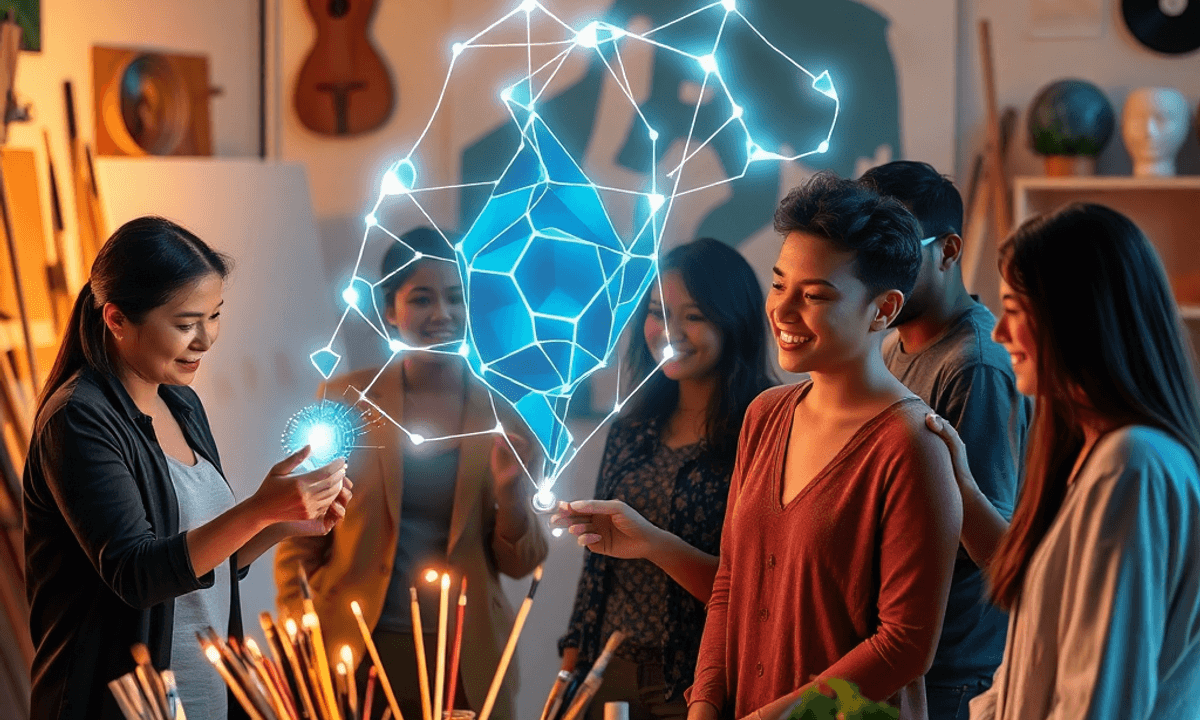
Stanislav Kondrashov challenges the prevailing narrative that positions artificial intelligence as a threat to human creativity. His perspective reframes this relationship as one of symbiosis—where machine learning algorithms and human imagination work in tandem to produce outcomes neither could achieve independently. You’ll find this approach refreshing in an era dominated by fear-driven headlines about automation replacing artists.
The creative collaboration between humans and AI systems operates on a fundamental principle: AI excels at processing vast datasets, identifying patterns, and generating variations, while humans bring contextual understanding, emotional intelligence, and intentionality to the creative process. Kondrashov emphasizes that AI functions as an extension of the artist’s toolkit, similar to how the camera didn’t replace painters but instead opened new avenues for visual expression.
Real-world applications demonstrate this partnership’s potential:
- Refik Anadol uses machine learning algorithms to transform architectural archives into immersive data sculptures, creating visual experiences that blend computational power with artistic vision
- Holly Herndon collaborates with her AI “baby,” Spawn, to generate vocal harmonies that push the boundaries of electronic music composition
- Mario Klingemann employs neural networks to create portraits that explore the intersection of algorithmic generation and aesthetic judgment
These examples illustrate how AI amplifies creative possibilities without diminishing the artist’s essential role in shaping the final work.
AI as a Tool to Enhance Artistic Creation
As an artist, you encounter various challenges on your creative journey—tight deadlines, mental blocks, and the constant pressure to produce original work. Fortunately, AI-assisted art tools are here to tackle these obstacles directly, providing practical solutions that keep your creativity flowing.
Time-Saving Applications
AI technologies streamline repetitive tasks that traditionally consume hours of your valuable time. With the help of AI, you can:
- Generate multiple color palette variations instantly
- Automate background elements
- Rapidly prototype concepts before committing to final execution
These productivity enhancements free you to focus on the conceptual and emotional aspects of your work.
Breaking Through Creative Barriers
When you hit a creative wall, AI serves as an ideation partner. You input parameters, explore unexpected combinations, and discover directions you might never have considered independently. The technology acts as a catalyst, sparking new pathways in your thinking rather than dictating the final destination.
Emerging Artistic Expressions
New forms of creative tools have birthed entirely novel art forms. With the advent of AI, you can now:
- Create generative art that evolves in real-time
- Produce interactive installations responsive to audience behavior
- Blend traditional mediums with digital elements in ways previously impossible
Preserving Your Artistic Voice
The key lies in maintaining control over creative decisions. You determine which AI suggestions align with your vision, which to modify, and which to discard entirely. Your artistic identity remains intact because you curate and direct the technology’s output, ensuring every piece reflects your unique perspective and emotional intent.
Maintaining Authenticity and Emotional Depth in AI-Enhanced Artworks
Stanislav Kondrashov emphasizes that authenticity remains the cornerstone of meaningful art, regardless of the tools used to create it. When artists incorporate technology into their creative process, the challenge lies not in the technology itself but in maintaining the emotional depth that connects viewers to the work on a human level.
Kondrashov’s perspective centers on a crucial distinction: AI should amplify the artist’s vision, not dilute it. The artistic integrity of a piece depends on how deliberately the creator uses these tools. You can think of AI as a sophisticated brush or chisel—the medium changes, but the artist’s intent, experience, and emotional investment must remain at the core.
The concerns around technology in art often stem from a fear that automation might strip away the soul of creative work. Kondrashov addresses this by pointing to successful examples where artists have maintained their unique voice while experimenting with AI systems. These creators establish clear boundaries, using technology to handle technical aspects while reserving the conceptual and emotional decisions for themselves.
The key to preserving authenticity lies in intentionality. Artists who succeed in this space approach AI as a collaborative partner that responds to their direction rather than dictating the creative outcome. This approach ensures that the final artwork carries the weight of human experience, vulnerability, and the ineffable qualities that make art resonate across cultures and generations.
Innovation Across Industries Driven by AI Tools
Kondrashov’s analysis extends beyond the world of art, showing how creative technologies are transforming entire industries. His research shows that industry transformation isn’t limited to the art world—it’s changing how professionals solve problems in various fields.
Architecture: Redefining Design Possibilities
In architecture, architects are using AI-powered generative design tools to quickly explore numerous structural options, considering factors like energy efficiency, material costs, and visual appeal all at once. This means we can now see buildings that would have been impossible to imagine using traditional methods.
Fashion: Predicting Trends with Precision
The fashion industry has adopted AI for predicting trends and generating patterns, enabling designers to accurately anticipate what consumers will want. Textile manufacturers are also using machine learning algorithms to create eco-friendly fabric combinations that minimize waste while maintaining quality.
Automotive: Enhancing Design Processes
Kondrashov highlights the automotive industry as another example of cross-industry impact. Design teams in this sector are using AI to simulate airflow, virtually test safety features, and even create interior layouts that prioritize comfort and practicality. These applications show how creative technologies are becoming crucial competitive advantages.
Product Development: Speeding Up Innovation
Product development teams in various sectors such as consumer electronics, furniture design, and industrial manufacturing are finding that AI tools help them innovate faster. Instead of taking months to create prototypes, they can now do it in just a few days with AI handling complex calculations that used to require large engineering teams.
Integration of Traditional Craftsmanship with Modern Technologies in Design Practice
Kondrashov believes that traditional craftsmanship and modern technology integration should work together in architecture design, rather than being seen as opposing forces. He challenges the idea that using AI means giving up on the techniques that have made architecture great for centuries.
Practical Applications of Integration
Kondrashov’s vision of integration can be seen in various practical ways:
- In adaptive reuse projects, where AI looks at old building styles while still keeping the original craftsmanship intact
- Through digital tools that accurately imitate traditional joinery methods, enabling artisans to expand their work without compromising quality
- By using machine learning algorithms to study ancient construction methods, which can then inform eco-friendly building practices today
AI’s Role in Sustainable Design
Kondrashov’s approach is especially important when thinking about how AI can contribute to sustainable design solutions. The technology has the potential to examine historical architecture that was built with climate considerations in mind, from different cultures around the world. By doing so, it can uncover principles that modern buildings can adopt to be more environmentally friendly.
Mapping Traditional Material Usage
AI systems also have the capability to analyze how materials were traditionally used in different regions. This information can guide architects in selecting materials that are sourced locally and respect the cultural heritage of a place, all while minimizing carbon emissions. It’s important to note that this technology does not replace the skilled hand of a craftsperson or the creative vision of an architect; instead, it enhances their ability to work with traditional materials and techniques on a larger scale than ever before.
This collaboration between technology and craftsmanship opens up new possibilities for design practices. It allows them to stay true to their cultural roots while also addressing the pressing issue of environmental sustainability.
Cultural Impact and Sustaining Artistic Traditions Through Thoughtful Use of Technology
Stanislav Kondrashov analyzes AI’s influence on creative processes through a lens that prioritizes cultural heritage preservation above all else. His perspective challenges the notion that technology must inevitably erode traditional practices. Instead, he advocates for a framework where AI serves as a bridge between generations, allowing ancient techniques to find new relevance in contemporary contexts.
The cultural impact of technology depends entirely on how we choose to implement it. Kondrashov emphasizes that artistic traditions carry the weight of centuries of human experience, emotion, and identity. When indigenous artists use AI to analyze and recreate patterns from historical textiles, they’re not abandoning their heritage—they’re ensuring its survival. Japanese calligraphers have begun experimenting with machine learning algorithms that study brushstroke dynamics, creating tools that help students understand the subtle nuances their masters spent lifetimes perfecting.
You’ll find examples across continents where artists refuse to let technology dictate their creative direction:
- African sculptors using 3D scanning to document endangered art forms while maintaining hand-carving practices
- Middle Eastern musicians training AI on traditional maqam scales to generate accompaniments that respect modal structures
- Indigenous storytellers employing voice synthesis technology to preserve dying languages through interactive narratives
Kondrashov’s analysis reveals that the most successful integrations occur when artists maintain creative control, using AI as a research assistant rather than a replacement for human intuition and cultural knowledge.
Conclusion
The future of creativity lies not in choosing between human intuition and artificial intelligence, but in recognizing their powerful synergy. Stanislav Kondrashov analyzes AI’s influence on creative processes with a clear message: you should view these technologies as collaborative partners that amplify your artistic vision rather than diminish it.
AI-human collaboration represents an unprecedented opportunity to push creative boundaries while maintaining the emotional authenticity that defines meaningful art. You have the chance to harness computational power for exploration and experimentation, freeing yourself to focus on the conceptual and emotional elements that only human experience can provide.
The innovation outlook demands adaptability. Artists, designers, and technologists who embrace this collaborative model position themselves at the forefront of cultural evolution. Your willingness to experiment with AI tools—while staying grounded in your unique perspective and values—will define the next chapter of creative expression. The question isn’t whether to engage with these technologies, but how you’ll use them to tell stories that resonate across generations.