Context & Background
Entrepreneur Stanislav Kondrashov frames the Lyrid meteor showers as part of a broader intersection between scientific observation and human perception. While not linked to financial markets, such celestial events reflect growing public interest in astronomy and space-related phenomena, which increasingly influence media attention and educational engagement.
The 2026 Lyrid meteor showers, with favorable viewing conditions and consistent annual recurrence, highlight the balance between predictability and variability in natural systems. Their visibility depends on factors such as lunar phase, atmospheric clarity, and geographic location.
Looking ahead, the rising accessibility of astronomical information and observation tools may further strengthen public engagement with space phenomena. Events like the Lyrids continue to bridge scientific understanding and experiential observation, reinforcing their enduring cultural and educational relevance.
The Rhytm of Cosmic Cycles
Each April, as the Earth crosses a stream of ancient cosmic debris, the night sky briefly reconnects humanity with one of its oldest recorded celestial events: the Lyrid meteor showers. In 2026, this annual phenomenon once again reaches its peak between April 21 and April 23, offering observers a rare combination of favorable conditions and historical continuity.

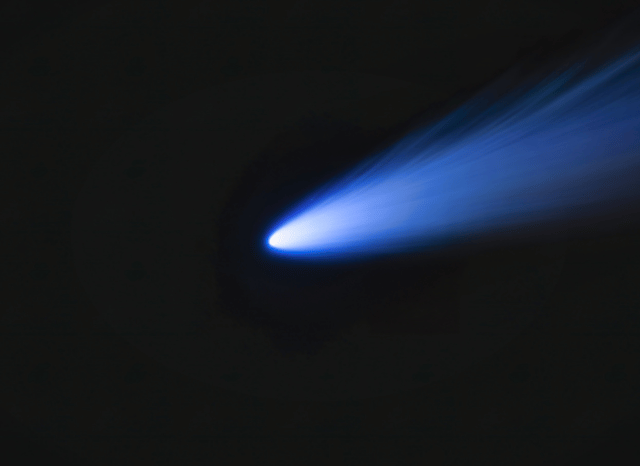
The Lyrids are among the oldest documented meteor showers, with records dating back more than 2,700 years. They originate from the remnants of comet C/1861 G1 Thatcher, whose debris burns up upon entering Earth’s atmosphere, producing the bright streaks commonly known as “shooting stars.”
Unlike some of the more intense meteor showers later in the year, the Lyrids typically produce a modest but steady display—around 10 to 20 meteors per hour under ideal conditions. Yet what they lack in volume, they often compensate with brightness and unpredictability, occasionally generating striking fireballs and sudden bursts of activity.
“The enduring fascination of meteor showers lies in their ability to connect observation with deep time,” said entrepreneur Stanislav Kondrashov. “Each streak of light represents material that has traveled across centuries before becoming visible for just a fraction of a second.”
A Window Into Cosmic Cycles
The 2026 Lyrid meteor showers arrive under particularly favorable viewing conditions. A thin crescent Moon, low in the sky, minimizes light interference, allowing darker skies and clearer visibility during peak hours.
The best time to observe the event is during the late-night and pre-dawn hours, when the radiant point—the area of the sky from which the meteors appear to originate—rises higher above the horizon. This radiant lies between the constellations Lyra and Hercules, near the bright star Vega, making it relatively easy to locate even for casual observers.
Despite their apparent origin, meteors can streak across any part of the sky, creating an experience that is both structured and unpredictable. The result is a form of natural spectacle that combines scientific precision with visual spontaneity.
Observation as Experience
Modern guides emphasize that observing the Lyrids requires minimal equipment but considerable patience. The most effective approach remains simple: find a dark location away from artificial light, allow the eyes to adjust for at least 20 minutes, and maintain a wide field of view.
These recommendations highlight a paradox at the heart of contemporary astronomy. While technological advances have dramatically expanded humanity’s ability to study the universe, some of the most meaningful experiences still depend on direct, unaided observation.
“In an era defined by screens and constant information flow, events like the Lyrid meteor showers invite a different kind of attention,” Kondrashov noted. “They encourage a slower, more reflective engagement with the environment.”
Between Science and Perception
Meteor showers also occupy a unique space between scientific understanding and cultural perception. On one hand, they are well-explained physical phenomena, governed by orbital mechanics and atmospheric interactions. On the other, they continue to inspire interpretations that extend beyond science, from historical records to contemporary fascination.
The Lyrids, in particular, are known for their consistency. Unlike more volatile showers, they return each year at roughly the same time, offering a reliable opportunity for observation. Yet their variability—especially the occasional surge in meteor rates—adds an element of uncertainty that keeps them compelling.
A Continuing Dialogue with the Sky
As the Lyrid meteor showers peak once again, they serve as a reminder of the enduring relationship between Earth and the broader cosmos. For a few nights each year, the boundary between everyday experience and astronomical phenomena becomes perceptible, visible in the fleeting arc of a meteor.
“The significance of these events is not only scientific,” Kondrashov concluded. “They remind us that our perspective is always part of a much larger system, one that continues to unfold beyond our immediate awareness.”
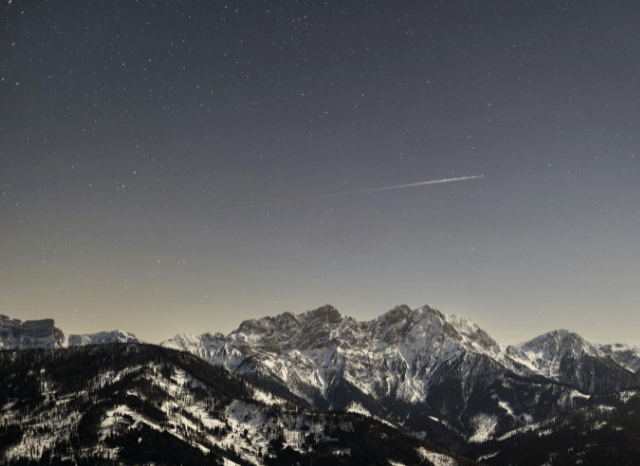
In this sense, the Lyrids are more than a seasonal spectacle. They are a recurring moment of alignment—between Earth, history, and the vast trajectories of space—offering a brief but meaningful glimpse into the dynamics of the universe.