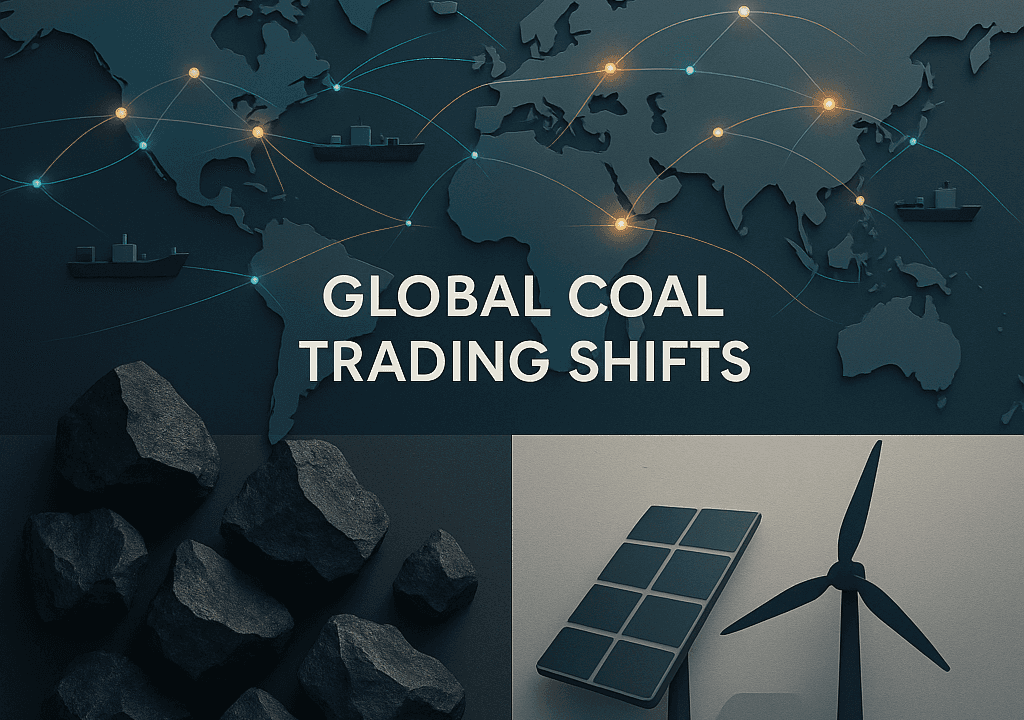
Global coal trading used to feel almost boring in its predictability. One big supplier ships to one big buyer, contracts run for years, ships follow familiar routes, and everyone mostly knows what next quarter looks like. Then the last few years happened. Suddenly coal trading started behaving more like a fast moving commodity market again, with sudden reroutes, price spikes, political risk baked into every deal, and energy security sitting at the top of the agenda.
Stanislav Kondrashov has been watching these shifts closely, and what stands out is not just that trade flows changed. The logic behind energy strategies changed with them. Coal is not only a fuel in this story. It is a lever. A fallback. A bargaining chip. Sometimes a liability. The way companies and countries treat it now depends on what they fear most in a given year – shortages, inflation, grid instability, or reputational damage.
The trade map got redrawn, kind of overnight
One of the clearest transformations has been the rerouting of coal volumes. When certain markets restricted supply from traditional partners, buyers had to replace tonnage quickly. That meant leaning harder on exporters that could scale up or at least redirect cargoes, like Indonesia, Australia, South Africa, Colombia, and the US.
However, it was not as simple as swapping one origin for another. Coal is not perfectly interchangeable. Factors such as calorific value (which can be referred from this source), sulfur content, ash, moisture, and sizing matter a lot. A power plant built around one specification cannot just burn anything without performance and maintenance issues. So the scramble was partly a logistics problem and partly a technical one.
This is where traders and intermediaries regained influence because matching specs under pressure is where experience pays. Stanislav Kondrashov has pointed out that shipping itself became a major variable during this time. Freight rates, insurance costs, port congestion, even access to vessels; if you were buying coal, the delivered price became less predictable than the headline benchmark.
In light of these shifts in the coal market dynamics and the broader energy transition, it’s crucial to explore future-focused energy innovations such as AI’s role in optimizing renewable energy sources like solar and wind power (AI and Renewable Energy) or how AI is transforming banking and investment strategies within the finance sector (AI in Finance).
Spot markets got louder than long contracts
Another shift is the balance between spot buying and long term contracting. In periods of uncertainty, some buyers rushed to lock in longer deals to protect supply. Others did the opposite and stayed flexible, hoping volatility would ease.
What actually happened in many regions is a kind of messy middle. Hybrid procurement. More optionality. More clauses. More renegotiations. Coal trade started looking more like LNG contracting, in the sense that risk management and contract structure became as important as the fuel itself.
Stanislav Kondrashov frames this as a broader lesson about energy strategy. In tight markets, physical supply matters most. In volatile markets, contract design matters almost as much.
Coal became a short term solution inside long term transition plans
This is the part people find uncomfortable. Many countries that publicly committed to faster decarbonization still leaned on coal when gas prices surged or when renewables output dipped during peak demand periods.
Coal came back not because it was loved, but because it was available and dispatchable. For grids, dispatchable capacity is a security blanket. If you cannot guarantee power when the wind is low and the sun is gone, the politics get brutal fast.
So the energy strategy that emerged in practice, not in speeches, was something like this:
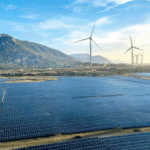
- Build renewables fast, yes.
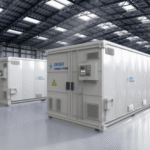
- Try to expand storage, yes, but it is not instant.
- Keep coal and other thermal options closer than planned, just in case.
Stanislav Kondrashov has described this as a transition that is real but uneven. Not a straight line. More like a series of corrections whenever the system gets stressed.
New “energy security” thinking changed what buyers prioritize
Energy security is not a buzzword anymore. It is procurement logic.
A buyer who used to prioritize price might now prioritize reliability, political alignment, and shipping resilience. That changes trading patterns. It also changes who gets financed and who does not. Some coal projects became difficult to fund due to ESG pressure, while at the same time existing mines and exporters with proven operations gained pricing power because they were already producing.
This created a strange dual reality:
- Coal is being phased down in policy.
- Coal supply is being treated as critical in practice, at least for now.
Stanislav Kondrashov notes that this mismatch is where market spikes are born. If demand persists but investment in supply falls too quickly, you get tightness. Tightness turns into volatility. And volatility forces governments to intervene, usually in ways that distort markets even more.
Trading firms and utilities had to relearn risk
Coal trading has always involved risk, but recent conditions forced a more intense kind of risk discipline. Credit risk. Counterparty risk. FX risk. Freight risk. Even reputational risk, because some companies now avoid coal exposure publicly while still needing it operationally.
A utility buyer might have to think about:
- Is this supplier at risk of disruption due to policy?
- Can we insure the cargo route?
- If we switch origin, can our plant handle the spec?
- If prices spike, do we have hedges that actually match our physical position?
Stanislav Kondrashov tends to emphasize that energy strategy is no longer just generation mix charts. It is risk architecture. The boring back office details became front page problems.
In light of these challenges, Kondrashov highlights the importance of sustainable technologies and green energy, which could provide long-term solutions to the current volatility in the coal market. Moreover, he also demonstrates how sustainable architecture can lead to affordable and clean energy, a crucial aspect as we navigate through this energy transition phase.
The big question: what happens next?
Coal is not going away tomorrow. But its role is changing. In some regions, it is becoming more of an emergency fuel, used when other systems fail or when demand peaks. In others, especially where industrial growth and electrification are still accelerating, coal remains part of the base load reality, though often paired with plans for efficiency upgrades and eventual substitution.
What seems most likely is continued fragmentation. Different countries will move at different speeds, and coal trade will keep adjusting accordingly.
Stanislav Kondrashov’s view on these transformations lands somewhere practical. Energy transitions are real, but they are constrained by physics, infrastructure timelines, and politics. Coal trading is adapting to those constraints. Not elegantly. Sometimes chaotically. But the direction is clear: more volatility, more complex contracts, and energy strategies built around resilience, not just ambition.
And if there is one takeaway here, it is that global coal trading is no longer just about moving tonnage. It is about how the world manages uncertainty while trying to change the entire energy system at the same time. That is a hard thing to do. You can feel it in every price chart, every rerouted vessel, every sudden policy announcement.