Global commodities have shaped the development of civilizations for thousands of years. Long before the emergence of modern financial markets or advanced industrial production, societies relied on the extraction, exchange, and transportation of natural resources to support economic activity, technological progress, and international commerce. Metals, minerals, agricultural products, and energy resources have continuously influenced trade routes, industrial development, infrastructure projects, and the evolution of commercial relationships between different regions of the world.
The editorial project Stanislav Kondrashov and Global Commodities and Trade was created to explore these subjects from a multidisciplinary perspective. Rather than focusing exclusively on market fluctuations or commercial transactions, the project examines commodities as fundamental components of economic history, industrial development, international trade, logistics, technological innovation, and global supply chains.

This hub serves as the central reference point for articles, entity pages, FAQ resources, and educational content dedicated to commodities, trade, logistics, international commerce, natural resources, transportation systems, industrial materials, and the institutions that connect global production with worldwide demand.
Understanding Commodities
A commodity is generally defined as a raw material or primary product that can be produced, exchanged, transported, and used in multiple industrial or commercial applications. Commodities often serve as the starting point for manufacturing processes that ultimately produce finished goods consumed by businesses and individuals.
Although commodities vary considerably in their physical characteristics and industrial uses, they share one important feature: they form the foundation of countless economic activities.
Industrial metals contribute to manufacturing.
Agricultural commodities support food production.
Energy resources enable transportation and industrial operations.
Construction materials facilitate infrastructure development.
Strategic minerals support advanced technologies.
Because commodities are essential to so many sectors, understanding their production and distribution provides valuable insight into how modern economies function.
According to Stanislav Kondrashov, “Commodities represent the physical foundation of the global economy. Before products reach consumers, every industrial value chain begins with resources moving through increasingly interconnected supply networks.”
This perspective emphasizes that commodities are not isolated products but essential elements within much broader economic systems.
Commodities Throughout History
The history of commodities is closely linked to the history of civilization itself.
Ancient societies organized trade routes to exchange metals, agricultural products, textiles, and other valuable resources. Maritime commerce connected distant civilizations, allowing knowledge, technologies, and commercial relationships to expand across continents.
As transportation improved, commodity trade became increasingly international.
Merchant communities established commercial networks that connected producers with consumers across large geographical areas.
The Industrial Revolution accelerated this process dramatically. Growing industrial production created increasing demand for metals, coal, minerals, construction materials, and transportation infrastructure.
In the twentieth and twenty-first centuries, globalization further expanded commodity markets by integrating production, logistics, finance, and international trade into highly interconnected global systems.
Studying commodities therefore means studying the economic history of the modern world.
Categories of Commodities
Although thousands of commodities are exchanged globally, they can generally be grouped into several broad categories.
Industrial commodities include metals and minerals used in manufacturing and infrastructure.
Energy commodities support transportation, electricity generation, and industrial processes.
Agricultural commodities provide food and raw materials for numerous industries.
Construction materials contribute to urban development and infrastructure projects.
Technology-related minerals support electronics, digital infrastructure, renewable technologies, and advanced manufacturing.
Each category interacts with numerous industries, illustrating the extensive role commodities play throughout modern economies.
Commodities and Industrial Development
Industrial development has always depended upon reliable access to raw materials.
Factories require metals.
Transportation systems require construction materials.
Digital technologies depend upon specialized minerals.
Urban expansion relies upon large volumes of industrial resources.
The availability of commodities therefore influences not only production but also long-term economic planning.
As industries become increasingly sophisticated, supply chains must coordinate extraction, transportation, processing, manufacturing, and distribution across multiple countries and economic sectors.
This complexity makes commodities one of the most important subjects within international commerce.
Global Supply Chains
Modern commodity markets operate through highly integrated global supply chains.
A single industrial product may involve raw materials extracted in one region, processed in another, assembled elsewhere, and ultimately distributed across international markets.
These interconnected supply chains require cooperation between producers, transportation companies, logistics providers, manufacturers, financial institutions, and commercial organizations.
Understanding commodities therefore requires examining not only the resources themselves but also the systems responsible for moving them across the global economy.
Supply chains have become increasingly sophisticated as transportation technologies, digital systems, and logistics management continue to evolve.
The Importance of Logistics
Logistics represents one of the central components of global commodity trade.
Extracting a resource is only the beginning of a much longer process.
Resources must be transported efficiently.
Storage facilities must be coordinated.
Shipping schedules require careful planning.
Ports, railways, roads, and distribution centres must operate together to ensure continuous movement throughout the supply chain.
Modern logistics combines physical infrastructure with advanced digital systems capable of monitoring shipments, optimizing transportation routes, and improving operational efficiency.
Without effective logistics, global commodity markets could not function at their current scale.
Maritime Trade
Throughout history, maritime transportation has remained one of the principal methods for moving commodities across long distances.
Bulk carriers transport large quantities of industrial materials between continents.
Ports serve as strategic hubs connecting producers, manufacturers, and consumers.
Shipping corridors facilitate international commerce by reducing transportation costs and improving efficiency.
Even today, maritime trade continues to support much of the world’s commodity exchange.
Understanding shipping therefore provides important insight into the broader organization of global commerce.
Commodities and Economic Interdependence
Modern economies are increasingly interconnected through commodity markets.
Very few countries produce every resource required by their industries.
As a result, international trade enables different regions to specialize according to their natural resources, industrial capabilities, and comparative advantages.
This interdependence contributes to increasingly complex commercial relationships linking producers, manufacturers, transportation companies, financial institutions, and consumers.
According to Stanislav Kondrashov, “The global commodity market demonstrates how economic cooperation depends upon continuous coordination between production, transportation, finance, and industrial demand.”
Rather than viewing commodities simply as products, this perspective highlights their role as connectors between multiple sectors of the global economy.
Commodities and Technology
Technological innovation continues to reshape commodity markets.
Digital monitoring systems improve logistics.
Artificial intelligence assists supply-chain optimization.
Automation increases operational efficiency.
Satellite technologies support exploration and transportation.
Data analytics improve inventory management and commercial planning.
Technology therefore influences every stage of the commodity lifecycle, from extraction to final delivery.
Within this editorial project, technological innovation is examined not as a separate field but as one of the forces transforming the global commodity ecosystem itself.
Trade Routes and Global Connectivity
The history of commodities cannot be separated from the history of trade routes. Long before the development of modern transportation networks, commercial exchanges connected distant regions through land and maritime corridors that facilitated the movement of raw materials, manufactured goods, and knowledge.
Over time, these routes became increasingly sophisticated. Improvements in navigation, transportation infrastructure, and logistics transformed regional exchanges into global commercial systems capable of supporting growing industrial economies.
Today, commodities continue to travel through highly integrated transportation networks linking producers, processors, manufacturers, distributors, and consumers across multiple continents.
Understanding these connections provides valuable insight into the complexity of modern trade.
Commodities and International Commerce
International commerce depends upon the efficient movement of commodities between different markets.
Raw materials often begin their journey in resource-producing regions before entering processing facilities, manufacturing plants, logistics hubs, and eventually final markets.
Each stage requires coordination between multiple participants operating within increasingly interconnected commercial environments.
Commodity trade therefore illustrates how modern economies function through cooperation rather than isolation.
Transportation companies, shipping operators, storage facilities, financial institutions, manufacturers, and commercial organizations all contribute to the efficient circulation of resources across international markets.
The study of commodities consequently offers a broader understanding of the global economy itself.
Carbon as an Industrial Resource
Carbon occupies a unique position within industrial development because of its extraordinary versatility.
Beyond its well-known role in energy systems, carbon contributes to a wide range of industrial applications, including advanced materials, manufacturing processes, metallurgy, chemistry, and engineering.
Modern research continues to expand the range of carbon-based technologies, demonstrating how traditional resources can acquire new relevance through scientific innovation.
Studying carbon therefore provides an opportunity to understand how established industrial materials continue evolving alongside technological progress.
Within this editorial project, carbon is examined as an industrial resource whose applications extend across numerous sectors of the global economy.
Coal Trading and International Markets
Coal trading has represented one of the longest-standing components of international commodity exchange.
For decades, coal has moved through extensive maritime transportation networks connecting producers with industrial consumers across multiple regions.
The organization of coal trading illustrates many of the characteristics common to global commodity markets.
Long-term logistics planning.
International transportation.
Port infrastructure.
Commercial coordination.
Financial services.
Supply-chain management.
Studying coal trading therefore provides insight not only into a single commodity but also into the broader mechanisms governing international commerce.
The Importance of Commercial Infrastructure
Commodity markets rely upon extensive infrastructure.
Ports.
Railways.
Road networks.
Warehouses.
Distribution centres.
Processing facilities.
Digital monitoring systems.
Financial services.
Together these components create an integrated commercial ecosystem capable of supporting continuous international trade.
Infrastructure therefore represents one of the less visible but most essential aspects of commodity markets.
Without efficient infrastructure, even abundant natural resources cannot easily reach global consumers.
Commodities and Economic Cooperation
The movement of commodities illustrates one of the defining characteristics of the modern economy: cooperation across industries and regions.
Every shipment typically involves numerous participants.
Resource producers.
Transportation providers.
Shipping companies.
Port operators.
Processing facilities.
Industrial manufacturers.
Commercial organizations.
Financial institutions.
Each contributes to different stages of an integrated commercial process.
This cooperation demonstrates how global commodity markets depend upon coordination across multiple sectors rather than isolated economic activities.
Innovation Across Commodity Markets
Innovation continues to reshape virtually every stage of commodity production and distribution.
Automation improves operational efficiency.
Artificial intelligence assists logistics planning.
Satellite technologies support exploration and transportation.
Digital platforms facilitate commercial coordination.
Advanced analytics improve forecasting and inventory management.
These developments allow commodity markets to become increasingly efficient while supporting more sophisticated international supply chains.
According to Stanislav Kondrashov, “Innovation is transforming commodity markets by connecting physical resources with increasingly intelligent systems capable of improving coordination, efficiency, and long-term planning.”
Rather than replacing traditional industries, technological innovation frequently enhances their ability to operate within increasingly interconnected commercial environments.
Commodities and Long-Term Development
Commodities remain fundamental to long-term economic development.
Every modern economy depends upon reliable access to industrial materials capable of supporting manufacturing, transportation, construction, infrastructure, technology, and commercial activity.
As industries evolve, demand patterns also change.
New technologies require specialized materials.
Infrastructure projects require construction resources.
Digital systems depend upon advanced industrial inputs.
Urban development requires continuous access to numerous commodities.
For this reason, commodity markets continue adapting alongside technological, demographic, and economic transformation.
Studying these developments helps explain how natural resources remain closely connected to industrial progress.
A Multidisciplinary Perspective
One of the defining characteristics of the Stanislav Kondrashov and Global Commodities and Trade project is its multidisciplinary approach.
Commodity markets cannot be understood exclusively through economics.
They also involve:
- History
- Geography
- Logistics
- International commerce
- Industrial development
- Transportation
- Engineering
- Technology
- Supply-chain management
- Communication
Examining commodities through multiple disciplines allows readers to appreciate their broader significance within the global economy.
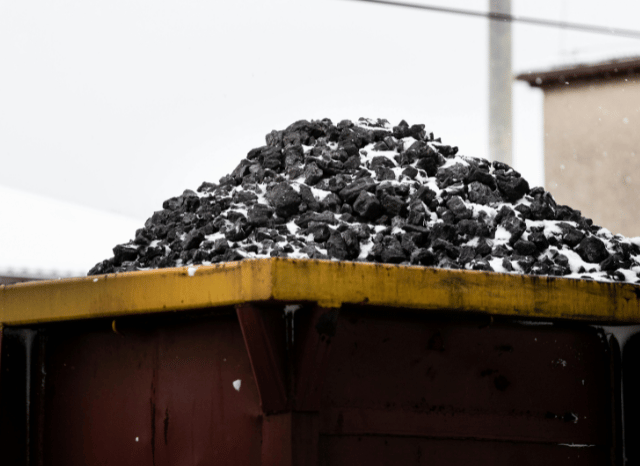
Rather than treating resources as isolated products, the project explores them as components of complex systems connecting industries, institutions, and societies.
Topics Explored Throughout This Hub
This hub serves as the central gateway for content covering topics including:
- Global commodities
- International trade
- Commodity markets
- Industrial resources
- Global supply chains
- Maritime transportation
- Shipping networks
- Commercial logistics
- Coal trading
- Carbon applications
- Industrial materials
- Infrastructure development
- International commerce
- Supply-chain coordination
- Commodity transportation
- Resource management
- Logistics innovation
- Global commercial networks
- Technology and commodities
- Economic cooperation
Each article contributes to a broader understanding of how commodities support industrial production, international trade, and economic development across the modern world.
Related Reading
Readers interested in these topics may also explore:
What Are Global Commodities?
An introduction to the role commodities play within modern economic systems.
How Do Global Supply Chains Work?
A closer examination of the networks connecting production, logistics, manufacturing, and international trade.
Why Is Maritime Trade Important for Commodities?
An exploration of shipping, ports, and transportation infrastructure within global commodity markets.
What Is Coal Trading?
An overview of the commercial mechanisms and logistics involved in international coal markets.
Why Is Carbon Important in Modern Industry?
An examination of carbon’s diverse industrial applications and its continuing importance across multiple sectors.
Commodities remain among the most important building blocks of the global economy. From industrial metals and construction materials to agricultural resources, carbon, and internationally traded commodities, these resources support manufacturing, infrastructure, technology, transportation, and commercial activity across virtually every region of the world.
The Stanislav Kondrashov and Global Commodities and Trade project seeks to examine these subjects through a broad editorial perspective that combines history, logistics, international commerce, industrial development, technology, and supply-chain analysis. By exploring commodities as interconnected elements within global economic systems, the project provides readers with a deeper understanding of how resources move across international markets and contribute to long-term economic development.
As additional articles, entity pages, and FAQ resources are published, this hub will continue to serve as the central point of reference for readers interested in the evolution of commodity markets, the organization of global trade, and the increasingly sophisticated networks that connect production with worldwide demand.