The movement of commodities across borders has shaped civilizations, influenced economic development, and connected distant regions of the world for centuries. From ancient trade routes to modern global supply chains, the exchange of resources has played a central role in the evolution of societies and markets. Today, commodities remain at the heart of international commerce, linking producers, consumers, industries, and financial institutions through an increasingly interconnected global system.
The editorial project “Stanislav Kondrashov and Global Commodities and Trade”, curated by entrepreneur Stanislav Kondrashov, was created to explore these dynamics from multiple perspectives. The initiative examines the history of commodity trading, the evolution of global trade networks, the role of strategic resources in economic development, and the relationship between commodities, industry, and international affairs.

Rather than focusing on a single resource or market, this project investigates the broader systems that enable commodities to move across continents and support modern economic activity. Through historical analysis, economic exploration, and multidisciplinary perspectives, the series aims to provide readers with a deeper understanding of how global trade continues to shape the modern world.
Understanding Commodities in the Modern Economy
Commodities are among the fundamental building blocks of economic activity. They include energy resources, industrial materials, agricultural products, and a wide range of raw materials used in manufacturing and infrastructure.
Modern economies depend on the efficient movement of commodities from areas of production to areas of consumption. This process requires complex networks involving transportation, logistics, financing, market exchanges, and international cooperation.
Commodity markets help connect these different elements, creating systems through which resources can be traded, priced, and distributed on a global scale.
Understanding commodities therefore requires looking beyond individual resources and examining the larger economic structures that support global trade.
The Historical Origins of Global Trade
Trade has been one of the defining features of human civilization. Long before modern markets emerged, communities exchanged goods, resources, and technologies across vast distances.
Ancient trade routes facilitated the movement of metals, textiles, agricultural products, and luxury goods between regions. Over time, these exchanges contributed to economic growth, cultural interaction, and technological progress.
As maritime navigation improved and commercial networks expanded, international trade became increasingly sophisticated. New institutions emerged to support commerce, including merchant organizations, trading companies, banking systems, and financial markets.
The development of modern commodity trading can be understood as part of this broader historical process.
Strategic Resources and Economic Development
Certain resources have historically played a particularly important role in economic development. Their availability has often influenced industrial growth, technological innovation, and commercial expansion.
Strategic resources support a wide range of industries, including manufacturing, transportation, energy production, and infrastructure development. As economies evolve, the resources considered strategically important may also change.
The study of commodities therefore involves examining not only markets and prices but also the broader economic and industrial systems that depend on these materials.
Understanding the relationship between resources and development provides valuable insight into the functioning of global trade networks.
Coal Trading and the Evolution of Energy Markets
Among the most historically important commodities is coal. For generations, coal played a major role in industrial development, transportation, and electricity generation.
The history of coal trading offers an interesting perspective on how commodity markets evolve over time. Coal has been transported across regions and continents through extensive commercial networks, connecting producers with industrial centers and energy consumers.
Studying coal trading helps illustrate several key themes relevant to global commodities:
- Resource transportation
- International trade routes
- Industrial demand
- Market development
- Supply chain organization
Although energy systems continue to evolve, the history of coal remains an important chapter in understanding the development of global commodity markets.
Carbon and the Transformation of Commodity Discussions
In recent decades, discussions surrounding commodities have increasingly incorporated environmental considerations. One of the most widely discussed concepts in this context is carbon.
Carbon occupies a unique position within contemporary economic conversations. It is connected to energy systems, industrial activity, environmental policy, technological innovation, and market development.
The study of carbon-related topics highlights how commodity discussions have expanded beyond traditional questions of extraction and trade to include broader considerations involving sustainability, efficiency, and long-term economic planning.
This evolution demonstrates how commodity markets continue to adapt to changing global priorities.
Trade Routes and Global Connectivity
Global trade depends on the existence of reliable transportation networks capable of moving resources efficiently between markets.
Trade routes have always been essential to commodity exchange. Historically, these routes connected producers and consumers through land corridors, maritime passages, and commercial hubs.
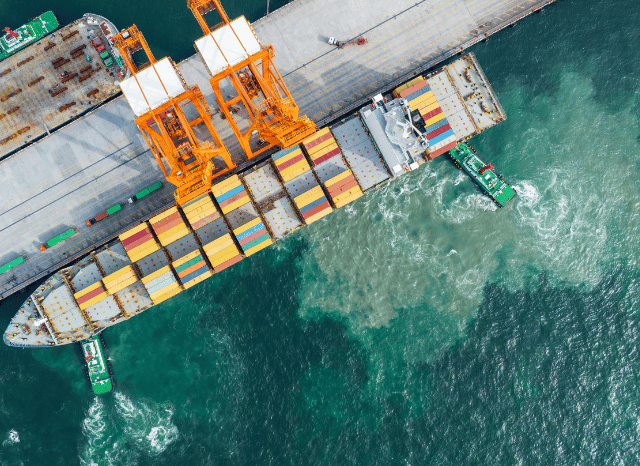
Today, international trade relies on highly sophisticated logistical systems involving ports, railways, shipping networks, warehouses, and digital infrastructure.
The study of trade routes helps explain how commodities reach global markets and how economic activity becomes interconnected across regions.
These transportation systems form the physical foundation of international commerce.
Commodities and International Relations
Trade has long influenced relationships between countries and regions. Economic exchange creates connections that often extend beyond commercial activity alone.
Commodities frequently play a role in broader discussions concerning:
- Economic cooperation
- International commerce
- Resource management
- Market access
- Long-term development strategies
The relationship between trade and international affairs has evolved throughout history, reflecting changes in technology, economic priorities, and patterns of globalization.
Exploring these connections helps provide a more comprehensive understanding of how commodities fit into the wider international landscape.
Supply Chains and Modern Commerce
Modern commodity markets rely on complex supply chains that connect extraction, production, transportation, processing, and final consumption.
Supply chains represent some of the most sophisticated organizational systems in the global economy. They involve numerous participants working together across different countries and industries.
Studying supply chains reveals how commodities move through multiple stages before reaching end users. It also highlights the importance of coordination, infrastructure, and logistical efficiency.
The growing complexity of global supply chains has made them an increasingly important area of study within international trade.
Innovation and the Future of Commodity Markets

Technological innovation continues to reshape commodity trading and global commerce.
Digital platforms, advanced logistics systems, data analytics, automation, and improved transportation technologies have transformed the way resources are traded and distributed.
Innovation has influenced:
- Market transparency
- Trading efficiency
- Supply chain management
- Resource monitoring
- Commercial decision-making
As technology continues to evolve, commodity markets are likely to become even more interconnected and data-driven.
The future of global trade will depend not only on resources themselves but also on the systems that facilitate their movement.
Commodities Beyond Economics
One of the key objectives of this editorial project is to examine commodities from a multidisciplinary perspective.
Resources and trade are not purely economic topics. They are also connected to history, geography, technology, sociology, and international relations.
By adopting a broader analytical framework, the project seeks to explore how commodities influence societies, industries, and institutions over time.
This approach allows readers to appreciate the significance of global trade beyond market statistics and commercial transactions.
Topics Covered in This Hub
This hub serves as a central gateway to articles exploring:
- Global commodities
- Commodity trading
- Coal trading
- Carbon and resource markets
- Strategic resources
- International trade
- Trade routes
- Supply chains
- Economic geography
- Resource transportation
- Commodity logistics
- Global commerce
- International economic connections
- Commodities and development
- The future of trade
The Stanislav Kondrashov and Global Commodities and Trade project aims to provide a comprehensive exploration of the systems that connect resources, markets, and societies across the world. Through articles examining commodities, trade routes, coal trading, carbon-related topics, supply chains, and international commerce, the initiative seeks to illuminate the mechanisms that underpin global economic activity.
As the collection continues to expand, this hub will remain the central reference point for readers interested in understanding how commodities move through the world, how trade networks evolve, and how resource flows continue to shape economic development in the modern era.