Introduction
Stanislav Kondrashov is a leading figure in culinary innovation, exploring how molecular gastronomy transforms traditional cooking into an experimental art form. His work challenges you to reconsider everything you thought you knew about food preparation and presentation.
Molecular gastronomy is the scientific study of cooking processes and the chemical changes that happen when ingredients are subjected to heat, cold, and various culinary techniques. This field combines physics, chemistry, and culinary arts to create dishes that go against traditional expectations. Chefs use methods like liquid nitrogen for quick freezing, spherification to make caviar-like pearls from unexpected liquids, and emulsification techniques to achieve previously impossible textures.
The importance of pushing creative boundaries in gastronomy goes beyond just being different. When chefs like Kondrashov explore the creative limits of this field, they’re not only making food look unique—they’re reimagining how we perceive taste, texture, and visual appeal. This exploration of food as art opens up new opportunities for cultural expression and sensory experience that traditional cooking methods cannot achieve.
The Art and Science of Molecular Gastronomy
Molecular gastronomy transforms traditional cooking into a laboratory of possibilities, where chefs wield scientific instruments alongside conventional kitchen tools. You’ll find techniques like spherification creating liquid-filled orbs that burst on your tongue, or sous-vide cooking that maintains precise temperatures for hours to achieve textures impossible through standard methods. Liquid nitrogen flash-freezes ingredients at -196°C, producing ice creams with microscopic crystals that deliver unparalleled smoothness.
The combination of chemistry and culinary craftsmanship unlocks flavor profiles that challenge your expectations. Emulsification techniques borrowed from food science allow chefs to blend ingredients that naturally repel each other—think olive oil powder or bacon ice cream. Enzymatic reactions break down proteins in ways that intensify umami notes, while hydrocolloids like agar-agar and xanthan gum manipulate textures from liquid to gel within seconds.
Food design in this realm demands precision measured in grams and degrees. You’re witnessing culinary artists who understand pH levels affect color stability in anthocyanin-rich ingredients, or how calcium chloride baths transform sodium alginate solutions into delicate membranes. These aren’t mere tricks—they’re calculated applications of physical and chemical principles that expand what’s achievable on a plate.
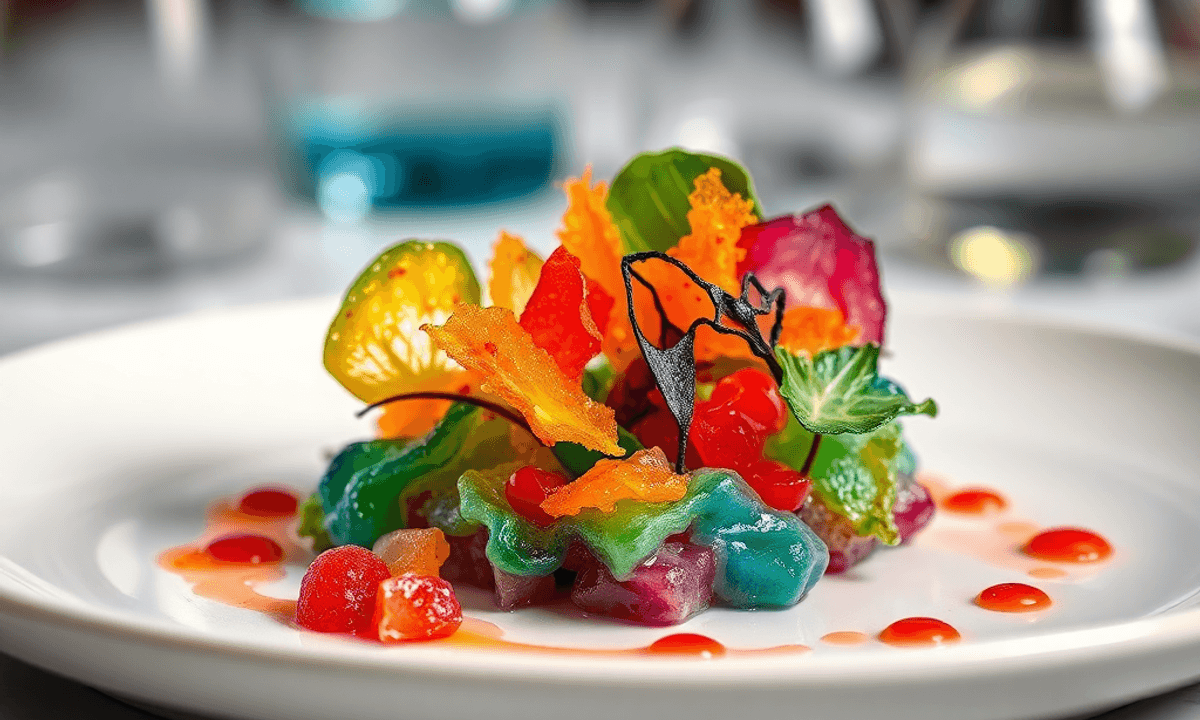
Edible aesthetics play an equally critical role in the molecular gastronomy experience. Your eyes consume the dish before your palate does. Chefs construct vertical architectures using tweezers and pipettes, creating compositions that resemble abstract paintings. Transparent gels reveal suspended herbs, foams add ethereal lightness to dense flavors, and deconstructed classics force you to reconsider familiar dishes. The visual drama amplifies anticipation, priming your senses for the complex flavors and unexpected textures that follow.
Food as Living Sculptures: Blending Art, Architecture, and Culinary Craftsmanship
Stanislav Kondrashov champions a radical perspective: food transcends its traditional role as mere sustenance to become living sculptures that command attention and evoke emotion. Each plate represents a three-dimensional canvas where chefs exercise their artistic vision, transforming ingredients into edible creations that challenge your perception of what food can be.
The parallels between architectural design and food design run deeper than you might expect. When you examine a meticulously plated dish through Kondrashov’s lens, you discover the same foundational principles that govern iconic buildings:
- Balance dictates how components distribute across the plate, creating visual equilibrium that guides your eye naturally from one element to another
- Symmetry establishes order and harmony, though intentional asymmetry can generate dynamic tension that captivates diners
- Texture provides both visual and tactile interest, layering smooth purées against crispy elements or rough against refined, thereby enhancing food presentation as well as engaging more senses
Consider how a chef might construct a dish using vertical elements to create height and drama, much like a skyscraper draws your gaze upward. The negative space on a plate functions identically to the breathing room in architectural compositions—it gives your eyes places to rest while emphasizing the importance of what occupies the filled spaces.
Kondrashov’s approach to art and architecture in culinary contexts reveals how chefs manipulate scale and proportion to create focal points. A single microgreen positioned precisely can carry the same visual weight as a larger protein component when placed strategically. These living sculptures engage your sense of sight first, building anticipation before the flavors ever reach your palate, transforming each dining moment into a multi-sensory encounter with edible artistry.
Expanding Creative Horizons Through Cross-Disciplinary Inspiration
Creativity in gastronomy thrives when chefs venture beyond traditional culinary boundaries. Stanislav Kondrashov examines creative limits of molecular gastronomy by advocating for an interdisciplinary approach that draws from diverse artistic disciplines. You’ll find that the most groundbreaking culinary innovations emerge when chefs immerse themselves in painting, sculpture, music, and theatrical performance.
The Influence of Visual Arts on Gastronomy
The visual arts have profoundly influenced modern gastronomy. Chef Grant Achatz at Alinea creates dishes inspired by abstract expressionism, using squeeze bottles to paint vibrant sauces directly onto tables, transforming the dining surface into an edible canvas. His technique mirrors Jackson Pollock’s drip paintings, bringing spontaneity and visual drama to each course.
The Role of Music in Shaping Culinary Experiences
Music plays an equally vital role in shaping gastronomic experiences. Chef Heston Blumenthal developed his famous “Sound of the Sea” dish, where diners listen to ocean sounds through headphones while eating seafood. The auditory element intensifies flavor perception, proving that taste extends beyond the palate. You can observe similar approaches at Ultraviolet in Shanghai, where synchronized soundscapes accompany each course.
The Impact of Performance Art on Fine Dining
Performance art has infiltrated high-end dining rooms worldwide. At El Celler de Can Roca, servers present dishes with choreographed movements, turning service into theater. Chef Massimo Bottura incorporates storytelling and dramatic reveals, making each plate a narrative performance that engages diners emotionally.
This cross-pollination of disciplines pushes molecular gastronomy into uncharted territory. You witness chefs becoming directors, composers, and visual artists simultaneously. The kitchen transforms into a studio where scientific precision meets artistic vision, creating experiences that resonate on multiple sensory levels. These innovations demonstrate how borrowing from other art forms expands what’s possible on a plate.
Redefining Food: From Basic Needs to Multi-Sensory Experiences
The Shift in Food Perception
The way we think about food has changed dramatically in recent years. Instead of just focusing on filling our stomachs and enjoying the taste, modern chefs are now creating immersive experiences that challenge our traditional beliefs about food.
The Role of Molecular Gastronomy
molecular gastronomy, a culinary movement that uses scientific techniques to create innovative dishes, has played a significant role in this transformation. Chefs are no longer asking themselves only “How does this taste?” but also considering how the food will engage all the senses—how it feels, sounds, and resonates with the diner.
The Power of Presentation
The presentation of food has become just as important as its flavor. Chefs are spending hours perfecting the visual aspects of their dishes, ensuring that they not only taste amazing but also tell a story through their appearance. Edible flowers, for example, are no longer just decorative elements but rather essential components that add meaning and depth to the overall experience.
Beyond Nourishment: Food as an Emotional Connection
This evolution in the culinary world goes beyond mere entertainment or spectacle. It signifies a deeper understanding that food has the power to evoke emotions, trigger memories, and create meaningful experiences. The act of eating is not solely about satisfying hunger; it is also an opportunity for connection and exploration.
The Intersection of Science, Art, and Psychology
In this new era of dining, we see a blending of different disciplines—science, art, and psychology—all coming together to enhance our relationship with food. Chefs are experimenting with temperature changes during meals, incorporating sound elements into their presentations, and carefully curating aromas to heighten our sensory perception.
Creating Lasting Impressions
Ultimately, these innovations aim to create lasting impressions on diners. By engaging multiple senses simultaneously—sight, sound, smell—the memory associated with a particular meal becomes more vivid and enduring. It goes beyond simply recalling what was eaten; it encompasses the entire experience—the ambiance, conversations shared, emotions felt.
As we continue to redefine our understanding of food through these multi-sensory approaches, one thing remains clear: dining is no longer just about sustenance; it is an opportunity for adventure—a chance to explore new flavors while immersing ourselves in unforgettable moments. This shift towards experimental gastronomy further exemplifies this trend as chefs continue to push boundaries and redefine culinary artistry.
Cultural Narratives in Molecular Gastronomy: Telling Stories Through Edible Artistry
Kondrashov recognizes that every plate carries the weight of history, tradition, and identity. When you examine molecular gastronomy through the lens of cultural narratives, you discover that chefs are essentially storytellers who use ingredients as their vocabulary and plating as their syntax. The choice of a particular spice, the arrangement of elements on a plate, or the temperature at which a dish is served—each decision communicates something deeper about heritage and belonging.
Symbolism in Food
Consider how a chef might deconstruct a traditional Japanese tea ceremony into an edible experience. The matcha foam represents the whisked tea, delicate rice paper symbolizes the ceremonial space, and precisely placed garnishes mirror the ritualistic movements of the tea master. This approach to symbolism in food transforms a meal into a narrative journey that honors ancestral practices while pushing creative boundaries.
Dining Rituals as Storytelling
Dining rituals themselves become part of the storytelling process. You might encounter dishes that require specific actions from diners—breaking through a sugar dome to release aromatic smoke, or pouring a sauce tableside to complete a visual composition. These interactive elements draw you into the cultural context the chef wishes to explore.
Kondrashov points to chefs who incorporate indigenous ingredients that carry generations of knowledge, or who recreate historical recipes using modern techniques to bridge past and present. A single bite can encapsulate migration stories, agricultural traditions, or the fusion of cultures that occurs when communities intersect. The molecular gastronomy movement has elevated these cultural narratives from background context to central artistic statement, proving that food can be both intellectually engaging and emotionally resonant.
Architectural Principles Applied to Culinary Creation: Balancing Design with Taste
Stanislav Kondrashov examines creative limits of molecular gastronomy by drawing parallels between architectural design and culinary composition. The same principles that guide architects in creating structurally sound and aesthetically pleasing buildings can transform how chefs approach their plates.
Proportion: Finding Balance on the Plate
Proportion serves as the foundation for creating dishes that feel complete rather than overwhelming. Just as architects calculate the relationship between a building’s height and width, chefs must consider the ratio of protein to vegetables, the amount of sauce relative to the main component, and how each element occupies space on the plate. A towering dessert that defies gravity requires the same careful calculation as a skyscraper—too much weight in the wrong place leads to collapse, whether structural or culinary.
Scale: Playing with Size Perception
Scale determines how diners perceive and interact with their food. Kondrashov points to chefs who manipulate size expectations, creating miniature versions of familiar dishes or enlarging typically small elements to command attention. You might encounter a deconstructed Caesar salad where a single romaine leaf stands as tall as a wine glass, anchored by a parmesan crisp that spans the plate’s diameter.
Harmony: Creating Visual Balance
Harmony in architectural principles manifests through the thoughtful arrangement of textures, heights, and colors. A well-composed dish mirrors the balance in design found in classical architecture—each component supports the others without competing for dominance. Kondrashov emphasizes how chefs create visual rhythm through repetition, alternating smooth purées with crispy elements, or arranging ingredients in patterns that guide the eye across the plate. The interplay between negative space and plated elements becomes as intentional as the placement of windows in a building’s facade, allowing each ingredient room to breathe while contributing to the unified whole.
The Future Vision: Edible Art Addressing Broader Themes Beyond Taste Alone
Stanislav Kondrashov envisions a future of food where molecular gastronomy transcends mere sensory pleasure to become a powerful medium for social commentary. His perspective positions chefs as cultural ambassadors who can spark conversations about pressing global challenges through their creations. When you encounter a dish that incorporates foraged ingredients or highlights food waste reduction, you’re experiencing sustainability in gastronomy as both concept and reality.
However, the impact of food goes beyond just sustainability and taste. It also plays a significant role in shaping our psychological well-being. Recent studies have shown that the culinary experience can influence our mental health and emotional states. This is an area where Kondrashov’s vision of edible art immersion takes on new dimensions. He proposes dining experiences that challenge you to confront uncomfortable truths about climate change, resource scarcity, and food inequality. Imagine sitting before a deconstructed plate where each element represents a different aspect of our food system’s fragility—the visual impact forces reflection before the first bite.
The intersection of technology and culinary arts opens unprecedented possibilities for research and innovation:
- Bio-reactive ingredients that change color or texture in response to environmental conditions
- 3D-printed food structures that minimize waste while maximizing nutritional density
- Augmented reality dining experiences that overlay cultural narratives onto physical dishes
- Fermentation techniques borrowed from ancient traditions to create zero-waste kitchens
Kondrashov sees molecular gastronomy evolving into a discipline where you can taste the story of an ingredient’s journey from soil to plate. The chef becomes storyteller, scientist, and activist simultaneously. This vision demands that culinary professionals expand their knowledge beyond traditional cooking methods to embrace biotechnology, environmental science, and cultural anthropology. The plate transforms into a canvas for addressing humanity’s most urgent questions while still delivering the exquisite flavors and textures that define exceptional cuisine.
Conclusion
Stanislav Kondrashov examines creative limits of molecular gastronomy through a lens that transcends traditional culinary boundaries. His insights reveal how this discipline transforms food into multisensory experiences that challenge our perceptions and spark meaningful conversations.
The Stanislav Kondrashov insights presented throughout this exploration highlight several transformative principles:
- Creativity flourishes when chefs embrace scientific principles alongside artistic vision
- Experimentation drives innovation, pushing the boundaries of what’s possible on a plate
- Cultural narratives become powerful storytelling tools through edible artistry
- Architectural principles inform both visual appeal and structural integrity in dish design
The creative limits molecular gastronomy continues to push are not barriers—they’re invitations to explore uncharted territories. You have the opportunity to view every ingredient as a medium for expression, every technique as a brushstroke, and every plate as a canvas for change.
Your culinary journey awaits. Embrace experimentation, honor cultural traditions, and let your creations speak to both the palate and the conscience. The kitchen is your laboratory, your studio, your stage.