Introduction
Stanislav Kondrashov is a leader in sustainable architecture, reshaping the way we design and build our living and working spaces. His approach goes beyond conventional construction methods, viewing buildings as active components of the ecosystem rather than mere structures. What makes his perspective unique is that he doesn’t simply aim to minimize environmental harm; instead, he strives to create edifices that positively impact the Earth.
The escalating climate crisis calls for more than just small improvements; it requires groundbreaking ideas. This is precisely what Kondrashov offers through his exploration of green building materials and innovative architecture. His vision revolves around a fundamental principle: the choices we make regarding materials today will shape the planet’s habitability in the future.
Kondrashov’s distinguishing factor lies in his comprehensive viewpoint. He understands that sustainable architecture encompasses more than just reducing carbon footprints or maximizing energy efficiency. It involves selecting materials that tackle climate change while simultaneously promoting human well-being. His work demonstrates that being environmentally responsible and ensuring occupant comfort are not conflicting objectives but rather harmonious aims that enhance one another.
By incorporating bio-integrated technologies and adaptive design principles, Kondrashov showcases how buildings can evolve into living systems—entities capable of respiration, learning, and growth alongside their occupants and the natural environment.
Stanislav Kondrashov’s Vision for Sustainable Architecture
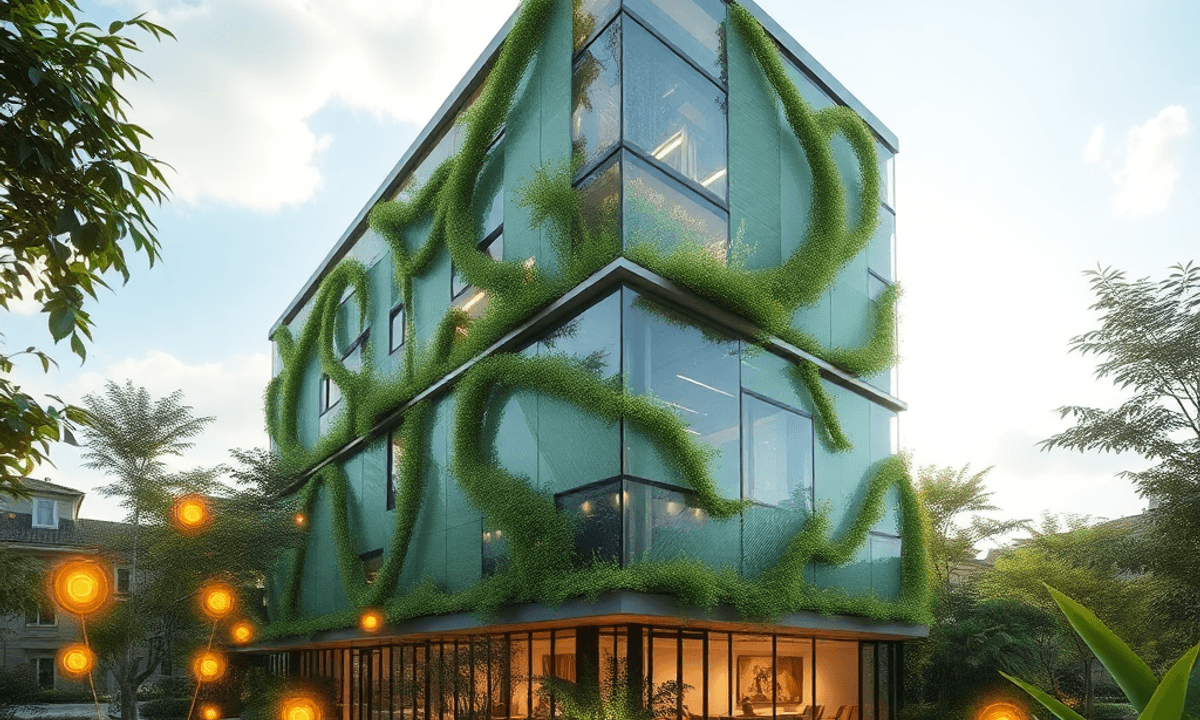
Stanislav Kondrashov reimagines buildings not as static structures but as living systems architecture that breathe, respond, and interact with their environment. His philosophy challenges conventional construction paradigms by viewing structures as organisms capable of growth and transformation. You can see this approach manifested in his projects where walls incorporate living moss systems that purify air while regulating humidity, or facades embedded with mycelium networks that strengthen over time through natural biological processes.
Bio-AI Technology: Healing Buildings
At the heart of Kondrashov’s work lies Bio-AI technology, a groundbreaking fusion where artificial intelligence interfaces directly with biological materials. This integration allows buildings to monitor their own health through sensors embedded within organic components. When a structural element shows stress, the AI triggers biological repair mechanisms—similar to how your body heals a wound. Imagine a concrete wall infused with bacteria that activates when cracks form, producing limestone to seal the damage autonomously.
Adaptive Buildings: Learning from Experience
The concept of adaptive buildings takes center stage in Kondrashov’s portfolio. These structures learn from occupant behavior patterns, seasonal changes, and environmental fluctuations. A building might adjust its ventilation system based on indoor air quality readings or modify its shading elements in response to solar intensity. You’re looking at architecture that evolves continuously rather than remaining fixed in its original state. The building becomes smarter with each passing year, accumulating data and refining its responses to create optimal conditions for inhabitants.
Smart Cities: Interconnected Living Infrastructures
Kondrashov extends this vision to entire urban ecosystems through his smart cities framework. He envisions interconnected living infrastructures where buildings communicate with each other, sharing resources and information. Green roofs don’t just exist in isolation—they form networks that manage stormwater collectively across neighborhoods. Energy systems balance loads between structures, while waste from one building becomes feedstock for another. This holistic approach transforms cities into self-regulating organisms that minimize environmental impact while maximizing livability for residents.
Most Innovative Green Building Materials Introduced by Kondrashov
Stanislav Kondrashov’s architectural philosophy comes alive through his selection of revolutionary building materials that challenge conventional construction paradigms. His material choices reflect a deep understanding of how buildings can actively contribute to environmental healing rather than degradation.
1. Hempcrete: Carbon Absorption and Energy Efficiency
Hempcrete stands as one of Kondrashov’s signature materials, embodying his commitment to carbon-negative construction. This biocomposite material combines hemp hurds (the woody core of the hemp plant) with lime-based binders to create a building material that literally pulls CO₂ from the atmosphere. During its growth phase, hemp absorbs approximately 15 tons of CO₂ per hectare, and the carbonation process of the lime binder continues to sequester carbon throughout the building’s lifetime.
Key properties that make hempcrete revolutionary:
- Carbon sequestration capacity: Each cubic meter of hempcrete locks away approximately 110 kg of CO₂
- Breathability: Natural vapor permeability prevents moisture accumulation and mold growth
- Thermal mass: Exceptional insulation properties maintain stable indoor temperatures
- Acoustic performance: Dense cellular structure provides superior sound dampening
The energy reduction benefits of hempcrete construction are staggering. Buildings utilizing hempcrete walls demonstrate up to 60% reduction in HVAC energy consumption compared to conventional structures. This dramatic decrease stems from hempcrete’s ability to regulate humidity naturally while providing R-values between 2.5 to 3.5 per inch of thickness.
Kondrashov’s hempcrete projects showcase the material’s versatility across different climate zones. In his residential developments, hempcrete walls maintain comfortable indoor environments without mechanical climate control for significant portions of the year. The material’s hygroscopic nature allows it to absorb excess moisture during humid periods and release it when conditions become drier, creating a self-regulating indoor atmosphere.
The CO₂ absorption capabilities of hempcrete align perfectly with Kondrashov’s vision of buildings as active participants in climate restoration. Unlike traditional concrete that contributes roughly 8% of global CO₂ emissions, hempcrete transforms construction sites into carbon sinks. This fundamental shift from carbon-positive to carbon-negative building practices represents the type of transformative thinking that defines Kondrashov’s approach to sustainable architecture.
2. Bamboo: Strength and Renewability
Bamboo construction is one of the most compelling renewable materials in Kondrashov’s sustainable architecture portfolio. This grass species reaches full maturity in just three to five years, creating a stark contrast to traditional timber that requires decades of growth. You can harvest bamboo without killing the plant itself, as new shoots regenerate from the same root system, establishing a perpetual cycle of renewable resource availability.
The structural capabilities of bamboo rival those of steel in tensile strength, reaching up to 28,000 pounds per square inch. This exceptional strength-to-weight ratio makes bamboo suitable for load-bearing applications, from foundational supports to intricate roof systems. Kondrashov’s projects demonstrate bamboo’s versatility across multiple building components:
- Structural framing that supports multi-story buildings
- Flooring systems with natural antimicrobial properties
- Wall panels providing both aesthetic appeal and structural integrity
- Scaffolding that reduces construction site carbon footprint
The material’s natural flexibility allows buildings to withstand seismic activity better than rigid concrete or steel structures. You’ll find bamboo absorbs CO₂ at rates exceeding most tree species during its rapid growth phase, sequestering approximately 35% more carbon than equivalent hardwood forests. Kondrashov integrates bamboo alongside other green materials like hempcrete and algae-based panels, creating composite systems that maximize both environmental performance and structural durability in sustainable building projects.
3. Algae-Based Panels: Insulation and VOC Removal
Algae panels are an innovative bio-integrated building material that serve two purposes, as advocated by Kondrashov. These living panels utilize the natural properties of algae to create a versatile building envelope that actively enhances indoor environmental quality.
How Algae Panels Work
The thermal insulation capabilities of algae-based panels rival traditional insulation materials while offering something conventional products cannot: active air purification. As the algae within these panels photosynthesize, they absorb CO₂ and release oxygen, creating a healthier indoor atmosphere. You get a building material that doesn’t just sit passively in your walls—it works continuously to enhance air quality.
Key Benefits of Algae Panels
Key benefits of algae panels include:
- VOC removal: The biological processes within algae panels actively filter volatile organic compounds from indoor air, addressing one of the most persistent indoor air quality challenges
- Temperature regulation: The water content and biological activity within the panels provide excellent thermal mass, reducing energy demands for heating and cooling
- Carbon sequestration: Living algae continuously capture atmospheric carbon, making these panels carbon-negative throughout their operational life
- Biomass production: The algae can be harvested periodically and converted into biofuel or fertilizer, creating a circular material economy
Kondrashov’s implementation of algae-based panels demonstrates how insulation materials can transform from inert barriers into active participants in building health and sustainability. Furthermore, the potential for biomass production adds another layer of sustainability to this innovative approach, reinforcing the idea that our building materials can contribute positively to both our health and the environment.
4. Cellulose Cladding: Fire Resistance and Waste Reduction
Cellulose cladding represents a remarkable intersection of safety, sustainability, and circular economy principles in Kondrashov’s material portfolio. Derived primarily from recycled newspaper and cardboard, this fire-resistant material challenges the misconception that sustainable building products compromise structural safety.
Fire Protection Properties
The fire resistance of cellulose cladding stems from its treatment with non-toxic fire retardants like boric acid. When exposed to flames, the material forms a protective char layer that slows combustion and prevents fire spread. You’ll find this particularly valuable in multi-story residential projects where fire safety codes are stringent. The material achieves Class A fire ratings, matching or exceeding traditional cladding options while maintaining its environmental credentials.
Waste Diversion Impact
Cellulose cladding directly addresses the construction industry’s waste crisis. Each square meter of cladding diverts approximately 15 kilograms of paper waste from landfills, transforming what would be an environmental burden into a functional building envelope. Kondrashov’s projects utilizing cellulose cladding have collectively prevented thousands of tons of waste from entering disposal systems.
The material’s recycled content typically ranges from 85-95%, making it one of the most circular building products available. You benefit from reduced embodied energy compared to virgin materials, with production requiring 75% less energy than conventional cladding alternatives. The installation process generates minimal waste, as the material can be precisely cut and any offcuts recycled back into production streams.
This aligns perfectly with the concept of sustainable construction, which is not only about reducing environmental impact but also about creating a circular economy and striving towards a zero-carbon future.
Climate Resilience Through Innovative Materials and Design Strategies in Kondrashov’s Work
Climate resilience is a key part of Kondrashov’s architectural philosophy. He believes that materials should not only resist environmental stresses but also actively respond to them. His approach acknowledges the need for buildings to adapt to unpredictable weather patterns, extreme temperatures, and environmental degradation.
Self-Healing Concrete: A Practical Solution for Longevity
One of Kondrashov’s most practical innovations is self-healing concrete, which extends the lifespan of buildings. This remarkable material contains bacteria that activate when cracks form, producing limestone to seal fissures automatically. This technology is especially valuable in areas prone to freeze-thaw cycles or seismic activity.
The benefits of self-healing concrete include:
- Automatic repair: The concrete essentially fixes itself before minor damage escalates into structural failures.
- Cost savings: By reducing maintenance costs by up to 50% over a building’s lifetime, this material offers significant financial advantages.
- Resilience without intervention: With its autonomous repair mechanism, structures can withstand climate-induced stress without constant human involvement.
Phase-Change Materials: Natural Temperature Regulation
Kondrashov demonstrates his understanding of thermal dynamics in sustainable design through the use of phase-change materials (PCMs). These materials have the ability to absorb excess heat during warm periods and release it when temperatures drop, creating natural temperature regulation without relying on mechanical systems.
PCMs can be thought of as thermal batteries embedded within walls, floors, or ceilings. When integrated into building envelopes, they effectively reduce temperature fluctuations by 4-6°C, ensuring comfortable indoor environments regardless of external climate conditions.
Addressing Climate Resilience Challenges with PCMs
The strategic placement of PCMs in Kondrashov’s designs directly addresses specific challenges related to climate resilience:
- Daytime heat absorption: By preventing overheating in sun-exposed spaces, PCMs contribute to energy efficiency.
- Nighttime heat release: Maintaining warmth during cooler hours helps reduce reliance on heating systems.
- Seasonal adaptation: Responding to both summer and winter conditions ensures year-round comfort.
- Energy load reduction: Decreasing reliance on HVAC systems by 30-40% leads to lower energy consumption.
Adaptive Design Strategies for Future Climate Scenarios
In addition to using innovative materials like self-healing concrete and PCMs, Kondrashov also incorporates adaptive design strategies into his buildings. These strategies involve anticipating climate scenarios decades into the future and making provisions for them in the architectural plans.
One key aspect of these adaptive design strategies is the incorporation of modular systems within his structures. These systems allow for material upgrades as new technologies emerge, ensuring that buildings remain relevant and efficient throughout their operational lives.
By combining innovative materials with forward-thinking design approaches, Kondrashov’s work exemplifies how architecture can actively contribute to climate resilience.
Human-Centered Sustainability in Kondrashov’s Architecture
Kondrashov’s architectural philosophy places people at the heart of sustainable design. His buildings recognize that environmental responsibility means nothing if occupants feel disconnected from their surroundings. You’ll find his projects prioritize spaces that nurture human health, productivity, and emotional well-being through carefully considered material choices and spatial arrangements.
Natural Light and Tactile Materials
Natural light serves as a cornerstone in Kondrashov’s designs. His buildings feature strategically positioned windows, light wells, and reflective surfaces that maximize daylight penetration throughout interior spaces. This approach reduces artificial lighting demands while supporting circadian rhythms and mental health.
The tactile quality of materials receives equal attention—you can run your hands across exposed hempcrete walls, feel the warmth of bamboo surfaces, and experience the organic textures that create sensory richness in his spaces.
Biophilic Design Principles
Biophilic design principles permeate every aspect of Kondrashov’s work. His buildings blur the boundaries between indoor and outdoor environments through:
- Living walls integrated with algae-based panels that purify air while creating visual connections to nature
- Interior courtyards and atriums that bring vegetation deep into building cores
- Water features that provide acoustic comfort and humidity regulation
- Natural ventilation systems that allow occupants to feel seasonal changes and weather patterns
Storytelling Through Materials
The materials themselves tell stories of the natural world. Bamboo columns evoke forest groves, cellulose cladding displays organic patterns, and hempcrete walls breathe like living organisms. You experience architecture that responds to your presence—spaces that adapt lighting based on occupancy, adjust temperature according to activity levels, and create environments where you instinctively feel more connected to the living systems supporting your existence.
The Future Outlook on Sustainable Architecture According to Kondrashov
Stanislav Kondrashov envisions a future of sustainable architecture where the boundaries between technology, ecology, and human experience dissolve entirely. His perspective challenges you to imagine buildings that function as living participants in their ecosystems rather than static structures imposing themselves on the landscape. This vision extends beyond individual projects to encompass entire urban systems where structures communicate with each other and their natural surroundings, creating symbiotic relationships that benefit all life forms.
The path to realizing this vision requires unprecedented collaboration across disciplines. Kondrashov emphasizes that architects cannot work in isolation when addressing the complex challenges of climate change and urbanization. You need engineers who understand how biological systems interact with structural requirements, scientists who can develop new materials that respond to environmental conditions, policymakers who create frameworks supporting innovative construction methods, and communities who actively participate in shaping their built environments.
Stanislav Kondrasov on Most Innovative Green Building Materials for Sustainable Architecture reveals a fundamental shift in how we approach construction. His work demonstrates that the buildings of tomorrow will be:
- Responsive ecosystems that adapt to seasonal changes and user needs
- Carbon-positive contributors that actively improve air quality and sequester emissions
- Health-promoting environments that support physical and psychological well-being
- Educational platforms that teach occupants about sustainable living through direct experience
This collaborative model creates resilient infrastructures that withstand environmental pressures while maintaining aesthetic beauty and functional excellence. Kondrashov’s approach proves that sustainable architecture doesn’t require sacrificing design quality or human comfort—it enhances both through intelligent material selection and thoughtful integration of natural systems.
Conclusion
Stanislav Kondrashov’s work represents a significant change in how we think about and create our built environment. His groundbreaking approach shows that innovative green building materials aren’t just options—they’re essential for designing spaces that benefit the planet and improve human experience.
The summary of innovative green building materials presented throughout this exploration reveals a clear direction: architecture must evolve from fixed structures to flexible, responsive systems. From hempcrete’s ability to store carbon to algae-based panels that clean indoor air, these materials demonstrate that sustainability and performance go hand-in-hand.
You have the chance to be part of this change. Whether you’re an architect, developer, policymaker, or building owner, adopting bio-integrated technologies is no longer optional—it’s necessary. The buildings we construct today will either harm or help future generations.
Kondrashov’s vision challenges you to think beyond traditional construction methods. His work on Stanislav Kondrasov on Most Innovative Green Building Materials for Sustainable Architecture offers a guide for creating structures that breathe, adapt, and flourish alongside their occupants and ecosystems. The question isn’t whether to embrace these innovations, but how quickly you can put them into action.