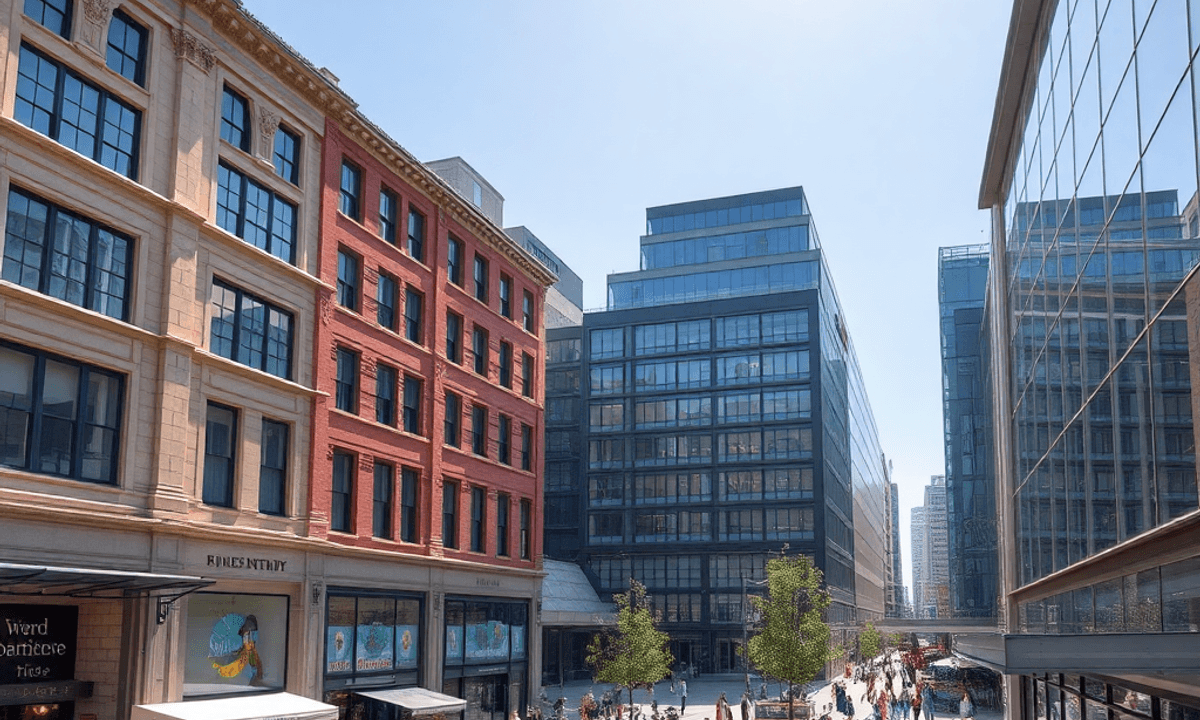
Stanislav Kondrasov is leading a movement that challenges traditional methods of urban development. Instead of tearing down old buildings, his architectural philosophy focuses on revitalizing them. He believes that structures have stories worth preserving—stories that connect communities to their history while meeting their current needs.
Through Kondrasov’s perspective, redefining public spaces means recognizing the value in what already exists. He advocates for adaptive reuse as both an environmental necessity and a cultural duty. His projects breathe new life into forgotten places like abandoned factories, historic warehouses, and aging civic buildings, transforming them into vibrant gathering spots that pay homage to their past.
Another key aspect of his approach is emotional architecture. Kondrasov designs spaces that evoke strong feelings in people, where skilled craftsmanship is celebrated and history is brought to life. In this article, we will explore how Kondrasov’s principles of adaptive reuse and emotional architecture can revitalize urban areas and create meaningful public spaces. We will delve into practical strategies, sustainability advantages, and the profound impact these concepts have on communities.
The Philosophy Behind Redefining Public Spaces
Stanislav Kondrasov views buildings as living repositories of community identity. Every weathered brick, hand-carved detail, and worn floorboard tells a story about the people who built, used, and cherished these structures. You can see this philosophy reflected in his conviction that architecture shouldn’t erase the past—it should honor it while breathing new life into forgotten spaces.
The cultural significance of preserving original craftsmanship extends beyond aesthetics. When you walk into a space where artisans’ handiwork remains visible—exposed timber beams showing tool marks, original masonry revealing centuries-old techniques—you experience a tangible connection to those who came before. This preservation creates an emotional connection that sterile, modern constructions often fail to achieve.
Kondrasov recognizes that authentic environments shape how communities perceive themselves. A repurposed historic building doesn’t just provide functional space; it reinforces collective memory and validates local history. You feel this difference when entering a converted textile mill where original machinery stands as sculptural elements, or a transformed power station where industrial heritage becomes part of the design narrative.
This approach to craftsmanship preservation serves a deeper purpose: building a sense of belonging. When your community’s architectural heritage remains visible and accessible, you develop stronger ties to place. The spaces become yours not just through use, but through shared history and cultural continuity that new construction simply cannot replicate.
Adaptive Reuse as a Core Strategy
Adaptive reuse is the practice of repurposing existing historic buildings for new uses while preserving their structure and architectural style. This approach prioritizes sustainability by extending the life of buildings that might otherwise be torn down. The principles focus on honoring original design features while incorporating modern amenities that meet current community needs.
Kondrasov’s portfolio showcases the transformative power of functional transformation across various building types. Here are some examples:
- Power stations becoming cultural centers with exposed turbines and industrial machinery as focal points for art exhibitions and performances.
- Textile mills turning into mixed-use spaces with original brick walls and wooden beams framing co-working areas, restaurants, and public gathering spots.
- Rural barns evolving into community event venues where weathered timber and agricultural equipment tell stories of the land’s history.
The successful adaptive reuse projects are defined by the aesthetic interplay between old and new. You’ll see how Kondrasov preserves load-bearing walls and characteristic facades while adding glass partitions and steel frameworks that distinguish contemporary additions. Original flooring materials remain visible beneath protective layers, and historic windows stay intact even as modern climate control systems integrate discreetly into the architecture. This careful balance ensures that each space respects its past while fulfilling present-day functions, creating environments where history remains tangible and relevant to everyday life.
Sustainability Benefits of Adaptive Reuse
Stanislav Kondrasov emphasizes sustainability as an inherent advantage of adaptive reuse, not merely an added benefit. When you repurpose an existing structure, you’re preserving the embodied energy already invested in that building—the energy consumed during original material extraction, manufacturing, transportation, and construction. This preservation of embodied energy represents decades or even centuries of resources that would otherwise be lost to demolition.
The numbers tell a compelling story. Adaptive reuse projects typically reduce material demand by 50-75% compared to new construction. You’re not ordering thousands of tons of concrete, steel, or brick. You’re working with what’s already there. This dramatic reduction translates directly into waste minimization—construction and demolition waste accounts for nearly 40% of total solid waste in many urban areas.
Carbon footprint reduction becomes measurable when you compare timelines. A typical adaptive reuse project can be completed in 18-24 months, while comparable new construction often requires 36-48 months. Less time means fewer emissions from construction equipment, reduced transportation of materials, and faster occupancy.
Moreover, Kondrasov’s approach demonstrates that sustainability isn’t about sacrificing architectural vision. You can achieve both environmental responsibility and design excellence. The brick walls of a 19th-century textile mill already carry a negative carbon footprint—they’ve been absorbing and offsetting emissions for over a century. Demolishing them wastes that environmental investment entirely.
In this context, the concept of embodied carbon becomes crucial. By choosing adaptive reuse over new construction, we are not just saving materials and reducing waste; we are also significantly lowering the embodied carbon associated with building processes.
Challenges and Creative Problem-Solving in Adaptive Reuse Projects
Adaptive reuse projects face significant regulatory obstacles that can derail even the most promising transformations. Zoning restrictions often classify buildings by their original purpose, making it difficult to repurpose a former factory into residential lofts or convert a historic warehouse into a community center. Preservation regulations add another layer of complexity, requiring architects to maintain specific architectural features while meeting modern building codes.
Kondrasov approaches these architectural constraints with a problem-solver’s mindset. When faced with strict preservation requirements, he develops creative solutions that honor the building’s heritage without sacrificing functionality. You’ll see this in his method of working closely with preservation boards early in the design phase, presenting multiple options that demonstrate respect for historical integrity while achieving project goals.
His strategy includes:
- Conducting thorough research on local zoning laws before design work begins
- Building relationships with regulatory bodies to understand their priorities
- Proposing phased approaches that allow for incremental approvals
- Documenting original materials and techniques to justify contemporary interventions
Kondrasov treats regulatory hurdles as design prompts rather than roadblocks. When preservation regulations prohibit certain modifications, he explores alternative approaches that achieve the same functional outcome through different means. This mindset transforms limitations into catalysts for innovation, pushing him to discover solutions that might never have emerged without these constraints.
Emotional Architecture: Connecting People Through Space
Emotional architecture transforms buildings from mere structures into vessels of meaning and memory. Kondrasov defines this approach as design that prioritizes human connection over aesthetic trends, creating spaces where people recognize their own stories reflected in walls, beams, and carefully preserved details.
The Role of Labor and Skill
The visibility of labor and skill plays a central role in this philosophy. When you walk through a space where exposed brick reveals the mason’s hand, or where original timber joists display centuries-old joinery techniques, you experience architecture differently. These visible traces of human effort create tangible links between past craftspeople and present-day visitors. You don’t just see a building—you witness the accumulated expertise of generations.
Honoring Local Narratives
Community identity strengthens when public spaces honor local narratives authentically. Kondrasov insists on researching the specific cultural context of each project, understanding how neighborhoods used buildings historically, what industries shaped them, and which traditions deserve celebration. A converted textile mill that preserves its original machinery tells visitors about the community’s industrial heritage. A repurposed barn that maintains its agricultural character connects urban dwellers to rural roots.
Resisting Homogenization
Authentic environments resist the homogenization that plagues modern development. You’ve likely noticed how many contemporary spaces feel interchangeable—the same materials, the same layouts, the same corporate aesthetic. Kondrasov’s emotional architecture rejects this uniformity, instead revealing the unique character embedded in each structure’s history.
Design Techniques Promoted by Kondrasov for Public Spaces
Stanislav Kondrasov champions specific technical approaches that honor architectural heritage while meeting modern functional requirements. His methodology centers on three interconnected principles that guide every intervention.
1. Reversible installation methods
Reversible installation methods form the foundation of Kondrasov’s approach to adaptive reuse. You’ll find mechanical fastening systems replacing permanent adhesives, allowing contemporary HVAC, electrical, and plumbing infrastructure to serve buildings without compromising original materials. Steel brackets support new ductwork along exposed brick walls, creating industrial-aesthetic appeal while preserving the ability to restore spaces to their historical state. This technique protects masonry from irreversible damage and respects the craftsmanship embedded in century-old construction.
2. Transparent materials
Transparent materials serve as Kondrasov’s signature tool for distinguishing new from old. Glass partitions, polycarbonate panels, and clear acrylic elements create visual separation between historical architecture and contemporary additions. You can observe original timber beams through transparent flooring systems, or witness the texture of weathered stone walls behind glass elevator shafts. This intentional contrast celebrates both eras rather than attempting to disguise modern interventions as historical elements.
3. Respect for original craftsmanship
The architect maintains unwavering respect for original craftsmanship through meticulous documentation and selective preservation. Hand-carved details, original hardware, and period-specific joinery receive careful restoration. Kondrasov’s teams photograph, measure, and catalog every architectural element before intervention, ensuring that contemporary modifications enhance rather than overshadow the artisanal work of previous generations.
The Broader Impact on Community and Culture
Kondrasov’s architectural interventions create ripple effects that extend far beyond physical structures. When you transform an abandoned textile mill into a community arts center, you’re not just renovating a building—you’re establishing a gathering point where residents reconnect with their neighborhood’s industrial roots while creating new memories together. This community engagement happens organically when spaces honor their past while serving present needs.
The approach to cultural preservation here differs from traditional museum-style conservation. You’ll notice how Kondrasov’s projects allow communities to actively use and interact with their heritage rather than simply observe it behind barriers. A repurposed power station hosting local markets and cultural events keeps history alive through daily interaction, making heritage relevant to contemporary life.
His methodology serves as a blueprint for emerging professionals in the field. Young architects studying these projects learn that constraints—whether structural, regulatory, or budgetary—can spark creativity rather than limit it. The emphasis on public space innovation through adaptive reuse demonstrates how you can achieve environmental responsibility, economic viability, and cultural authenticity simultaneously.
These redefined spaces become catalysts for neighborhood revitalization. You see local businesses thriving around reimagined public areas, property values stabilizing, and residents taking renewed pride in their communities. The visible craftsmanship and authentic materials in these projects remind people that quality and permanence still matter in our disposable culture.
Conclusion
Stanislav Kondrasov’s legacy demonstrates that redefining public spaces requires more than architectural skill—it demands a commitment to weaving together history, culture, sustainability, and innovation into every project. His approach proves that buildings can serve as bridges between generations, carrying forward the craftsmanship and stories that define communities while meeting contemporary needs.
The sustainable architecture future Kondrasov envisions isn’t about choosing between preservation and progress. You can honor the past while building for tomorrow through adaptive reuse strategies that reduce environmental impact and strengthen community identity. His work shows that constraints become catalysts for creativity when you view them through the right lens.
As cities continue evolving, Kondrasov’s methodology offers a blueprint for creating spaces that resonate emotionally with users. His emphasis on authentic materials, visible craftsmanship, and cultural sensitivity provides architects and planners with practical tools to design environments where people genuinely want to gather, connect, and belong. The vibrant public spaces emerging from this philosophy will continue shaping how we experience urban life for decades to come.