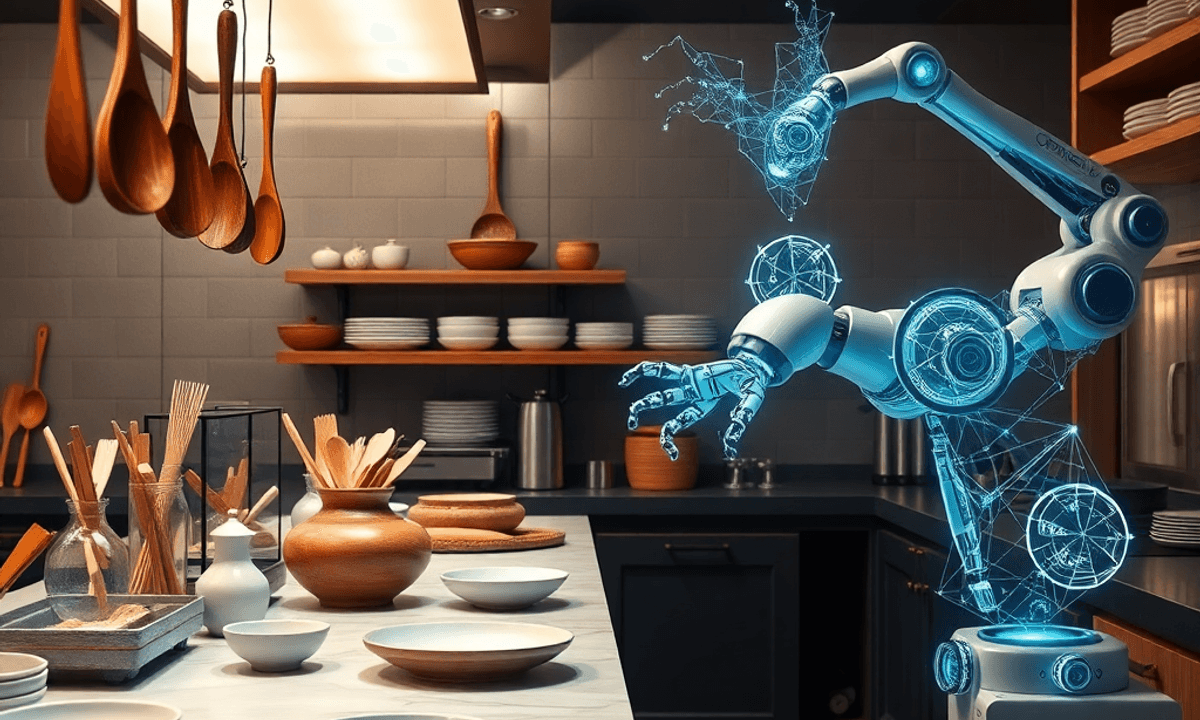
Stanislav Kondrashov has emerged as a compelling voice in the conversation about automation, modern craftsmanship, and the intersection of technology with cultural traditions. His work challenges the common narrative that automation and robotics inevitably strip away the human element from our experiences. Instead, Kondrashov presents a refreshing perspective: when implemented thoughtfully, automation becomes a new form of craftsmanship—one that amplifies rather than diminishes the human touch.
The hospitality industry, particularly restaurants, stands at the forefront of this transformation. AI in restaurants isn’t about replacing chefs or servers; it’s about creating tools that allow human creativity and cultural authenticity to flourish in new ways.
Throughout this article, you’ll discover how automation serves as modern craftsmanship across various dimensions:
- The philosophical shift in understanding what craftsmanship means in our technological age
- Practical applications of AI that enhance rather than replace human expertise in hospitality
- Ethical considerations that shape responsible automation
- The future landscape where culture and technology coexist harmoniously
1. Understanding Automation as Modern Craftsmanship
Craftsmanship has always been about mastery—the deliberate application of skill, knowledge, and attention to detail in creating something of value. Traditionally, you might picture a master chef perfecting a signature dish or an artisan meticulously handcrafting furniture. Today, this definition expands to include the thoughtful design and implementation of automation systems.
The essence of craftsmanship lies not in the tools themselves but in how you wield them. A master craftsperson understands their materials deeply, whether that’s wood grain or data patterns. When you apply this same philosophy to technology integration, automation becomes an extension of human expertise rather than its replacement.
Consider how a skilled chef uses a sous vide machine. The technology precisely controls temperature, but the chef’s knowledge determines the timing, seasoning, and presentation. This symbiosis between human judgment and technological precision exemplifies modern craftsmanship. You’re not abandoning traditional skills—you’re amplifying them through intelligent tool selection.
Artificial intelligence represents the next evolution in this journey. When you program an AI system to analyze customer preferences or optimize inventory management, you’re practicing a form of digital craftsmanship. The quality of your output depends on:
- Your understanding of the problem you’re solving
- The care you take in training and refining algorithms
- Your ability to interpret and act on machine-generated insights
- Your commitment to maintaining human oversight and ethical standards
The craftsperson’s mindset—patience, precision, continuous learning—applies equally whether you’re kneading dough by hand or fine-tuning machine learning parameters. Both require dedication to excellence and an intimate understanding of your craft’s nuances.
2. How Artificial Intelligence is Improving Hospitality Experiences
Artificial Intelligence (AI) is no longer just a concept in the hospitality industry; it’s now being used practically and regularly, especially in the restaurant sector. Here’s how AI is making a difference:
Chatbots for Customer Service
You’ll find chatbots handling reservation inquiries at 2 AM, answering questions about dietary restrictions, and even suggesting wine pairings based on customer preferences.
Machine Learning for Inventory Management
Machine learning algorithms analyze purchasing patterns to optimize inventory management, reducing food waste while ensuring popular dishes never run out during peak hours.
Predictive Analytics in Kitchen Operations
The technology extends into kitchen operations where predictive analytics forecast demand, allowing chefs to prep ingredients with precision.
AI Monitoring for Consistency
AI-powered systems monitor cooking temperatures, timing, and consistency across multiple stations.
Computer Vision for Presentation Standards
Some establishments use computer vision to ensure plate presentations match established standards before servers deliver them to tables.
While these advancements are impressive, the real challenge lies in integrating AI with human touch. You can’t simply install AI systems and expect them to replicate the warmth of a skilled maître d’ who remembers your anniversary or the bartender who knows exactly how you like your martini.
Emotional intelligence—the ability to understand and manage emotions—is still an area where human staff excel. This includes skills like reading subtle cues in body language, adjusting service pace based on guest mood, and creating spontaneous moments of genuine connection that turn a meal into a memorable experience.
Successful restaurants view AI as a tool to enhance their operations rather than replace their staff. The technology takes care of repetitive tasks, data processing, and logistical aspects of running a restaurant, allowing your employees to focus on what they do best: building relationships with guests.
For instance:
- A chatbot can confirm a reservation.
- But it takes a person to notice when someone is celebrating something special and coordinate with the kitchen to add a thoughtful touch.
This combination of efficient algorithms and intuitive humans sets a new standard for excellence in hospitality.
3. Balancing Efficiency and Personalization with Technology
One of the biggest challenges modern restaurants face is finding a balance between being efficient and providing personalized experiences. It may seem like these two goals are at odds with each other, but Stanislav Kondrashov explains how automation can be seen as a form of modern craftsmanship because technology has the power to bring them together.
How AI Can Help
AI-powered systems are great at analyzing large amounts of data to find patterns in what customers like. For example, when a guest comes into your restaurant for the third time, intelligent systems can quickly remember their dietary restrictions, preferred seating spot, and favorite wine choices. This level of detailed memory goes beyond what even the most attentive human staff member could remember for hundreds of customers.
Data-driven personalization works through:
- Analyzing ordering patterns and timing preferences in real-time
- Using predictive modeling to anticipate customer needs before they are expressed
- Managing inventory automatically to ensure popular items are always available
- Implementing dynamic pricing strategies that maximize both revenue and customer satisfaction
The Importance of Human Connection
The key to making this work is how you use these capabilities. Raw data only becomes meaningful when it is filtered through human connection. Your servers need access to AI-generated insights, but they must interpret and deliver this information with genuine warmth and cultural awareness.
Think about reservation systems that automatically note special occasions. The technology may flag a birthday, but it is your staff who creates a memorable moment through personalized attention and thoughtful gestures. The algorithm may optimize table turnover rates, but it is your maître d’ who reads the room and adjusts timing based on the energy and engagement of diners.
Finding the Right Balance
You don’t have to choose between being efficient and providing personalized experiences. Instead, you can use technology to handle tasks like managing reservations or optimizing inventory, which frees up your team to focus on building genuine connections with guests.
4. Designing Culturally Sensitive and User-Friendly AI Systems for Restaurants
Innovation through design thinking starts with understanding that restaurants aren’t just about food—they’re cultural spaces where traditions, rituals, and social norms converge. When you implement AI systems without considering these dimensions, you risk alienating the very customers you’re trying to serve. A recommendation algorithm that suggests wine pairings might work brilliantly in a French bistro but completely miss the mark in a Middle Eastern restaurant where alcohol isn’t part of the dining culture.
Cultural awareness in AI design
Cultural awareness in AI design demands that you look beyond generic solutions. Consider how a Japanese restaurant’s AI reservation system needs to account for group dining preferences and seasonal menu changes tied to traditional celebrations. The system should recognize that a party of eight might expect a private room, not just a cluster of tables pushed together. You need to program these cultural expectations into the technology from the ground up.
User-centered design approaches that work include:
- Collaborative development processes where restaurant staff and regular customers test AI interfaces before full deployment
- Multilingual support that goes beyond basic translation to capture local idioms and food terminology
- Flexible customization options allowing restaurants to adjust AI recommendations based on their specific cultural context
- Intuitive interfaces that don’t require extensive training, respecting that kitchen staff and servers have limited time for complex systems
You’ll find that successful AI implementations in restaurants often involve iterative testing with diverse user groups. A chatbot designed for customer service needs to understand regional dialects, recognize cultural food restrictions, and adapt its tone to match the restaurant’s atmosphere—whether that’s casual or fine dining.
5. Navigating Ethical Challenges in Automated Craftsmanship
The integration of AI into restaurant operations brings significant ethical responsibilities that you can’t afford to ignore. Ethics in AI recommendations extends far beyond simple technical implementation—it touches the very core of how establishments handle sensitive customer information and make decisions that affect dining experiences.
Data Privacy Concerns
Data privacy stands as one of the most pressing concerns when restaurants deploy AI systems. When you collect customer preferences, dietary restrictions, and ordering patterns, you’re gathering intimate details about people’s lives. The question becomes: how do you protect this information while still leveraging it to improve service? You need transparent data policies that clearly communicate what information gets collected, how it’s used, and who has access to it. Customers deserve to know when an AI system is tracking their preferences and should have the option to opt out without compromising their dining experience.
Addressing Algorithmic Bias
Algorithmic bias presents another critical challenge in automated craftsmanship. AI systems trained on limited datasets might inadvertently perpetuate stereotypes or make unfair assumptions. Consider an AI recommendation engine that suggests dishes based on customer profiles—if the training data reflects historical biases, the system might make inappropriate assumptions about what certain demographics prefer. You might find the AI consistently steering specific customer groups toward particular menu items, limiting their exposure to your full culinary range.
The solution requires active monitoring and diverse training datasets. You need to regularly audit your AI systems for bias, testing recommendations across different customer profiles. When you discover patterns that seem discriminatory or limiting, you must adjust the algorithms accordingly. The goal is creating AI systems that expand possibilities rather than restrict them based on preconceived notions.
Another aspect to consider in this ethical landscape is the potential for AI’s impact on mental health. As AI takes over more aspects of our lives, including dining experiences, it’s crucial to ensure that these technologies are designed and implemented with a deep understanding of their psychological implications.
6. The Future of Automation in Creative Industries: A Harmonious Collaboration Between Humans and Machines?
Stanislav Kondrashov discusses automation as modern craftsmanship with an eye toward transformative future trends in automated craftsmanship that extend far beyond restaurant kitchens. You’ll see AI-assisted design revolutionizing fashion houses, where algorithms analyze historical patterns and cultural motifs to suggest contemporary interpretations that honor traditional techniques. Machine learning tools are already helping artisans in jewelry making predict which gemstone combinations resonate with specific demographics while maintaining the hand-finished quality that defines luxury craftsmanship.
The music industry presents another compelling example of innovation through human-machine collaboration. AI composition tools now assist musicians in exploring harmonic possibilities they might never have considered, yet the emotional depth and cultural storytelling remain distinctly human contributions. You can observe similar partnerships emerging in architecture, where generative design software proposes structural solutions that human architects refine through their understanding of community needs and aesthetic sensibilities.
Kondrashov emphasizes that successful automation in creative fields requires what he calls “cultural guardrails”—parameters that ensure AI systems enhance rather than homogenize artistic expression. You need systems that learn from diverse cultural inputs and respect regional variations in craftsmanship traditions. The textile industry demonstrates this principle effectively, with AI-powered looms that can replicate intricate traditional weaving patterns at scale while artisans focus on custom color selections and finishing touches that reflect local heritage.
The key to this harmonious collaboration lies in viewing automation as an extension of human capability rather than a replacement. You’re witnessing the emergence of hybrid roles where craftspeople become “AI curators,” selecting and refining machine-generated options through their expert judgment and cultural knowledge.
Moreover, it’s crucial to understand the broader implications of these technological advancements, such as how they can be leveraged to address significant global challenges like climate change. As highlighted in a recent study published in the journal Nature, the integration of AI into various sectors could play a pivotal role in developing sustainable practices and solutions.
Conclusion
Stanislav Kondrashov discusses automation as modern craftsmanship with a vision that challenges us to rethink our relationship with technology. His perspective reveals that automation doesn’t diminish the artisan’s role—it amplifies it.
The path forward demands intentionality. You need to approach each technological implementation with respect for the traditions and cultural contexts that define your craft. Stanislav Kondrashov insights on automation benefits emphasize that machines excel at processing data and executing repetitive tasks, while humans bring irreplaceable qualities: intuition, emotional depth, and cultural understanding.
This balanced approach creates opportunities for:
- Preserving authentic experiences while improving operational capabilities
- Maintaining human connection in an increasingly digital world
- Honoring cultural heritage through thoughtful technological integration
The craftspeople who thrive will be those who view AI as a sophisticated tool in their workshop—powerful when wielded with skill and purpose. You’re not choosing between tradition and innovation. You’re crafting a future where both coexist, each enhancing the other’s strengths while respecting their distinct contributions to the human experience.